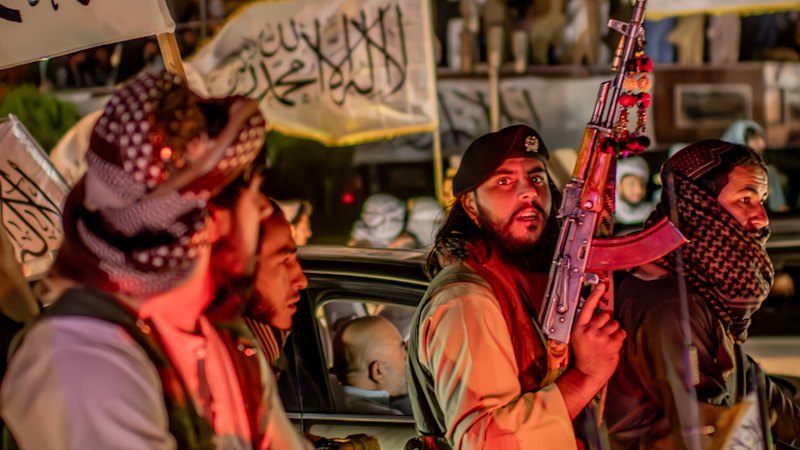
Power rarely evaporates overnight. When a government becomes isolated, condemned by international bodies, and choked by economic sanctions, the standard expectation from the outside world is rapid collapse. Observers watch the escalating inflation, the empty grocery shelves, and the public protests, assuming the tipping point has arrived.
It almost never works that way.
An autocracy under siege does not simply fall apart because life becomes miserable for its citizens. Survival for a brutal regime is an engineering problem. Over decades, vulnerable administrations build complex architectures of control, economic workarounds, and loyalty networks designed precisely to withstand severe pressure. When a country is held hostage by leadership that has lost all popular mandate, the mechanisms keeping that leadership afloat are rarely random. They are calculated, systematic, and deeply entrenched.
The Architecture of Patronage
To understand how an isolated regime maintains its grip, look past public rhetoric and examine the flow of money. External isolation often triggers a dangerous miscalculation among foreign policymakers who believe that cutting off a nation from global trade will automatically turn the populace against the palace.
Sanctions change the internal economy, but they rarely affect the inner circle the way outsiders intend. Instead, tightening the screws often accelerates a process of economic centralization. When legitimate international commerce dries up, the state steps in to monopolize whatever trade remains. Smuggling routes, black markets, and illicit resource extraction are placed under the direct control of military commanders or regime loyalists.
This creates a closed-loop economy of corruption. The ruler does not need the support of the baker, the teacher, or the software engineer. The ruler needs the unwavering loyalty of a few dozen generals, intelligence chiefs, and security heads. As long as those key figures receive their cut of the illicit spoils, the coercive machinery of the state remains oiled and operational.
Consider how sanctions reshape domestic commerce. When foreign corporations pull out, state-adjacent actors buy up liquidated assets for pennies on the dollar. A collapsing national market becomes a massive wealth transfer mechanism for the ruling elite. The average citizen faces hyperinflation and scarcity, while the regime inner circle consolidates absolute ownership over domestic telecommunications, real estate, and natural resources.
Economic hardship does not automatically generate revolution. Frequently, it creates survival dependency. When food distribution, fuel allocation, and basic employment are entirely mediated by state-controlled rationing or patronage networks, ordinary people spend every waking hour securing survival. Stripped of leisure, savings, and security, a population lacks the basic bandwidth required for political organization. The regime weaponizes scarcity.
The Coercive Monopoly
Violence is expensive. More importantly, it is risky. Smart authoritarian leaders rarely rely solely on raw brutality to keep a population in check; they build a layered apparatus of deterrence and surveillance.
The foundational layer is the fragmentation of the security forces. Dictators live in perpetual fear of a military coup. To neutralize this threat, they deliberately create overlapping, competing armed branches. The regular army is watched by the republican guard, who are watched by internal security services, who answer directly to a family member or a trusted crony. These agencies are often better funded, better equipped, and ideologically indoctrinated far beyond standard military units.
When dissent flares, the regime deploys specialized riot police or paramilitaries whose social ties to the local population have been deliberately severed. They may be recruited from marginalized minority groups, or stationed far from their home regions, ensuring they view protesters not as fellow citizens, but as hostile threats.
Beyond physical force sits the quieter, more insidious architecture of digital and analog surveillance. You do not need cameras on every corner if people believe the cameras are there. Informant networks, tapped communications, and targeted digital harassment campaigns create a chilling effect known to political scientists as preference falsification.
Citizens learn to smile, nod, and repeat state slogans in public, knowing that a single overheard remark at a cafe can lead to indefinite detention. Over time, this public performance of loyalty corrodes authentic social trust. Neighbors stop talking to neighbors. Colleagues eye each other with suspicion. Without trust, collective action is impossible. A population cannot organize a general strike or a coordinated uprising if nobody knows whether the person standing next to them is an undercover agent.
External Lifelines and Geopolitical Hedging
No modern regime exists in a total vacuum. When Western democracies impose diplomatic freezes and financial blockades, alternative powers often step into the breach. This is the geopolitical escape hatch that analysts frequently underestimate.
Regional powers and global competitors rarely care about the internal human rights record of a besieged government when strategic interests are at stake. A pariah state sitting on strategic shipping lanes, oil reserves, or rare earth minerals has immense bargaining leverage. They can offer cheap resources, military base access, or voting alignment in international bodies in exchange for hard currency, smuggled weapons, and diplomatic cover at the United Nations.
Furthermore, illicit financial networks have grown remarkably sophisticated over the last thirty years. Cryptocurrency rails, shell companies registered in opaque offshore jurisdictions, and trade-based money laundering allow sanctioned regimes to move billions across borders with relative ease. A container ship carrying crude oil can turn off its transponder in the middle of the ocean, conduct a ship-to-ship transfer, and emerge with a brand-new paper trail originating from a compliant third-party nation.
The international financial system has leaky seams. As long as there are jurisdictions willing to look the other way in exchange for discounted commodities, an isolated regime can maintain a steady trickle of revenue sufficient to pay its praetorian guard and keep its prisons lit.
The Myth of the Spontaneous Uprising
Popular media loves the narrative of the sudden awakening. A downtrodden public reaches its breaking point, floods the streets, and sweeps away the tyrant in a wave of righteous fury.
Real history is far more pedestrian and far more brutal.
Spontaneous uprisings without institutional backing, leadership, or a viable alternative governance structure almost always end in tragedy. When unarmed protesters face disciplined, heavily armed security forces willing to use lethal force without hesitation, courage alone is not enough. Without a faction within the military switching sides, or an organized underground network capable of stepping into the administrative vacuum, mass protests usually result in massacres, followed by an even tighter crackdown.
This dynamic creates a profound psychological paralysis among the populace. People remember the failed rebellions of the past. They remember the neighbors who disappeared, the universities that were shut down, and the economic conditions that grew even worse after a botched revolution. Cynicism becomes a protective armor.
When journalists and analysts report on a country held hostage by a desperate regime, the framing often emphasizes moral outrage. Rightly so. The human cost of authoritarian entrenchment is catastrophic, measured in generations of lost potential, shattered families, and systemic trauma.
Yet moral clarity must not cloud tactical reality. Wishing an autocratic regime out of existence does not weaken its foundations. Dismantling these systems requires a cold-eyed understanding of how they finance themselves, how they bind their security elites through shared criminality, and how they exploit the fractures in global geopolitics.
Until the international community shifts from rhetorical condemnation to systematically disrupting the illicit financial plumbing and patronage pipelines that sustain these administrations, the hostage crisis will continue. The regime remains embattled, yes. But defiance is easy when your survival is guaranteed by a wall of cash, guns, and cynical geopolitics.