The skies above Eastern Europe no longer belong to birds or commercial airliners. They belong to autonomous circuit boards and explosives. In the airspace shared by Russia and Ukraine, an industrialized web of drones has transformed civilian survival into a daily lottery.
This is not the high-altitude, detached warfare of previous decades. It is granular, mechanized, and intensely close. Long-range strategic munitions and cheap first-person-view quadcopters have turned routine existence into a theater of attrition where non-combatants pay the ultimate penalty.
The Anatomy of Modern Skysweeps
To understand why civilian casualties have spiked to historic highs, one must look past the abstract maps on television screens and examine the tactical hardware. Both militaries have decentralized production. Thousands of airframes are assembled in makeshift workshops, utilizing commercially available components sourced from global supply chains.
These platforms fall into two distinct categories. First are the long-range strategic loitering munitions, capable of flying hundreds of kilometers to strike deep inside enemy territory. Second are the short-range reconnaissance and attack quadcopters that hover over front-line towns like mechanical vultures.
Front-line residents describe a sense of being hunted. A farmer tending a patch of land, an elderly woman walking to a grocery store, or a municipal crew repairing a blown transformer are tracked by high-definition optics. The distance between an operator sitting in a basement five kilometers away and a civilian on a bicycle has collapsed to zero.
[Front-Line Zone] ---> Short-Range FPV Drones ---> Urban / Agricultural Targets (Direct Civilian Hazard)
[Deep Interior]   ---> Long-Range Munitions   ---> Energy Grids & Residential Blocks
The Economics of Attrition
War is a matter of mathematics, and the ledger of this conflict is written in cheap silicon. Traditional air defense systems rely on expensive interceptor missiles. Firing a multi-million-dollar battery to stop a device built from commercial camera parts and carbon fiber is an economic trap.
This financial asymmetry drives the tactical decisions on both sides. Moscow continues to saturate urban centers with ballistic missiles and massed drone waves to overwhelm depleted interceptor stocks. Kyiv, facing vast numerical disadvantages in manpower and traditional artillery, has turned to long-range drone campaigns targeting industrial supply lines, fuel depots, and retail logistics hubs inside Russian territory.
When a long-range strike misses its intended industrial target or is deflected by electronic jamming countermeasures, its payload still descends somewhere. Often, that somewhere is a residential apartment block, a railway platform, or a crowded public square. The margin for error in autonomous navigation is narrow, and the civilian population absorbs the error margin with blood.
Civilian Collateral as a Strategic Vector
International humanitarian law is explicit regarding the protection of non-combatants. Yet, the integration of dual-use infrastructure into the war economy has blurred traditional legal boundaries.
When Ukrainian long-range strikes target major distribution centers or fuel storage facilities deep within Russia to disrupt military logistics, civilian employees and nearby neighborhoods are caught in the blast radius. Conversely, when Russian forces systematically bombard municipal heating grids, water stations, and transit hubs, the intent is explicitly coercive. The goal is to manufacture civilian misery, forcing populations to flee and destabilizing the enemy's rear guard.
Consider a hypothetical scenario illustrating this operational dilemma: A warehouse used to store commercial goods by day is repurposed at night to pack electronic components for military guidance systems. To an automated intelligence feed, the distinction between a commercial distribution hub and a military depot evaporates. The strike is authorized, the facility burns, and the surrounding residential district bears the cost.
The Psychological Fracturing of Domestic Populations
The expansion of aerial drone warfare has altered the psychological baseline of millions. In major cities far removed from the physical trenches, the nightly whine of incoming engines triggers a standardized survival routine. Basements, subway stations, and internal corridors become makeshift bedrooms.
In Russia, the arrival of long-range strikes has pierced the state-sanctioned illusion of a distant, bloodless special military operation. Fuel rationing, interrupted supply chains, and sudden explosions in regional industrial hubs bring the reality of the front line directly to domestic populations. Yet, rather than collapsing political resolve, these pressures frequently harden public defiance or drive citizens into fearful compliance.
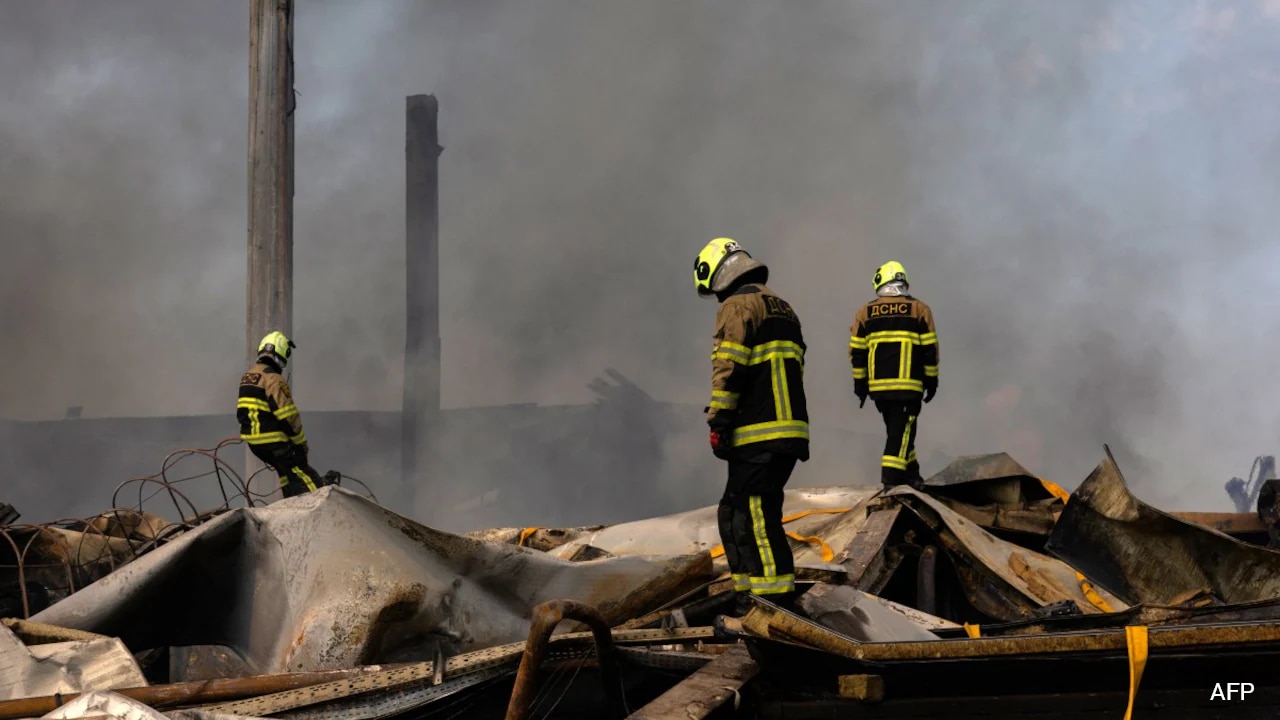
Meanwhile, inside Ukraine, emergency response teams face unprecedented hazards. First responders arriving at the scene of an initial drone strike are routinely targeted by secondary attacks minutes later, a deliberate tactic designed to eliminate rescue capacity and terrorize local communities.
The skies above Europe's eastern frontier remain open laboratories for the future of combat. As artificial intelligence algorithms take over target acquisition and swarm coordination, human oversight is rapidly shrinking. The current trajectory points toward an automated battlefield where the safety of non-combatants is treated not as a priority, but as a persistent, acceptable friction of algorithmic war.