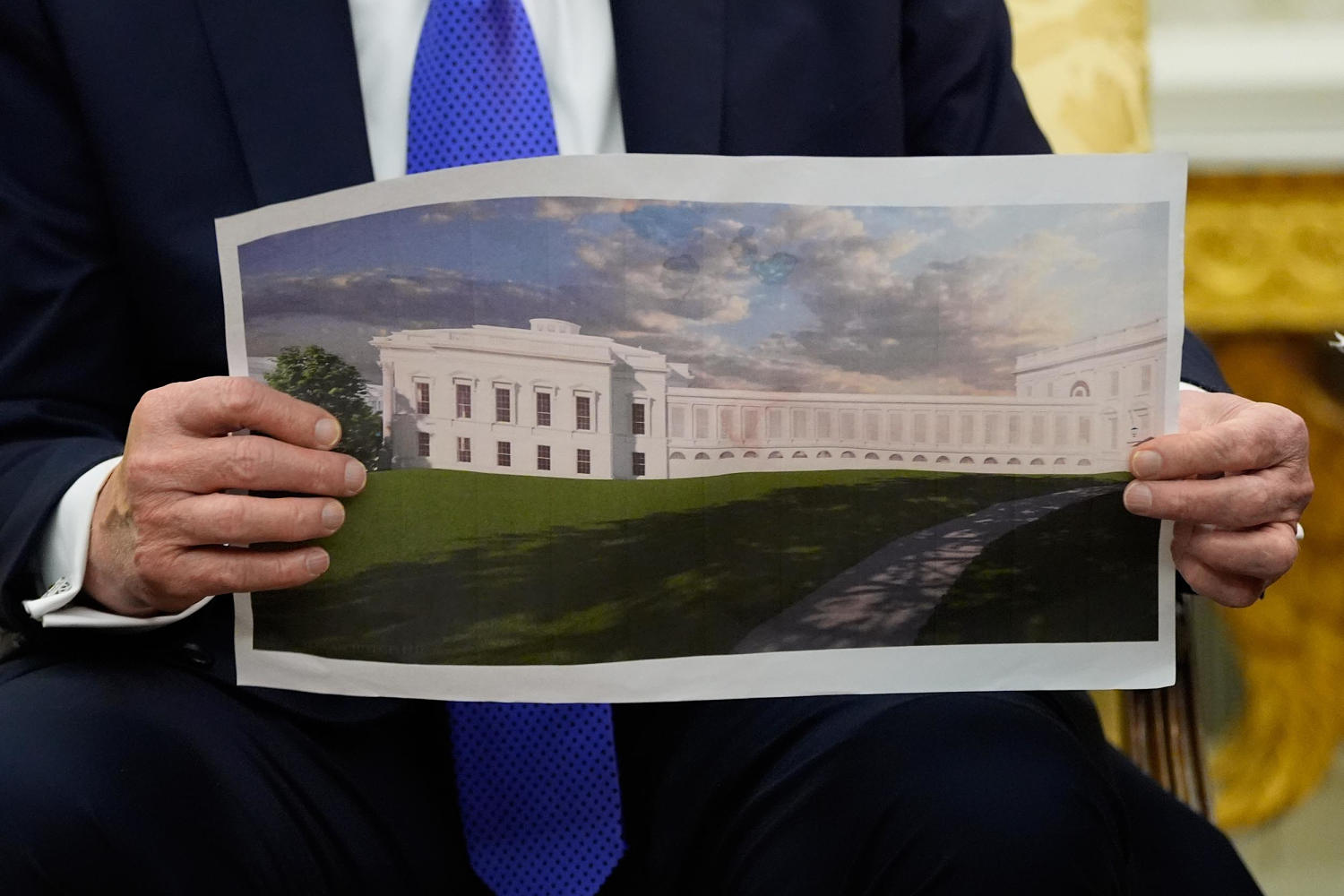
The Senate parliamentarian just gutted a hidden centerpiece of the Republican immigration reconciliation package, stripping a $1 billion White House security and ballroom expansion fund from the filibuster-proof bill. Senate Parliamentarian Elizabeth MacDonough ruled the provision violates the strict procedural guardrails of the Byrd Rule. While Capitol Hill framework mechanics view this as a standard procedural hurdle, the setback exposes a deeper systemic vulnerability in how the executive branch attempts to finance legacy-defining infrastructure through unrelated legislative vehicles. The defeat demonstrates that even with a unified party control of Congress, the institutional mechanics of the Senate can still halt the most aggressively pushed executive priorities.
The funding structure was quietly tucked into a $72 billion package designed to fund Immigration and Customs Enforcement (ICE) and Customs and Border Protection (CBP). The specific line item directed $1 billion to the U.S. Secret Service for campus enhancements, including security infrastructure for a massive 90,000-square-foot White House ballroom project. Administration officials repeatedly insisted that the ballroom's physical construction would be covered entirely by private donations. However, the operational reality of securing a massive new structure inside the historic executive campus requires an entirely different order of public capital. The Secret Service requested the money following a high-profile security incident at the White House Correspondents' Association dinner, framing the expansion as an urgent protective necessity.
The Jurisdiction Trap
The legislative strategy fell apart due to a fundamental misunderstanding of Senate committee boundaries. The underlying spending bill was authored by the Senate Judiciary Committee, which holds jurisdiction over immigration enforcement, border security, and basic judicial functions.
By inserting a massive, multi-agency infrastructure security project into an immigration enforcement vehicle, Senate leadership triggered an automatic procedural red flag. The parliamentarian noted that a project of this scale cross-cuts the jurisdictions of multiple Senate committees, including Homeland Security and Environment and Public Works. Under the rules of budget reconciliation, a committee cannot write legislation that funds activities outside its explicit purview.
Understanding the Byrd Rule Hurdle
To pass a bill with a simple 51-vote majority and bypass the 60-vote filibuster threshold, every single provision must comply with the Byrd Rule. This rule prohibits "extraneous matter" that does not have a primary, direct impact on the federal budget. The parliamentarian applies a series of tests to determine compliance:
- The Policy Test: Is the provision driven by a policy change rather than a budgetary necessity?
- The Jurisdiction Test: Did the writing committee exceed its structural boundaries?
- The Deficit Test: Does the provision increase the deficit outside the designated budget window?
The $1 billion security fund failed the jurisdiction test outright. Because the money was funneled through a committee that does not oversee federal buildings or comprehensive public works, the parliamentarian advised that the provision would require 60 votes to survive a floor challenge.
The Private Money Illusion
The administration’s defense has consistently relied on the claim that private donors are picking up the tab for the $400 million ballroom construction. This argument ignores the long-term fiscal footprint of executive branch real estate.
A modern secure structure built within the White House perimeter cannot be treated like a private commercial real estate venture. The moment ground is broken, the public becomes financially responsible for the operational perimeter.
The proposed 90,000-square-foot facility would significantly expand the secure footprint of the East Wing. Securing a structure of that size requires specialized blast-resistant materials, underground access tunnels, secure communication arrays, and a permanent increase in active-duty Secret Service personnel. These costs are institutional, recurring, and entirely public.
| Project Element | Funding Source | Estimated Cost | Status Under Ruling |
|---|---|---|---|
| Ballroom Structural Shell | Private Donations | $400 Million | Unaffected |
| Secret Service Perimeter Upgrades | Federal Budget | $1 Billion | Rejected/Out of Order |
| ICE & CBP Operations | Federal Budget | $71 Billion | Approved |
By attempting to split the physical construction from the defensive infrastructure, the administration tried to maintain the optics of a self-funded project while asking taxpayers to subsidize the true operational reality. The parliamentarian's ruling effectively forced these hidden costs into the daylight.
The Strategic Miscalculation
Senate leadership’s decision to tie the White House security money to the immigration bill reveals a flawed legislative calculus. The immigration package is a high-priority, $72 billion partisan measure intended to fund enforcement through 2029. Leadership assumed that the political urgency of the border security funding would shield the controversial ballroom security rider from intense scrutiny.
The opposite happened. The inclusion of the ballroom provision handed Senate Democrats a potent political target. It allowed critics to frame a complex immigration bill as a delivery mechanism for an executive luxury project.
The immediate defense from leadership staff is that this is a temporary setback. Spikes in procedural friction are common during reconciliation fights. The prevailing mantra from the majority leader’s office is simple: redraft, refine, and resubmit.
Fixing the bill is not a simple matter of shifting words around. To comply with the ruling, Republicans must either strip the $1 billion allocation entirely or route it through the proper committee channels. Routing it correctly would require opening up a separate reconciliation instruction, a move that could disrupt the delicate political consensus holding the broader budget package together.
The Institutional Firewall
The larger takeaway from this legislative defeat is the enduring power of the Senate’s non-partisan procedural infrastructure. The parliamentarian acts as an institutional referee, protecting the legislative process from executive overreach and short-term political maneuvering.
When an administration treats budget reconciliation as an all-purpose vehicle for controversial pet projects, it inevitably runs into these procedural guardrails. The system is intentionally designed to resist sudden, massive shifts in policy and spending that attempt to circumvent regular order.
The immigration enforcement elements of the bill remain largely intact, meaning the core policy goals of the package will likely advance. The defeat of the ballroom fund shows that the Senate still possesses the tools to check executive ambition when it steps outside constitutional boundaries. The administration can continue to seek private capital for its architectural legacy, but the infrastructure required to protect it cannot be slipped through the legislative back door.


_Biopsy.png?branch=uat_release_3)
