Five suspects stand charged with first-degree murder and related offenses following a methodical, months-long police investigation into a double homicide on the grounds of a Brampton elementary school. Peel Regional Police announced that three adults and two youths face a combined sixteen charges after a late-night shooting on April 3 left an adult man and a male teenager dead. The arrests pull back the curtain on a violent corridor stretching from Toronto through Peel Region and up to Orangeville, highlighting how modern street crime relies on cross-municipal logistics, hidden weapons pipelines, and youth foot soldiers.
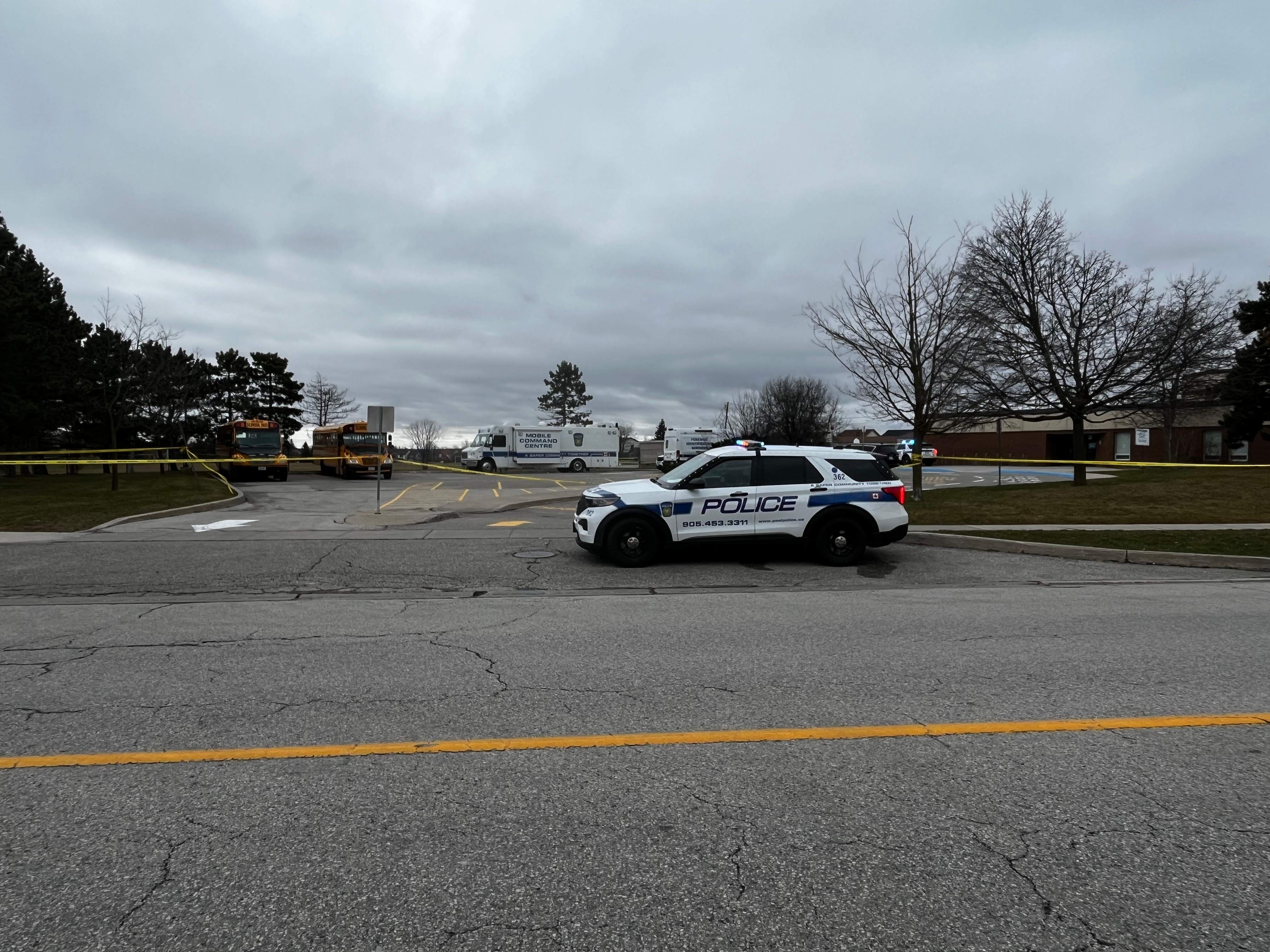
The bloodshed unfolded shortly after 10:20 p.m. on the property of St. Joachim Elementary School near Rutherford Road and Kennedy Road. For residents living near Weybridge Trail, the sound of gunfire shattered a quiet spring Friday. Responding officers found an adult man in his twenties suffering from multiple gunshot wounds directly on the school grounds. A short distance away, near Weybridge Trail, they located a male youth who had also been shot. Both victims succumbed to their injuries at the scene despite frantic lifesaving measures from paramedics and first responders. Don't forget to check out our recent article on this related article.
Investigative momentum stalled in the immediate aftermath, as standard street-level intelligence offered few definitive answers. Yet behind closed doors, Peel Regional Police Homicide Bureau investigators pieced together a mosaic of surveillance footage, forensic ballistics, and digital footprints that ultimately spanned multiple municipalities.
The Mechanics of a Multi-Jurisdictional Arrest Grid
Major crime operations rarely unfold within clean municipal borders. Modern illicit networks operate fluidly across the Greater Toronto Area, treating regional boundary lines as administrative noise. If you want more about the context of this, Associated Press offers an excellent breakdown.
The suspects netted by police reflect this geographic sprawl. Jahnoi Bell, 21, and two 17-year-olds are local residents of Brampton. Yet the broader web ensnared 25-year-old Mcaium Aarons of Toronto, who faces charges of conspiracy to commit an indictable offense and breaching a probation order. Meanwhile, 23-year-old Jayden Christmah of Orangeville was nabbed and charged with possessing a firearm for the purpose of trafficking.
This geographic dispersal illustrates a grim logistical reality. Urban centers often supply the logistical backing and conspiracy infrastructure, peripheral municipalities house distribution nodes or safe havens, and local actors execute the operational violence. When a shooting occurs on school property, it points away from impulsive passion and toward the calculated deployment of individuals across municipal lines to obscure accountability.
Police recovered five firearms throughout the course of the investigation. Three were discovered at the homicide scene itself, one was located a short distance away, and a fifth was seized following a targeted search warrant executed at a residence in Brampton. Recovering multiple weapons at or near a single crime scene suggests multiple shooters or an active exchange of gunfire, moving the incident far beyond a simple targeted execution into the territory of a tactical confrontation.
The Invisible Pipeline of Youth and Firearms
The involvement of minors in high-stakes homicide cases continues to plague the justice system. Two of the five individuals charged in the Brampton double homicide are 17 years old. Under the provisions of the Youth Criminal Justice Act, their names are legally protected from publication.
This legal veil frequently functions as an operational asset for older criminal masterminds. Experienced organizers routinely delegate high-risk tasks—such as carrying restricted firearms, securing stash houses, or pulling the trigger—to teenagers who face lighter sentences if caught and who carry less institutional suspicion from law enforcement. One of the unnamed 17-year-olds faces not only two counts of first-degree murder but a staggering stack of secondary firearm violations, including unauthorized possession of a firearm, possession of a loaded restricted firearm, possession of a prohibited device, and possession of a weapon with an altered serial number.
An altered serial number is a hallmark of the black-market arms trade. It transforms a traceable commodity into an anonymous instrument of death, smuggled across provincial or international borders through well-worn corridors. The presence of trafficking charges tied to Orangeville and conspiracy charges tied to Toronto confirms that the guns used on that schoolyard did not materialize out of thin air. They moved through an active, profit-driven pipeline.
The Cost of Community Trauma
School grounds are civic sanctuaries designed for children, education, and community growth. When violent flashpoints invade these spaces, the psychological damage ripples far beyond the immediate families of the victims.
Peel Regional Police Chief Nishan Duraiappah acknowledged the grinding nature of the case, noting that the investigation required relentless police work to untangle the web of evidence. Yet arrests do not instantly restore community safety. They represent merely the opening salvo in a grueling judicial marathon.
None of the allegations against Bell, Aarons, Christmah, or the two youths have been tested in a court of law. Every accused person remains constitutionally presumed innocent until proven guilty beyond a reasonable doubt. As these files wind their way through the Ontario Court of Justice, defense attorneys will meticulously dissect the Crown's ballistic evidence, challenge the execution of search warrants, and scrutinize the reliability of confidential informants and digital surveillance trails.
The legal machinery moves deliberately, often frustrating families demanding immediate closure. But the deeper institutional failure exposed by the Brampton schoolyard shooting remains clear. As long as illegal firearms flow freely through regional transit corridors and vulnerable youth remain eager recruits for underground syndicates, the machinery of street violence will continue to claim lives in the shadows of public playgrounds

-copy.jpeg?width=1200&auto=webp&trim=78%2C0%2C79%2C0)