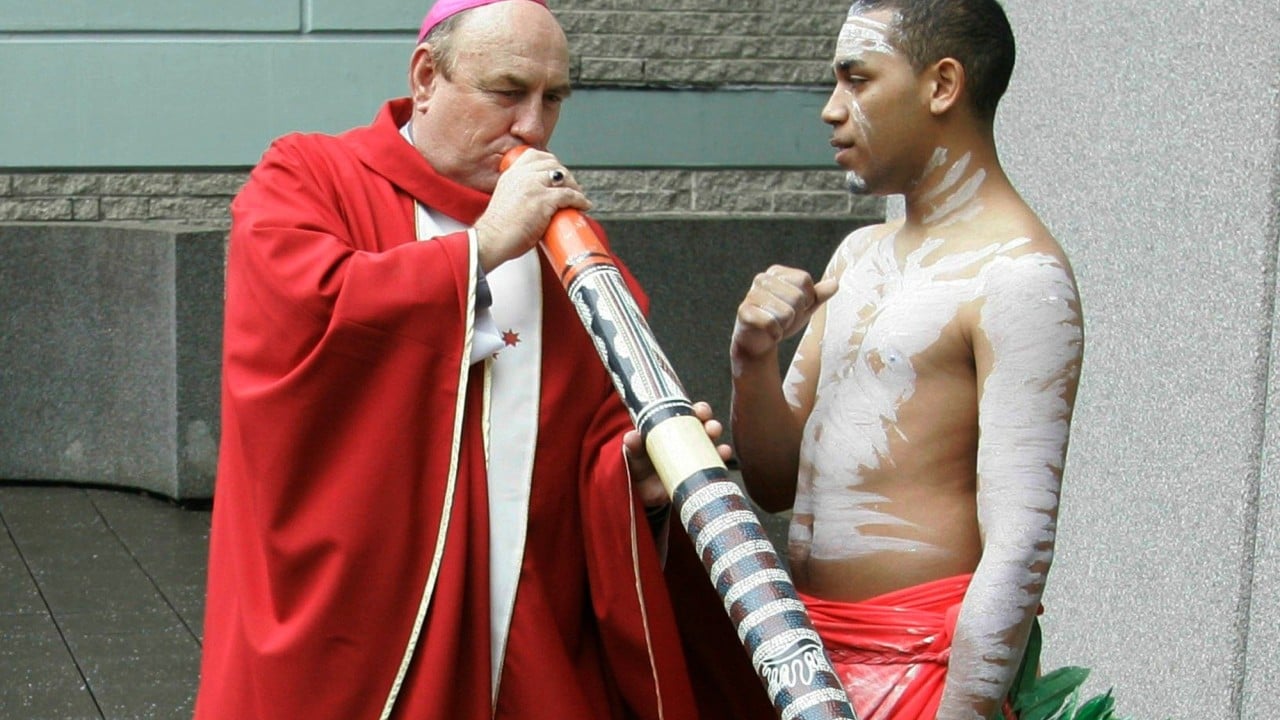
A West Australian District Court jury convicted former Bishop of Broome Christopher Saunders of thirteen sexual offenses against two young Aboriginal men, exposing a machinery of clerical exploitation operating in remote northern parishes. For decades, the sprawling Kimberley diocese functioned as an isolated fiefdom where spiritual authority overlapped with absolute social control. Saunders, seventy-six, sat at the apex of that local hierarchy. When a West Australian jury handed down guilty verdicts for sexual penetration without consent and multiple counts of unlawful and indecent assault, it punctured the illusion that institutional geographic isolation can permanently shield predatory behavior from secular criminal law.
The trial details revealed a calculated pattern of grooming that relied heavily on systemic power imbalances. Prosecutors established that Saunders leveraged church-owned properties, institutional funds, and alcohol-fueled gatherings to target vulnerable Indigenous youths. By supplying alcohol and cigarettes to minors and young adults, the former bishop manufactured dependency. Witnesses described social events where young men were encouraged to strip off their shirts, fostering an environment explicitly designed to lower boundaries.
This dynamic highlights an uncomfortable reality about high-profile clerical misconduct cases. Perpetrators rarely operate in random flashes of opportunity. They construct micro-environments where their status as spiritual leaders grants them immunity from standard social friction. In remote regions like the Kimberley, where employment prospects are scarce and institutional infrastructure is often synonymous with the church itself, that power asymmetry multiplies exponentially. A young man facing a local bishop is not simply dealing with an individual; he is confronting an entire institutional apparatus that commands profound social deference.
The legal journey to this verdict was protracted and fraught with procedural hurdles. Saunders stepped aside in 2020 only after years of mounting public scrutiny and local rumors forced the hierarchy's hand, leading Pope Francis to accept his resignation a year later. Yet, structural reform within global religious bodies routinely lags behind criminal revelations. Critics point out that internal ecclesiastical investigations frequently stall because they prioritize institutional protection over transparency. When local dioceses police themselves, victims face extraordinary burdens of proof, often battling entrenched community skepticism and the sheer weight of clerical prestige.
This verdict places Australia's broader ecclesiastical accountability framework back under harsh microscopic examination. Years after the landmark findings of the Royal Commission into Institutional Responses to Child Sexual Abuse, high-level structural vulnerabilities persist. While organizations like the Catholic Church have implemented professional standards offices and mandatory reporting protocols, the implementation gap between paper policies and cultural reality remains wide. Bureaucratic hurdles and defensive legal strategies deployed during civil and criminal proceedings often compound the initial trauma experienced by complainants.
Observers tracking institutional accountability note that criminal convictions, while vital, represent only the final step of a long institutional failure. The systemic enablers—unchecked administrative autonomy, inadequate independent oversight boards, and cultures of clericalism that elevate priests above critique—allow predatory behavior to persist for years unchecked. Until governance structures are fundamentally rewired to strip bishops of unchecked local autonomy, remote dioceses will remain fertile ground for abuse of authority.
The fallout from the Broome trial extends far beyond Western Australia. It forces a reckoning among parishes globally about how seminary training, pastoral assignments, and financial controls intersect. When a bishop controls local real estate, discretionary funds, and community welfare programs without meaningful external checks, accountability evaporates. The legal system has rendered its verdict on Christopher Saunders, but the structural conditions that permitted his actions to go unhindered for over a decade demand a far deeper institutional overhaul
George Pell guilty of sexually abusing choirboys | ABC News
This video provides historical context on previous high-profile Australian clerical abuse convictions and the institutional reactions that followed.
http://googleusercontent.com/youtube_content/1