For more than thirty years, passengers traveling by rail between London and continental Europe have had exactly one choice. Eurostar launched its cross-channel service in 1994, operating in a protected operational enclosure that effectively rendered the Channel Tunnel a single-airline route on steel tracks. High ticket prices, restrictive booking windows, and an absence of competitive pressure became the default reality for millions of annual travelers moving between St Pancras International and destinations like Paris, Brussels, and Amsterdam. Now, the regulatory landscape is shifting beneath the feet of the incumbent operator. The Office of Rail and Road has formally granted Virgin Trains track access approval for up to twenty daily return services through the Channel Tunnel, targeting an operational launch in October 2030.
This regulatory milestone follows months of positioning, including the crucial acquisition of access rights to the Temple Mills Depot in east London. Yet behind the celebratory corporate press releases lies a grinding logistical gauntlet. Breaking a three-decade infrastructure monopoly requires navigating immense structural hurdles, complex international safety regimes, and severe capacity bottlenecks that have historically crushed rival ambitions before a single wheel turned on the rails.
The Anatomy of the Cross-Channel Barrier to Entry
Why has the Channel Tunnel remained a monopoly for three decades when regional air routes experience fierce, multi-airline competition? The answer lies in a toxic combination of high fixed capital costs, stringent regulatory friction, and specialized technical requirements. Operating a passenger train through a fifty-kilometer undersea link is not like running a regional service between Manchester and London. Every piece of rolling stock must comply with rigorous cross-border safety standards set by multiple sovereign nations and international rail bodies.
Trains must feature specialized fire suppression systems, emergency evacuation protocols tailored to subterranean environments, and multi-system signaling equipment capable of transitioning seamlessly from British rail networks to French, Belgian, and Dutch infrastructure. Historically, these requirements forced prospective entrants to commission bespoke train fleets with multi-million-pound price tags. Eurostar held the ultimate advantage through its legacy positioning and exclusive command over the few maintenance facilities capable of servicing high-speed international sets.
When Virgin secured access to Temple Mills Depot, it cleared a vital hurdle that blocked previous challengers. Without a secure place to stable, clean, and repair high-speed trainsets in east London, any operational plan remains an exercise in fantasy. Still, owning a path through the regulatory door does not mean the hallway is clear of obstacles.
Rolling Stock Realities and the 2030 Timeline
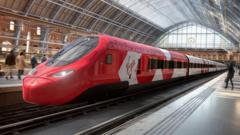
A target launch date of October 2030 sounds distant, but in the slow-moving world of heavy rail procurement, it is an aggressive sprint. Virgin is currently finalizing agreements to acquire a dozen Avelia Stream high-speed trainsets from French manufacturer Alstom. Purchasing modern rolling stock is only the first step. Manufacturing, factory testing, dynamic track testing on High Speed 1, and subsequent homologation across continental rail networks consume years of meticulous engineering work.
Consider the regulatory labyrinth governing international rail operations. Virgin must obtain safety authorizations not only from the British rail watchdog but also from the European Union Agency for Railways and national safety authorities in France, Belgium, and the Netherlands. Each jurisdiction approaches safety management systems with its own distinct bureaucratic interpretations. A delay in obtaining certification in one country cascades across the entire deployment schedule, pushing back revenue-generating service dates and inflating pre-operational expenditure.
Furthermore, station capacity at international terminals remains a acute pressure point. St Pancras International, Gare du Nord, and Amsterdam Centraal feature dedicated international boarding zones equipped with juxtaposed border controls. Passengers clear British and Schengen exit and entry checks before boarding the train. These physical boarding lounges possess finite capacity limits. Squeezing twenty daily Virgin return trips into terminals already straining under Eurostar’s peak traffic requires infrastructural expansion, clever scheduling algorithms, and cooperation from border forces that are already stretched thin.
The Economics of Open Access on High Speed 1
The commercial model underpinning Virgin's venture relies on open-access principles rather than traditional franchised subsidies. Open-access operators take commercial risk entirely upon themselves. They do not receive government bailouts or passenger revenue guarantees. Instead, they must carve out enough market share from the incumbent to cover steep track access charges levied by infrastructure managers like High Speed 1 and Getlink, the operator of the Channel Tunnel.
Track access charges across the Channel link have historically been criticized as excessively high, serving as a silent deterrent to market entrants. While Getlink has introduced capacity incentive schemes to stimulate traffic, the baseline cost of running a heavy rail service through the tunnel remains daunting. To make the economics work, Virgin will need to stimulate primary demand while aggressively poaching business and leisure travelers from both Eurostar and regional airlines.
Market dynamics suggest the demand is waiting. Eurostar reported record passenger numbers recently, proving that post-pandemic appetite for international rail travel is robust. Yet high ticket prices during peak holiday periods and business travel hours leave wide margins for a competitor offering value or a differentiated onboard experience. If Virgin can deploy competitive pricing structures alongside its traditional brand marketing, the overall cross-market volume could expand significantly, turning a zero-sum game into a larger overall pie.
Broader European Shifts and Competitive Pressures
Virgin is not the sole entity eyeing the lucrative cross-Channel corridor. Italy’s state-backed operator, Trenitalia, has also laid groundwork for potential rival services before the end of the decade. Spain’s Renfe has long expressed ambitions to run cross-border European routes, and other open-access challengers are monitoring regulatory precedents closely. The European Union’s broader policy push toward open rail markets is finally piercing the English Channel, an engineering marvel that lagged behind continental Europe in adopting open competition.
The next four years will test whether regulatory good intentions can translate into physical reality. Securing track access and depot space transforms a press release into a legal right, but laying steel and securing safety sign-offs require deep pockets and unyielding operational focus. The 30-year reign of the cross-channel monopoly faces a credible challenger, but the journey to St Pancras platforms in 2030 runs through an unforgiving landscape of engineering and regulatory crosswinds.