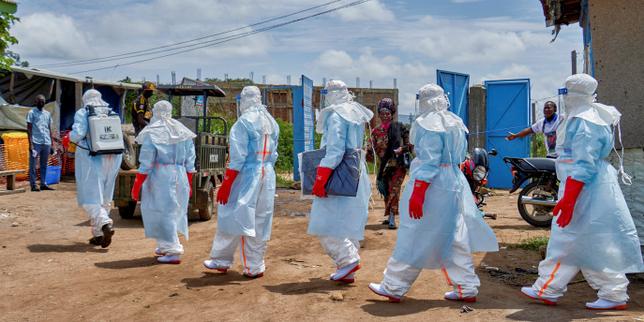
More than 300 people died of Ebola in eastern Democratic Republic of the Congo over a single recent week, setting a grim milestone in an outbreak that has already eclipsed historical records for sheer velocity. Total cases have surpassed 5,500, with fatalities climbing past 2,600. Yet focusing purely on the rising body count misses the structural mechanics driving this catastrophe.
International reporting treats each weekly mortality spike as a sudden meteorological event. It is not. The current outbreak, driven by the rare Bundibugyo virus strain, is moving faster than the historic West African epidemic of 2014 through 2016. Behind these figures lies a toxic compounding of institutional paralysis, localized economic collapse, and a total disconnect between centralized crisis response and the communities trapped in the epicenter.
The Invisible Months Before the Alarm
Official timelines claim the outbreak began when authorities formally declared it on May 15. Epidemiologists on the ground know better. Retrospective tracing points to active transmission in remote mining enclaves like Mongbwalu as early as February.
For nearly three months, the virus circulated quietly. Why? Because local health infrastructure was practically non-existent. When miners fell ill, their symptoms were misattributed to endemic malaria or routine tropical fevers. By the time diagnostic samples cleared bureaucratic bottlenecks and confirmed the Bundibugyo strain, the virus had built an insurmountable head start.
Viral containment relies on friction. Every day an outbreak goes unrecognized is a week gained for the pathogen. In eastern Congo, rugged geography combined with bureaucratic inertia to remove all friction from the virus's path.
The Anatomy of Frontline Abandonment
Medical teams do not operate in a vacuum. To stop a hemorrhagic fever, responders need secure corridors, reliable supply chains, and the active cooperation of local populations. Instead, health workers in Ituri and North Kivu provinces have faced continuous operational sabotage.
Consider the compounding indignity of unpaid wages. While international donors pledge tens of millions of dollars in emergency funds, local nurses and contact tracers have staged work stoppages because their salaries failed to materialize. Asking an underpaid medic to walk into a hostile zone without gear or compensation is an invitation to failure.
Militia activity further chokes the response. The ongoing conflict involving armed groups fragments the operational theater. Treatment centers have been forced to close or relocate after coming under direct threat. When roads are controlled by hostile factions and bridges are washed out, epidemiological surveillance breaks down completely. Most new cases are still emerging from outside monitored contact lists, proving that health authorities are chasing ghosts rather than breaking chains of transmission.
The Vaccine Paradox and the Burden of Proof
Much of the international discourse has centered on the arrival of vaccine shipments. Yet this relief comes with a heavy caveat.
The doses deployed are the Ervebo vaccine, which proved effective against the Zaire strain during previous epidemics. However, the current outbreak is caused by the Bundibugyo strain, for which there is no fully licensed vaccine or proven antiviral treatment. While laboratory data suggests cross-protection is possible, health officials are essentially running clinical trials in real time while bodies pile up in villages.
Communities exhausted by decades of chronic violence view experimental interventions with deep suspicion. Rumors that the disease is a fabrication or a malicious political tool gain traction easily when outsiders arrive in protective gear accompanied by armed escorts. Trust cannot be airdropped by helicopter. When engagement strategies rely on top-down lectures rather than deep community integration, resistance multiplies.
The death toll will continue to climb until the response mechanism shifts away from emergency panic and confronts these foundational failures. Until medical workers are reliably paid, armed interference is neutralized, and local populations are treated as genuine partners rather than passive targets for containment, every new shipment of vaccines will arrive too late.