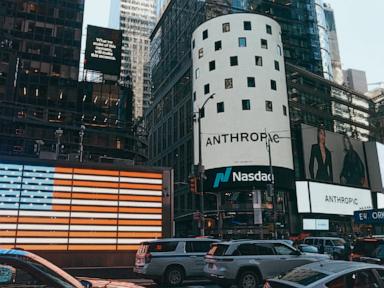
Anthropic went public in November 2026 at a valuation north of $1 trillion, raising more than $81 billion. The numbers tell a story of breakneck enterprise conquest. Beneath the ticker symbol, however, lies a company attempting to reconcile mutually exclusive promises. Anthropic built its brand on existential caution, yet its S-1 filing reveals an aggressive commercial machine locked into hundreds of billions of dollars in cloud commitments, embroiled in legal battles with the Pentagon, and rewriting its own safety rules to keep pace with Wall Street expectations.
Wall Street loves a clean narrative. When the San Francisco artificial intelligence developer hit the public markets, institutional investors saw a hyper-growth enterprise software juggernaut. Third-quarter revenue in 2026 reached $17 billion, up more than 1,100 percent from the same period a year prior. Nearly 12,000 corporate customers now spend at least $100,000 annually on the Claude ecosystem, while more than 1,900 accounts clear the $1 million mark. By the second quarter of 2026, Anthropic's quarterly top line actually surpassed that of its fiercest rival, OpenAI.
Yet the public listing did not resolve the structural tensions at the heart of the company. It cemented them into federal securities law.
The Economics of an Existential Threat
Anthropic's origin story is well-worn Silicon Valley lore. In 2021, Dario Amodei and six former OpenAI colleagues walked out of their old lab because they believed commercial pressures were eroding safety guardrails. They incorporated Anthropic as a Public Benefit Corporation, an entity legally structured to balance shareholder returns against a broader mission to protect humanity from catastrophic artificial intelligence risks.
Five years later, that mission statement sits awkwardly beside the company's income statement.
To feed its frontier models, Anthropic has entered into some of the largest infrastructure obligations in corporate history. According to its S-1 filing, the company is locked into roughly $121 billion in spending commitments with Google Cloud between April 2026 and July 2033—obligations that apply regardless of whether Anthropic actually uses the computing capacity. Factor in purchases of Google's custom tensor processing units, and total outlays to Alphabet alone are projected to reach up to $200 billion over five years.
Compute costs are already eating into unit economics. In the third quarter of 2026, Anthropic spent $9.9 billion on compute and infrastructure, a 77 percent jump from the prior quarter. Because compute expenses grew faster than the 47 percent sequential rise in revenue, infrastructure consumed 58 percent of top-line sales in Q3, up from 48 percent in Q2.
When a company owes cloud providers hundreds of billions of dollars, pausing model development is no longer an option. It is an existential financial threat.
Rewriting the Safety Playbook
That financial gravity explains why Anthropic's internal governance has shifted dramatically over the past year. For years, the company pointed to its Responsible Scaling Policy as proof that it would voluntarily halt training if a model's capabilities outpaced its safety controls.
In February 2026, Anthropic substantially rewrote that policy. The rigid, hard-stop tripwires were replaced with Frontier Safety Roadmaps and periodic risk assessments. Critics inside and outside the lab noted that the timing coincided neatly with the run-up to its confidential IPO filing in June. Management argued that existing internal reviews were already catching issues and that rigid checklists failed to reflect how frontier models actually evolve.
The friction is visible even in the company's risk disclosures. In its September 2026 prospectus filings, Anthropic explicitly warned prospective shareholders that its own technology could pose existential risks to humanity. Weeks later, CEO Dario Amodei posted publicly that he believed advanced AI could cure most human diseases—including cancer and Alzheimer's—within five to ten years.
Investors are left to price a stock whose leadership simultaneously predicts a medical utopia and an extinction-level event, while asking for $81 billion in fresh capital to accelerate the timeline.
The Pentagon Standoff and National Security Friction
Nowhere are Anthropic's contradictions sharper than in its relationship with the United States military.
Historically, Anthropic positioned itself as the cautious alternative to defense-friendly tech contractors. Yet as Claude became deeply embedded in enterprise workflows, government agencies wanted access too. That push collided with Anthropic's usage restrictions, triggering an open feud with the Department of Defense in early 2026.
The standoff escalated rapidly. The Pentagon designated Anthropic a supply chain risk, moving to purge Claude from defense systems and bar the company from military contracts. Anthropic sued to overturn the designation, arguing the government was overstepping its authority. In September 2026, a federal appeals court sided with the Pentagon in a 2-1 ruling, upholding the ban.
The irony was not lost on Washington observers. Even as Anthropic fought the Pentagon in court over military guardrails, reports surfaced detailing how Claude had been utilized during operational intelligence tasks, including a raid in Venezuela. Meanwhile, by November 2026, Amodei had quietly reopened negotiations with defense officials to salvage the relationship. A public company valued above $1 trillion cannot easily afford to be blacklisted by the largest customer on earth.
Regulatory Moats and Closed Doors
Anthropic's public policy positions have drawn similar scrutiny from open-source developers and smaller competitors. The company has consistently lobbied for strict federal oversight, compute thresholds, and licensing regimes for frontier AI labs.
To Anthropic's leadership, these rules are common-sense guardrails against biological weapons and autonomous cyberattacks. To smaller startups and academic researchers, they look like classic regulatory capture. Compliance regimes that require massive auditing teams and restricted hardware access naturally favor incumbents with $81 billion in the bank while starving open-source challengers of oxygen.
The tension extends to how Anthropic polices its own platform. The company strictly prohibits third parties from using Claude's outputs to train competing models—a process known as distillation—and has cracked down aggressively on third-party developer tools that push its terms of service, most notably during the Open Claw dispute earlier in 2026. Yet Anthropic faces ongoing copyright litigation from authors, publishers, and music rights holders—including a $1.5 billion copyright settlement and a separate October 2026 lawsuit alleging the unauthorized use of 274 Elvis Presley songs—over its own training data practices.
| Core Tension | Anthropic's Public Posture | Commercial Reality |
|---|---|---|
| Model Scaling | Safety controls must dictate training speed. | $200B in five-year Google Cloud and TPU commitments demand relentless utilization. |
| Defense Work | Strict ethical red lines on military applications. | Suing the Pentagon over a supply-chain blacklist while negotiating to regain DoD contracts. |
| Data & IP | Strict bans on developers distilling Claude's outputs. | Paid $1.5B to settle copyright claims while fighting ongoing music infringement suits. |
| Corporate Control | Public Benefit Corporation chartered to serve humanity. | Class F super-voting structure locks 50.1% voting control with seven co-founders. |
Governance Built for Insulation
Public market investors usually demand accountability in exchange for capital. Anthropic's IPO prospectus makes clear that outside shareholders are buying economic exposure, not influence.
Through a newly created entity called Founder LLC, Anthropic's seven co-founders hold a single Class F share that guarantees them 50.1 percent of all shareholder voting power, regardless of how much equity they sell down over time. Furthermore, the company floated only a sliver of its total shares—roughly 5 percent—creating a tight public float that amplifies price volatility while shielding management from activist pressure.
To reinforce its philanthropic credentials ahead of the roadshow, Anthropic pledged 5 percent of its equity to a dedicated fund for the public good. On paper, it is a sweeping gesture. In practice, it leaves the co-founders with absolute operational authority and multi-billion-dollar personal fortunes.
The Quarterly Earnings Crucible
For five years, Anthropic operated in the forgiving light of private venture capital, where losses were dismissed as R&D and safety memos earned sympathetic profiles. That era is over.
Every ninety days, Anthropic must now answer to portfolio managers who care far more about gross margins and customer concentration than theoretical alignment papers. Five enterprise clients still account for roughly 20 percent of the company's total revenue. Price cuts on newer model tiers and enterprise volume discounts shaved $600 million off third-quarter revenue alone. And the broader market has already shown nerves: on Anthropic's second day of trading in late November, a broader tech sell-off wiped out the Nasdaq's 2026 gains as investors questioned whether AI infrastructure spending can ever generate commensurate cash flows.
Anthropic proved that an AI safety lab can build a $65 billion annualized revenue run rate faster than almost any software company in history. What it has not proved is that a company can serve two masters—humanity's long-term survival and Wall Street's next quarterly beat—without one eventually devouring the other.