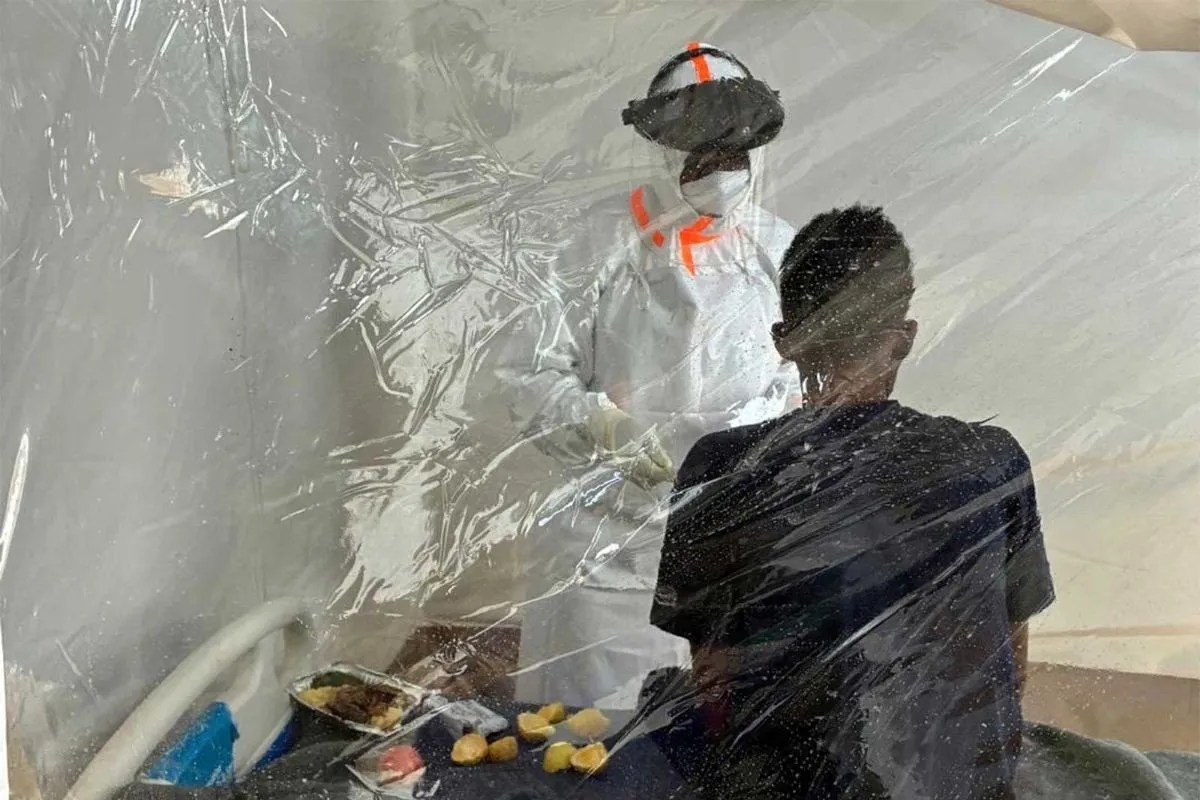
The death toll has surged past 3,000, but focusing solely on the arithmetic of the latest Ebola epidemic in the Democratic Republic of Congo misses the structural machinery driving the catastrophe. When the Ministry of Public Health confirmed the initial cases in the remote zones of Ituri Province, international response mechanisms activated the usual playbooks. Those playbooks failed. Driven by a distinct viral strain and colliding with endemic regional conflict, this epidemiological emergency has expanded across an area the size of France, exposing the profound fragilities of global health intervention models.
The Strain Variable
For decades, international biomedical responses to the virus operated under a singular assumption: the dominance of the Zaire ebolavirus species. Vaccines and therapeutics deployed during prior outbreaks were engineered specifically for that variant. However, laboratory sequencing of samples from the current outbreak revealed an entirely different biological actor at play. The Bundibugyo ebolavirus has taken hold, rendering standard preventative stockpiles and existing therapeutic interventions markedly less effective.
This mismatch created a dangerous window of vulnerability. While researchers scrambled to adapt clinical protocols, the virus moved through mining communities and displacement camps with unchecked velocity. Virologists understand that RNA viruses mutate under selective pressures, but the geographic localization of the Bundibugyo variant meant that front-line clinicians were effectively flying blind during the crucial opening weeks. The clinical presentation remained brutal, featuring rapid systemic deterioration, high fever, and multi-organ failure, yet the tools designed to intercept these symptoms stuttered against an unexpected genetic profile.
The Geography of Conflict
Biology alone does not dictate the trajectory of an epidemic. The human terrain of eastern Congo provides an environment where containment becomes an extraordinary logistical puzzle. Decades of institutional neglect, coupled with active armed insurgency by multiple local and regional militias, have shredded the physical infrastructure of the region.
Consider a hypothetical intervention scenario to understand the operational friction. In a stable nation-state, contact tracing involves digital databases, reliable vehicle fleets, and secure communication networks. In the conflict-affected health zones of North Kivu and Ituri, health workers navigate active combat zones on foot or motorcycle, carrying paper logs that are frequently abandoned during sudden security escalations. Ambulances are targeted or commandeered. Treatment centers face armed incursions not out of ideological opposition to medicine, but because distrust of centralized authority runs deep among populations that have survived decades of predatory governance and resource exploitation.
The Architecture of Distrust
Blaming local communities for resisting medical interventions is a convenient deflection mechanism for international agencies unable to read the room. When health workers arrive in protective gear resembling hazardous materials units, escorted by armed guards or foreign peacekeepers, they do not look like saviors to villagers. They look like an occupying force.
Decades of broken promises from state institutions and international NGOs have fostered a rational skepticism. If a community has watched clean water infrastructure fail, schools collapse, and promises of economic development evaporate, why should they trust external actors who suddenly appear with millions of dollars when a pathogen threatens global security, while ignoring endemic malaria or malnutrition that kills children daily?
Epidemiologists on the ground have increasingly recognized that community-led response units—local nurses, traditional leaders, and survivors who speak the local dialects—achieve vastly superior contact tracing results compared to top-down command structures. Yet, funding streams and bureaucratic inertia consistently favor centralized international logistics over grassroots empowerment until it is too late.
Operational Realities on the Ground
The transmission dynamics are further accelerated by high population mobility. Mining operations draw transient labor from across national borders, turning local markets into high-frequency nodes for viral dissemination. A single infected individual can travel across provincial boundaries before symptoms fully manifest, initiating a secondary cluster fifty miles away.
Uganda's rapid containment of cross-border spillovers demonstrated that strict border screening, synchronized contact tracing, and immediate isolation protocols can halt transmission if governmental apparatuses are functional. But comparing Kampala's administrative reach to the ungoverned spaces of eastern Congo is a false equivalence.
As confirmed fatalities climb past the three thousand mark, the crisis exposes the limits of reactive international health security. Surging emergency funds into a burning zone after transmission chains are already exponential treats the symptoms of a global health architecture that waits for bodies to accumulate before recognizing systemic failure. The trajectory of this outbreak will not be altered by rhetoric or temporary deployments, but by whether the international response mechanism can relinquish control to the local communities who alone understand how to navigate the fractured landscape of eastern Congo.


