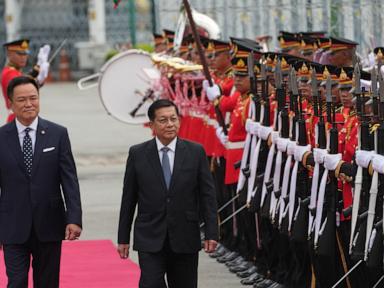
Min Aung Hlaing arrived in Bangkok on a diplomatic mission designed to secure official state rehabilitation. More than five years after orchestrating the military coup that unseated Aung Suu Kyi's civilian administration, the former general is attempting to complete a quiet transition from pariah commander to recognized regional president. This strategic pivot relies on a calculated wardrobe change, stage-managed domestic polls, and an accommodating neighbor in Thailand eager to reset border dynamics regardless of the human cost.
The visit features high-level meetings with Thai Prime Minister Anutin Charnvirakul alongside bilateral business forums. For Bangkok, engagement is framed as a pragmatic response to hard geographic realities. Shared borders require administrative cooperation on transnational crime, drug trafficking, and labor migration. Yet, treating a military leader as a legitimate statesman creates deep fractures within the Association of Southeast Asian Nations.
The Mechanics of Image Laundering
The political rehabilitation strategy began in earnest earlier in the year. Following phased elections that internal and external watchdogs dismissed as elaborate theater, Min Aung Hlaing discarded his military fatigues for presidential garb. This rebranding exercise attempts to address a singular vulnerability. Diplomatic isolation and Western sanctions have crippled state finances, driving Naypyidaw closer to a handful of strategic allies like China, India, and Russia.
Stepping foot in Thailand marks an escalation of this campaign. It represents an effort to chip away at the consensus of non-recognition that has kept Myanmar's top leadership barred from high-level Association of Southeast Asian Nations summits.
Changing out of a military uniform does not alter the fundamental architecture of a regime sustained by violence.
👉 See also: The Stone That Breathes Again
Independent monitors estimate that the civil war triggered by the 2021 coup has claimed upwards of 100,000 lives across all factions, accompanied by thousands of arbitrary detentions and widespread scorched-earth tactics. Against this backdrop, superficial gestures such as a rare humanitarian visit to detained political figures by international observers are deployed strategically to appease foreign critics without yielding actual concessions.
The Regional Split
Bangkok has emerged as the primary advocate for a policy of calibrated re-engagement. Thai leadership argues that keeping communication channels open yields better outcomes than total alienation. This philosophy prioritizes stability and economic security along the Mekong basin over regional punitive measures.
Other members of the regional bloc view this independent overture with profound skepticism. They contend that welcoming a military ruler back into the fold undermines the credibility of multilateral diplomacy. When individual governments bypass collective blocks to normalize ties with Naypyidaw, the enforcement mechanism of regional peace plans dissolves entirely.
The economic dimensions of the visit underscore why neighboring states are willing to look past domestic atrocities. Energy projects, cross-border trade, and infrastructure connectivity create powerful domestic lobbies within Thailand that pressure policymakers to normalize relations. Business interests routinely outweigh human rights concerns when capital markets intersect with geopolitical strategy.
The Cost of Acquiescence
As bilateral memorandums of understanding are signed and business delegations exchange pleasantries in Bangkok, the structural crisis inside Myanmar deepens. Armed resistance movements continue to contest large swaths of territory, and the humanitarian toll climbs daily.
Diplomatic red carpets rolled out for visiting heads of state send an unmistakable signal to populations living under authoritarian rule. They suggest that endurance and tactical elections are sufficient to erase the illegitimacy of a violent seizure of power. The ongoing diplomatic tour does not solve the underlying conflict. It merely provides a veneer of respectability to a fractured state built on the suppression of its own citizens.