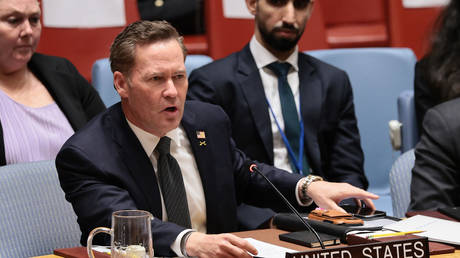
When former Indian High Court Chief Justice S. Muralidhar stood up to defend the United Nations Independent International Commission of Inquiry on the Occupied Palestinian Territory, he did not merely push back against diplomatic talking points. He exposed a fundamental structural collision between international humanitarian law and raw geopolitical power. Facing fierce condemnation from Washington and Tel Aviv over the commission's findings regarding genocide in Gaza, Muralidhar—serving as a key member of the UN-mandated panel—argued that attacking the messengers does not alter the evidentiary record established on the ground.
The clash centers on a simple, brutal reality. Major Western powers, led by the United States, alongside the Israeli government, have systematically sought to delegitimize the UN Commission of Inquiry since its inception. Their strategy relies on questioning the mandate's fairness, alleging institutional bias within the UN Human Rights Council, and dismissing legal conclusions that classify military operations in Gaza as genocidal acts. Muralidhar's public defense of the commission's methodology signals that seasoned jurists are no longer willing to let political pressure dictate the boundaries of legal accountability. Discover more on a connected issue: this related article.
The Architecture of Impunity and the Attack on the Messenger
To understand why Muralidhar's defense carries weight, you have to look at how international accountability mechanisms actually function. They have no police force. They cannot arrest a head of state or halt an airstrike. Their sole currency is evidentiary credibility and moral authority. When the United States and Israel label a UN commission "one-sided" or "antisemitic," they are aiming directly at that currency, attempting to bankrupt the investigation before its findings can be used in the International Court of Justice or the International Criminal Court.
Justice Muralidhar, known throughout his career on the Indian bench for meticulous adherence to constitutional rights and evidentiary standards, approached the pushback not as a diplomat, but as a judge. Diplomatic language thrives on ambiguity, offering escape hatches for powerful nations. Judicial language demands precision. When critics accused the commission of ignoring Israeli security concerns or lacking balance, Muralidhar pointed directly to the terms of reference set by the UN Human Rights Council and the massive volume of verified open-source intelligence, satellite imagery, witness testimonies, and medical records compiled by investigators. Further analysis by NBC News explores comparable views on the subject.
The core argument from Washington and Jerusalem rests on the premise that a democratic state fighting a non-state actor embedded in civilian areas cannot be judged by the same metrics applied to state-sponsored mass atrocities. They argue that civilian casualties, however catastrophic, are the tragic byproduct of urban warfare rather than the result of specific intent to destroy a people.
Muralidhar and his colleagues dismantled that defense by focusing on the mens rea—the criminal intent—required under the 1948 Genocide Convention. Intent in international law does not require a signed confession from a prime minister. It is inferred from a pattern of conduct, the scale of destruction, the systematic deprivation of essentials like water and medicine, and public statements made by military and political leaders. By grounding the report in the strict text of the Convention, the commission shifted the debate from political opinion to legal threshold.
Why Justice Muralidhar Changes the Equation
International bodies often suffer from a perception problem, particularly when investigators come from diplomatic backgrounds where compromise is instinctual. S. Muralidhar brings a radically different pedigree. During his tenure at the Delhi High Court and later as Chief Justice of the Orissa High Court, he built a reputation for holding state power accountable, regardless of which political party held office. His judgments on custodial violence, unlawful detention, and state complicity in communal riots established him as a jurist who treats state sovereignty as subordinate to fundamental human rights.
When a figure with that specific judicial history defends a UN report, the standard smear tactics lose their effectiveness. Critics cannot easily dismiss him as a partisan activist or a naive academic. He knows how states manufacture narratives to justify exceptional violence. He knows how security apparatuses invoke national survival to suspend basic legal protections.
In addressing the US and Israeli backlash, Muralidhar highlighted a glaring contradiction in how Western democracies engage with the rules-based international order. These nations frequently champion UN investigative commissions when those bodies scrutinize adversaries like Russia in Ukraine, the military junta in Myanmar, or the government in Syria. The exact same investigative methodologies—remote sensing, digital verification, refugee interviews—are praised as gold-standard fact-finding when applied to geopolitical rivals. Yet, the moment those identical tools are turned toward an ally, the methodology is suddenly declared flawed and the investigators biased.
This selective application of international law is not a minor hypocrisy. It is an existential threat to the entire post-World War II legal framework. If the definition of a war crime or a crime against humanity depends entirely on who pulls the trigger, the law ceases to exist as a restraint on power and becomes merely a weapon of foreign policy.
The Evidentiary Reality Behind the UN Findings
Critics of the UN Commission of Inquiry frequently claim that the panel operates without direct access to Israel or Gaza, arguing that an investigation conducted from afar is inherently defective. Israel has consistently refused to cooperate with the commission, denying investigators entry to both Israel and the occupied territories, while simultaneously citing that lack of on-the-ground access to invalidate the report's conclusions.
Muralidhar directly confronted this circular logic. Refusing access to investigators is a classic tactic used by states accused of serious violations, from Sudan to North Korea. If non-cooperation were accepted as a valid reason to halt an investigation, every rogue actor on earth would simply lock their borders and achieve automatic immunity.
Modern human rights investigations do not rely solely on physical site visits. Over the past decade, forensic architecture, satellite analysis, and digital verification have transformed how atrocities are documented. The commission analyzed thousands of pieces of digital evidence, cross-referencing timestamps, shadows, architectural features, and metadata to verify videos uploaded from Gaza. They interviewed hundreds of victims, medical personnel, and international aid workers who rotated out of the territory.
The resulting picture documented in the report goes far beyond isolated battlefield excesses. It details the systematic dismantling of Gaza's healthcare infrastructure, the destruction of agricultural land and water treatment facilities, and the repeated displacement of over a million people into shrinking zones that were subsequently bombed. Under Article II of the Genocide Convention, deliberately inflicting on a group conditions of life calculated to bring about its physical destruction in whole or in part constitutes genocide. You do not need to visit a destroyed hospital in person to verify via satellite imagery and multiple independent medical testimonies that the facility was systematically rendered inoperable.
Washington's Diplomatic Shield and Its Rising Cost
The United States has spent decades acting as Israel's primary diplomatic shield at the United Nations, exercising its Security Council veto dozens of times to block resolutions critical of Israeli policies. However, the current confrontation over the Gaza report reveals how costly that shield has become for American standing globally.
By attacking the UN Commission of Inquiry and rejecting the legal assessments of jurists like Muralidhar, Washington is placing itself in direct opposition not just to the Global South, but to its own stated commitment to international law. Diplomats across Africa, Asia, and Latin America watch these exchanges closely. When the US State Department dismisses a thoroughly documented UN legal report out of hand, it confirms a long-held suspicion in the developing world that international law is a tool designed exclusively to discipline weak states while insulating powerful ones.
Furthermore, the US position ignores the growing consensus among independent legal scholars, human rights organizations, and specialized UN rapporteurs. The commission's findings do not exist in a vacuum. They align with provisional measures ordered by the International Court of Justice in South Africa's case against Israel, as well as warnings issued by dozens of UN special procedures mandate-holders. For Washington to maintain that all of these independent legal bodies are simultaneously compromised requires a level of cognitive dissonance that few outside the Beltway are willing to entertain.
The Battle Over the Definition of Self-Defense
At the heart of the Israeli and American critique is the concept of self-defense under Article 51 of the UN Charter. Following the brutal Hamas-led attacks of October 7, 2023—which the UN commission itself unequivocally condemned as war crimes and crimes against humanity—Israel asserted its right to defend its citizens and eliminate the threat posed by Hamas.
Muralidhar's intervention clarifies a crucial distinction that political rhetoric routinely blurs. The right to self-defense is not a blank check. Under international humanitarian law, specifically the Geneva Conventions, the justification for going to war (jus ad bellum) is entirely separate from the rules governing how that war is fought (jus in bello). Even in a war of pure self-defense against an enemy that hides among civilians, a state remains strictly bound by the principles of distinction, proportionality, and precaution.
The principle of distinction requires belligerents to differentiate at all times between combatants and civilians. Proportionality prohibits attacks expected to cause incidental loss of civilian life that would be excessive in relation to the concrete and direct military advantage anticipated. Precaution mandates that forces take every feasible measure to spare the civilian population.
When a military campaign flattens entire residential neighborhoods, destroys universities and cultural heritage sites, and leaves an entire population on the brink of engineered famine, the invocation of self-defense ceases to be a valid legal argument. As Muralidhar pointed out, the commission examined both the October 7 attacks and the subsequent Israeli military campaign through the exact same legal lens. The outrage from Tel Aviv and Washington stems not from a double standard, but from the uncomfortable application of a single standard to all parties involved.
What Happens When Legal Institutions Are Hollowed Out
The confrontation between Muralidhar's commission and Western capitals is about much more than a single report on Gaza. It is a stress test for the survival of international accountability itself.
If powerful states succeed in bullying UN commissions into silence, or if they successfully defund and delegitimize investigators who reach politically inconvenient conclusions, the precedent set will reverberate for generations. Tomorrow, another major power will cite the exact same arguments to dismiss UN investigations into its own territorial aggressions or internal repressions. The rhetorical weapons forged in Washington to protect an ally will inevitably be picked up by Moscow, Beijing, and every authoritarian regime seeking to escape international scrutiny.
Muralidhar's refusal to back down represents a critical line in the sand. By insisting that legal facts cannot be negotiated away through diplomatic pressure, he has forced the international community to confront a binary choice. Either the Genocide Convention and the Geneva Conventions apply universally, binding the strong just as tightly as the weak, or they are merely decorative parchment to be discarded the moment geopolitical interests demand it. Every government currently debating how to respond to the UN report is no longer just voting on Gaza; they are deciding whether international law has a future at all.