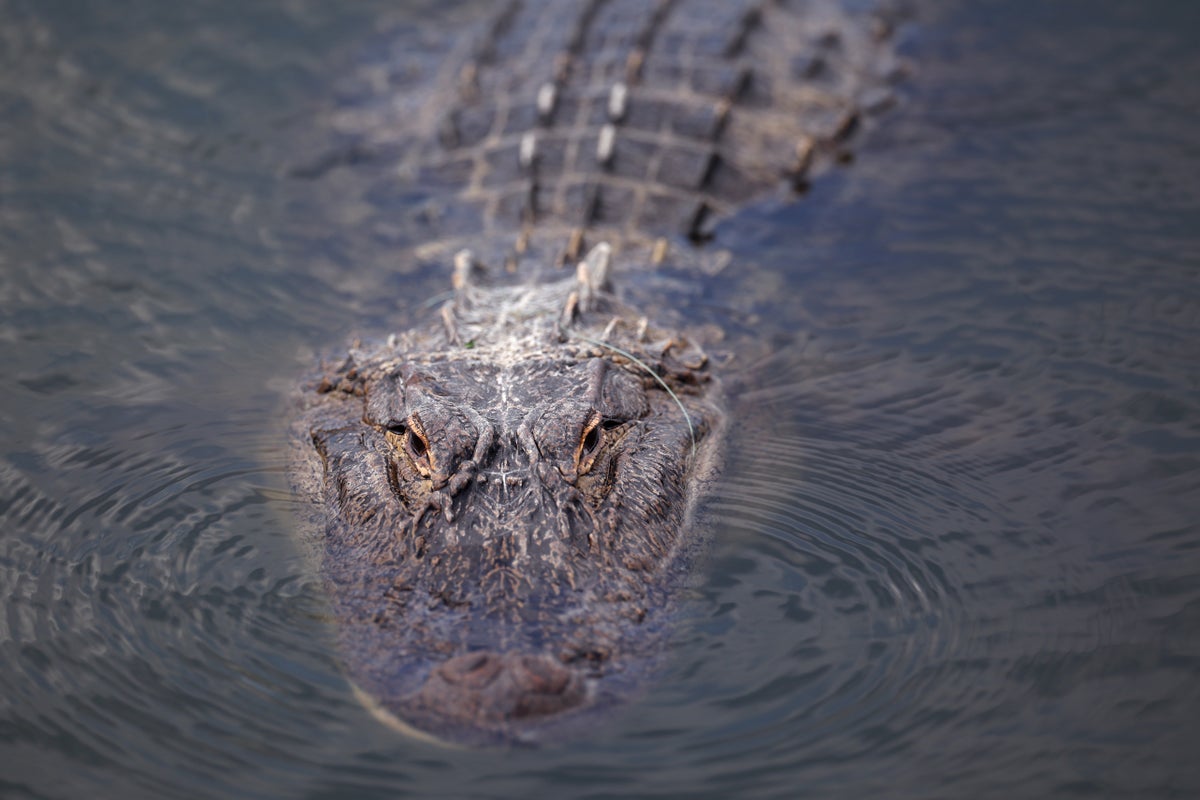
State wildlife records show that contracted trappers have removed 414 nuisance alligators from Walt Disney World property since the tragic death of a toddler in 2016. Following that high-profile incident at the Grand Floridian Resort & Spa, Disney fundamentally transformed its approach to managing native apex predators within its manicured theme park borders. Data from the Florida Fish and Wildlife Conservation Commission reveals that alligator removals skyrocketed immediately following the tragedy and have remained sustained at a higher baseline than pre-2016 levels. This aggressive extraction strategy exposes the ongoing, quiet corporate battle against Florida geography to maintain an illusion of total safety.
The tension between corporate liability and natural ecosystems is nowhere more apparent than in Central Florida.
The Illusion of the Managed Wilderness
Theme parks thrive on absolute environmental control. Every tree is pruned, every street is swept, and every body of water is engineered to look pristine. But the Seven Seas Lagoon and Bay Lake are not completely artificial tanks. They connect to natural waterways, swamps, and canals that crisscross the entire region.
Before June 2016, Disney removed an average of 23 alligators per year. The corporate assumption was that standard vigilance was enough. That illusion shattered when a two-year-old boy playing in the shallow water of a resort beach was grabbed by a native alligator.
The corporate reaction was immediate and massive. In 2016 alone, trappers took 83 alligators off the property. The following year, they took 57. Even a decade later, the numbers remain elevated, averaging roughly 36 removals annually, with 12 caught in the first four months of 2026 alone.
This is not a temporary spike. It is a permanent shift in operations.
ALLIGATOR REMOVALS FROM DISNEY PROPERTY
=======================================
Pre-2016 Average:   23 per year
2016 Peak Year:     83 removed
Post-2016 Average:  36 per year
How the Extraction System Operates
Disney does not employ a private army of alligator wrestlers. Instead, the entertainment giant coordinates directly with the Statewide Nuisance Alligator Program.
When a guest or an employee spots an alligator, a specific protocol triggers.
- The Sighting: Frontline workers log the location, estimated size, and behavior of the reptile.
- The Assessment: If the animal is over four feet long or shows a lack of fear toward humans, it is designated a nuisance.
- The Trapping: State-contracted trappers are called in to hook, snare, or capture the animal.
The fate of these animals is rarely a relocation story. Under state law, nuisance alligators cannot simply be moved to another public lake, as they possess strong homing instincts and will often try to return, or they will simply become a threat to humans somewhere else.
Instead, the vast majority of alligators harvested from corporate properties are euthanized. Their hides and meat are sold by the trappers to offset costs, while smaller reptiles under four feet are occasionally transferred to alligator farms or exhibits.
"It's Florida. If there is a puddle of water bigger than a bathtub, you must assume there is an alligator in it."
That reality clashes directly with the expectations of millions of international tourists who save for years to visit a fantasy world where nothing goes wrong.
The Hidden Infrastructure of Safety
To keep these numbers from escalating further, the resort had to alter its physical landscape. The wide, open sandy beaches that used to invite guests down to the water's edge at the Polynesian and Grand Floridian resorts are gone.
In their place stands a network of physical barriers. Heavy stone retaining walls and thick, obscured fencing now separate the manicured lawns from the dark water. Large, explicit warning signs featuring graphics of alligators and snakes replaced the old, vague "No Swimming" markers.
But physical barriers only do so much. Alligators are highly mobile, especially during the spring mating season when warming water temperatures cause males to search for territory and females to hunt aggressively for food. They walk across golf courses, navigate drainage pipes, and slip into retention ponds overnight.
The cost of this constant vigilance is high, but the cost of failure is existential for a brand built on family safety. By maintaining an aggressive, zero-tolerance policy for any reptile that crosses onto its grid, the company has successfully prevented another biting incident since 2016. Yet, the data proves that nature cannot be completely paved over. The 414 reptiles pulled from the property are a stark reminder that the swamp always tries to reclaim its own.