A lethal, multi-country Ebola outbreak is currently expanding through the heart of Central and East Africa, and the global health architecture is entirely unprepared for the specific threat it poses. The World Health Organization has officially declared the situation a Public Health Emergency of International Concern. More than 540 suspected cases and 136 suspected deaths have already been recorded across the Democratic Republic of the Congo and Uganda. The primary driver of this disaster is the Bundibugyo strain, a rare variant of the Ebola virus for which there are zero approved vaccines and zero validated pharmaceutical treatments.
While the public retains a memory of the 2014 West African epidemic, that crisis was fought and eventually contained using tools designed specifically for the Zaire strain of the virus. The current emergency strips those modern medical advancements away, forcing field teams to rely entirely on nineteenth-century containment tactics in a twenty-first-century conflict zone. If you liked this piece, you should look at: this related article.
[Image of Ebola virus structure]
The Ghost Strain and the Diagnostic Blindspot
Public health officials missed the early warning signs of this outbreak due to a critical flaw in routine diagnostic infrastructure. For another look on this story, check out the latest update from National Institutes of Health.
When an initial casualty occurred in late April in Bunia, the capital of the Ituri province in the DRC, local health workers performed standard diagnostic checks. The tests came back negative. What field teams did not account for was that standard rapid diagnostic tests deployed throughout the region were calibrated exclusively to detect the Zaire strain.
The body was returned to Mongbwalu, a densely populated mining area, where family members opened the coffin to prepare the deceased for a traditional funeral. This single cultural practice triggered a massive superspreading event. By the time blood samples were flown across the country to the National Institute for Biomedical Research in Kinshasa, genetic sequencing revealed the truth. It was not Zaire, but the Bundibugyo virus disease (BVD).
By the time the virus was identified, the window for early containment had already closed.
| Ebola Virus Strain | Approved Vaccine | Approved Therapeutics | Historical Fatality Rate |
|---|---|---|---|
| Zaire Strain | Ervebo, Zabdeno-Mvabea | Inmazeb, Ebanga | 60% to 90% |
| Sudan Strain | None (Experimental Only) | None | 50% to 55% |
| Bundibugyo Strain | None | None | 30% to 50% |
Urban Infiltration and the Failure of Dispersal Models
The classic epidemiological model for Ebola involves a spillover event in a remote forest village, a localized cluster of deaths, and a rapid military or medical quarantine that chokes off the virus.
That model is obsolete here.
The Bundibugyo strain has already breached major urban centers. Cases are confirmed in Goma, a lakeside trading hub of over two million people on the Rwandan border, and in Kampala, the capital of Uganda. The virus did not travel through slow, predictable rural footpaths; it moved via commercial vehicles and regional transport networks.
[Bunia Epicenter] ---> [Mongbwalu Mining Zone] ---> [Goma Transit Hub] ---> [Kampala Capital]
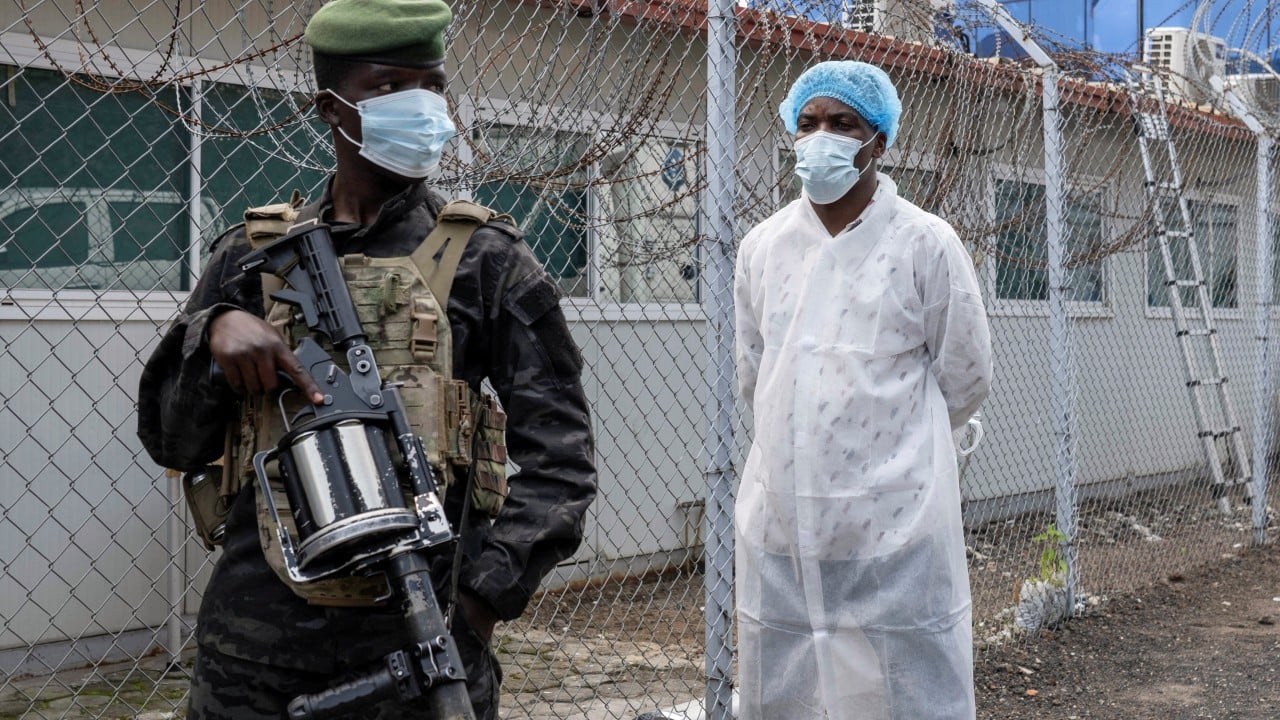
In Goma, the situation is compounded by geopolitics. The city is currently surrounded and partially controlled by the Rwanda-backed M23 militia. This introduces an extraordinary layer of operational danger. International medical organizations cannot freely deploy contact-tracing teams or establish isolation tents without negotiating access through fractured rebel commands.
When a virus with a 50% mortality rate enters an informal settlement where thousands of people share communal water sources, traditional contact tracing breaks down. If a contact tracer cannot safely enter a neighborhood due to active gunfire, the chain of transmission goes dark.
The Hospital as an Amplifier
A devastating detail highlighted by global health leaders is the high rate of infection among frontline medical personnel. At least four healthcare workers have died in the initial weeks of the outbreak.
When healthcare workers die of a hemorrhagic fever, it means the local medical system has transformed into an amplification mechanism for the disease. Inadequate supplies of personal protective equipment, poor waste management, and the lack of running water in informal clinics mean that patients seeking help for routine malaria or typhoid are instead exposed to lethal bodily fluids.
The financial reality on the ground makes containment even more volatile. The WHO has released a meager $3.9 million from its emergency contingency fund to jumpstart operations. For context, containing the 2018 Zaire outbreak in North Kivu ultimately cost hundreds of millions of dollars. The current funding is a drop in the ocean for an epidemic that spans two countries, an active war zone, and multiple major cities.
The Experimental Gamble
With no approved vaccines or therapies available, the WHO is quietly debating a high-stakes medical gamble: deploying unapproved, experimental candidate vaccines that have never undergone large-scale human efficacy trials.
This approach carries immense risk. In past outbreaks, the deployment of proven vaccines like Ervebo created a psychological shield, giving communities the confidence to cooperate with medical teams. Deploying an unproven drug that fails to protect recipients can permanently destroy community trust, leading families to hide their sick relatives from authorities.
The alternative is a brutal return to basic public health measures.
- Strict isolation of suspected patients in rudimentary containment units.
- Decontamination of homes using highly corrosive chlorine solutions.
- Enforced safe burials carried out by teams in biohazard suits, often over the objections of grieving families.
These methods are effective, but they are slow, invasive, and deeply unpopular. They require an absolute level of community trust that currently does not exist in eastern Congo, where decades of conflict have left the population profoundly suspicious of state authorities and foreign intervention.
The hard truth is that international health bodies are fighting a modern biological crisis with an empty arsenal, relying on the hope that regional borders can remain open while a highly contagious killer moves silently through the population.