The World Health Organization issued a stark warning that a fast-spreading Ebola outbreak in the eastern Democratic Republic of Congo is outpacing containment efforts due to violent conflict, but the international community is missing the real crisis. While global attention focuses on the agency’s plea for an immediate ceasefire, a far more dangerous reality is unfolding on the ground. The current epidemic involves the rare Bundibugyo strain of the virus, for which there are no approved vaccines or therapeutic treatments. Combined with a complete breakdown of local state infrastructure, mass displacement, and cross-border contagion into Uganda, the region faces a public health emergency that cannot be solved by diplomacy alone.
The Blind Spot in Global Containment Strategy
Public health officials traditionally rely on a proven playbook to halt Ebola. They isolate the sick, trace contacts, and deploy targeted ring vaccination to shield communities. This strategy successfully broken the back of previous outbreaks involving the more common Zaire strain. For another view, consider: this related article.
The Bundibugyo strain entirely breaks this playbook.
Discovered in 2007, this variant presents a distinct biological challenge. Because it lacks a commercial vaccine, containment depends entirely on traditional, resource-intensive barrier nursing and strict isolation. The WHO has reported over 1,000 confirmed and suspected cases, along with more than 220 suspected deaths across 11 health zones, including major urban hubs like Butembo and Goma. The documented case fatality rate hovers under 25 percent—statistically lower than the lethal Zaire strain—but this metric is dangerously deceptive. The lower mortality rate means patients survive longer, remain infectious over extended periods, and move across wider geographic areas before succumbing or recovering. Similar insight regarding this has been shared by Everyday Health.
Compounding this biological reality is the collapse of community trust. In the town of Mongbwalu, unidentified groups recently attacked an isolation facility, burning patient tents and causing dozens of symptomatic individuals to flee back into the population. One patient died of severe hemorrhaging while attempting to escape. These attacks are not random acts of nihilism. They are driven by a profound local resistance to institutionalized burial practices.
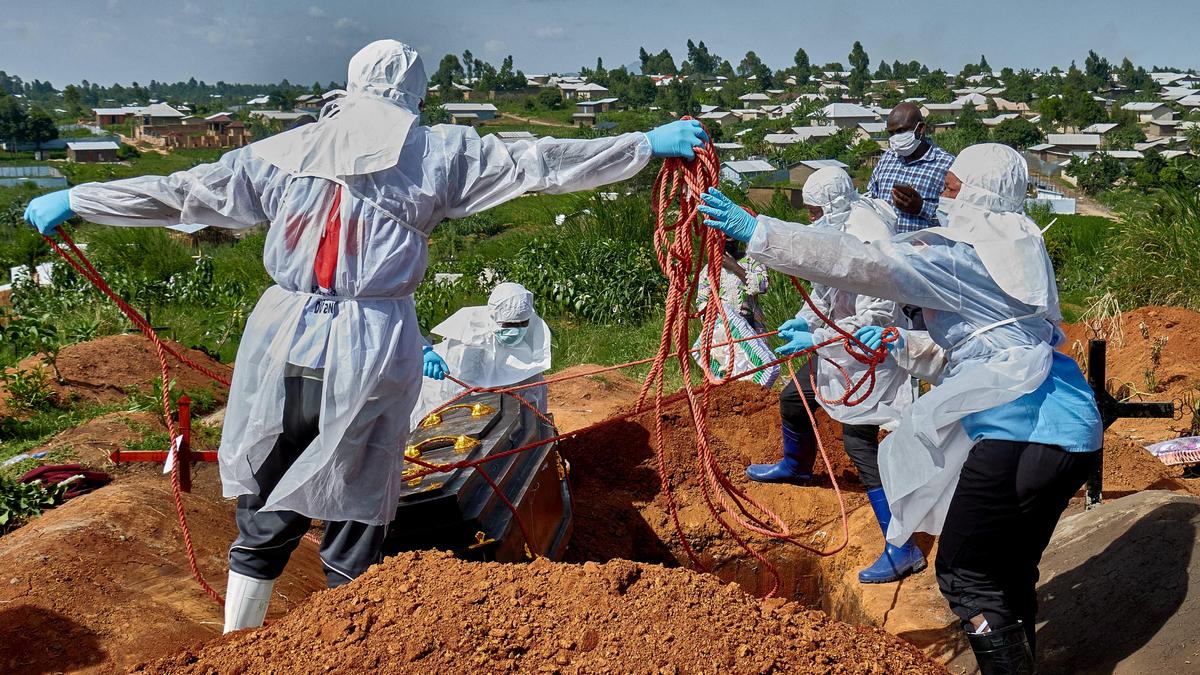
Ebola remains highly contagious after a patient dies. Standard health protocols require specialized teams to handle and bury the deceased in sealed body bags. Yet, traditional customs in Ituri province dictate that family members wash and touch the corpse during funerals. When medical teams intervene, communities perceive it as a theft of their loved ones and a desecration of ritual. This clash of values has turned medical centers into targets, rendering contact tracing almost impossible.
Anatomy of a Broken Corridor
The epicenter of the outbreak lies in Ituri province, a region that has suffered under the weight of shifting militia control for three decades. The presence of the Allied Democratic Forces, CODECO militias, and the Rwanda-backed M23 rebel group has created an environment of permanent volatility.
[Ebola Transmission Vector in Conflict Zones]
Symptomatic Patient ──> Lack of Ambulances ──> Motorbike Transport ──> Driver Exposure
                                                                            │
Overcrowded Displaced Camps <── Active Fighting <── Displacement <──────────┘
The physical infrastructure of eastern Congo further accelerates transmission. There are virtually no functioning ambulances in rural Ituri. Symptomatic individuals are routinely transported to clinics on the back of commercial motorbikes, squeezed between drivers and relatives. In the village of Rwampara, health workers describe spraying chlorine on motorbikes after passengers arrive presenting with high fevers and nasal hemorrhaging. The drivers, protected by nothing more than thin surgical masks, immediately return to commercial service, transforming a vital transport network into a primary vector for the virus.
Active combat has forced nearly one million people in Ituri out of their homes. This displacement shatters the containment corridors established by international agencies. When a village is attacked, exposed contacts do not stay in isolation for the required 21-day incubation period. They flee. They blend into massive, overcrowded camps for internally displaced persons, or they flee across borders.
Neighboring Uganda recently enacted a four-week border closure with the Democratic Republic of Congo after recording seven confirmed cases and one death in Kampala. The restrictions bar entry to everyone except humanitarian teams and cargo trucks, imposing a mandatory 21-day quarantine on permitted travelers.
History shows that formal border closures rarely stop a virus. The frontier between Congo and Uganda is porous, defined by dense forest tracks and informal river crossings. Forcing desperate people away from official checkpoints simply drives them into unmonitored routes. It cuts off the visibility of surveillance teams, making it far more difficult to track the true geographic footprint of the disease.
Hunger and the Limits of Medical Aid
The crisis is exacerbated by a severe, systemic food shortage. The UN-backed Integrated Food Security Phase Classification monitor indicates that nearly 10 million people across eastern Congo face acute hunger. Malnutrition degrades the human immune system, reducing the body's natural capacity to mount a defense against viral infection.
International funding cuts have simultaneously hollowed out the local health system. Frontline workers lack the basic personal protective equipment required to handle a hemorrhagic fever safely. Temporary isolation wards are built from fragile tarpaulins rather than permanent structures, leaving them highly vulnerable to both weather and human attack.
The World Health Organization’s demand for a ceasefire treats the conflict as an external disruption that can be paused through political will. The reality is that the war is completely intertwined with the region's economy and social fabric. Armed groups fund their operations through the control of local gold mines, which attract thousands of transient migrant laborers. These laborers move constantly between rebel-held territories and government-controlled towns, carrying the virus with them into areas completely inaccessible to western medical teams.
Relying on traditional top-down humanitarian deployment will not stop this outbreak. Containing the Bundibugyo strain in a war zone requires a fundamental shift in strategy. International agencies must stop waiting for a diplomatic peace that will not come. Resources must be diverted away from large, centralized treatment centers and toward decentralized, heavily protected mobile health units capable of operating within fluid territory.
Local motorbike associations must be integrated into the response, supplied with protective gear, and trained in safe transport protocols. Most critically, burial teams must find a compromise with community elders to adapt traditional funeral rites rather than overriding them by force. Without these shifts, the epidemic will continue to spread through the dense networks of the displaced, moving far faster than the global bureaucracy can react.