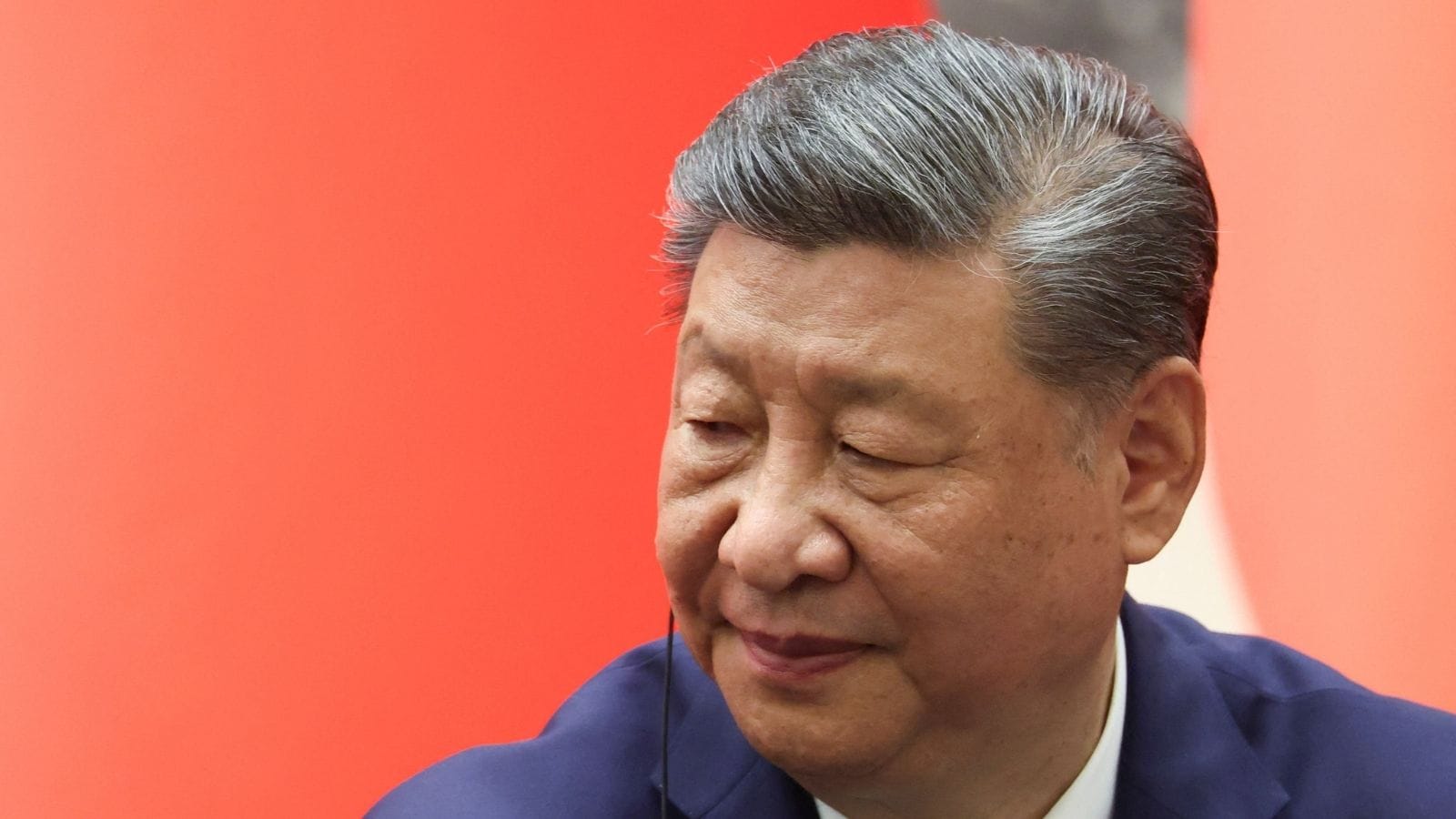
When the Chinese Communist Party convenes its Central Committee behind closed doors in Beijing, the cameras always pan across a sea of matching dark suits, synchronized applause, and meticulous choreography. Yet in recent plenums focused on tightening internal discipline, the most revealing story has not been who was speaking at the podium, but who was missing from the floor. Record numbers of formal expulsions and unexplained absences among senior military commanders, defense executives, and provincial ministers have turned routine party gatherings into visible proof of an ongoing, high-stakes purge at the top of China's political hierarchy.
Political analysts, state media communiqués, and official Central Commission for Discipline Inspection (CCDI) disclosures point to a stark reality: the anti-corruption campaign launched over a decade ago has evolved into a permanent mechanism of ideological enforcement and elite control. Rather than winding down after eliminating rival factions in the early years of Xi Jinping’s tenure, the disciplinary apparatus has turned inward, targeting officials whom Xi himself elevated to the highest rungs of power.
The Anatomy of an Unexplained Absence
In the opaque architecture of Chinese elite politics, an empty seat is rarely a scheduling conflict. Full and alternate members of the Central Committee are constitutionally required to attend plenary sessions unless granted explicit leave for major health emergencies or critical state missions abroad. When multiple sitting generals and cabinet-level officials fail to appear without a formal announcement of illness or diplomatic travel, seasoned observers immediately cross-reference the attendance roll against state procurement records, military command announcements, and legislative committee rosters.
The pattern is unmistakable. During the Third Plenum of the 20th Central Committee in July 2024, state television broadcasts and official communiqués confirmed the formal expulsion of former Defense Minister Li Shangfu, former Foreign Minister Qin Gang, and former Rocket Force commander Li Yuchao, alongside several other senior officers. More tellingly, attendance figures revealed that several sitting members were absent without explanation—a classic precursor to formal investigation or quiet demotion. Subsequent sessions of the Central Committee and the National People’s Congress Standing Committee have continued this trajectory, steadily stripping away members from the military-industrial complex, financial regulatory bodies, and provincial leadership.
This is not merely routine bureaucratic turnover. The Central Committee consists of roughly 205 full members and 171 alternate members, representing the apex of party, state, and military authority. Removing a full member requires a two-thirds vote at a plenary session, a procedural hurdle designed to signal collective leadership consensus. When a single session ratifies the removal of multiple high-ranking figures—and quietly sidelines others—it indicates that the leadership is willing to absorb significant reputational damage to enforce compliance.
Why the Military and Defense Sector Took the Hardest Hit
A disproportionate share of the expulsions and unexplained disappearances has centered on the People’s Liberation Army (PLA), specifically the Rocket Force and the Equipment Development Department. The Rocket Force oversees China’s rapidly expanding arsenal of conventional and nuclear ballistic missiles, making it the centerpiece of Beijing’s strategic deterrence and any potential contingency involving Taiwan.
According to assessments by the U.S. Department of Defense and independent defense researchers, the roots of this crisis lie in the massive capital inflows directed toward military modernization over the past fifteen years. Billions of dollars were allocated to high-tech weapons procurement, underground silo construction, and aerospace research with minimal external auditing, shielded by national security secrecy. That opacity created fertile ground for bid-rigging, kickbacks, and substandard manufacturing.
When investigators began probing procurement irregularities in the Equipment Development Department—an agency previously led by Li Shangfu—the trail quickly led into the Rocket Force and the upper echelons of state-owned defense conglomerates, including the China Aerospace Science and Technology Corporation (CASC) and the China North Industries Group Corporation (Norinco). Executives from these firms were quietly removed from the Chinese People’s Political Consultative Conference (CPPCC) months before their fates were formally acknowledged, demonstrating how state media signals political disgrace through gradual erasure rather than immediate headlines.
For the party leadership, corruption in the defense sector is not just a financial crime; it is an existential operational vulnerability. A military apparatus compromised by graft cannot be trusted to execute complex joint operations or maintain combat readiness. By purging commanders and defense executives simultaneously, Beijing is attempting to clear out compromised networks, even at the short-term cost of disrupting command continuity and slowing weapons procurement cycles.
The Shift From Factional Purge to Systemic Discipline
Early western commentary on China's anti-corruption drive often framed it primarily as a tool for factional consolidation—a way to dismantle the political networks of predecessors like Jiang Zemin and Hu Jintao. While that dynamic undeniably played a role between 2012 and 2017, it fails to explain the current wave of removals. Virtually every senior official expelled or sidelined during the 20th Central Committee term was vetted, promoted, and entrusted with critical portfolios under the current administration.
Political scientists who study Leninist party structures note that total political dominance creates a distinct governance dilemma. Once external political rivals are eliminated, the leader faces a principal-agent problem: subordinates have strong incentives to feign loyalty while pursuing personal enrichment or distorting economic data to meet unrealistic targets. Without independent courts, a free press, or opposition parties to expose misconduct, the ruling party must rely entirely on internal policing.
Consequently, the CCDI and the National Supervisory Commission have been transformed from reactive auditing bodies into omnipresent political enforcers. The revised Chinese Communist Party Disciplinary Regulations, updated to take effect in 2024, significantly expanded the definition of political infractions. Officials are no longer punished solely for taking bribes or abusing administrative power; they are disciplined for "failing to implement major decisions of the Party Central Committee," "engaging in passive resistance," or "harboring political ambitions."
This expansion blurs the line between financial corruption and ideological deviation. An official who hesitates to execute an economically risky stimulus directive or questions the feasibility of a local industrial target can now face the same disciplinary machinery as a bureaucrat caught hiding cash in a basement.
The Economic Chill Inside the Bureaucracy
The relentless tightening of party discipline has produced an unintended side effect that is increasingly visible in China's macroeconomic performance: widespread bureaucratic paralysis. Across provincial governments and state-owned banks, officials have adopted a posture of defensive inaction, commonly referred to in Chinese political discourse as "lying flat" or "avoiding work to avoid mistakes."
In an environment where any policy experiment that goes awry can be retroactively interpreted as a disciplinary violation, local cadres have little incentive to take initiative. Approving a loan to a struggling private tech firm carries personal career risk if the company defaults; approving a loan to a state-owned infrastructure project is politically safe, even if the project generates zero economic return.
This dynamic directly undermines Beijing's stated economic priorities. While central planners call for revitalizing private sector confidence, attracting foreign investment, and fostering technological innovation, local regulators and financial officials remain focused on compliance and self-preservation. The finance sector itself has been subjected to sweeping inspections, resulting in the downfall of senior executives at major state banks, securities regulators, and asset management firms.
Furthermore, the reliance on campaign-style discipline complicates crisis management. When senior ministries—such as the Foreign Ministry and the Defense Ministry—lose their top leaders abruptly, diplomatic engagement and military-to-military communications stall. Foreign counterparts are left dealing with acting officials or party secretaries who lack the explicit mandate to negotiate compromises, increasing the risk of miscalculation during moments of geopolitical friction.
How the Party Controls the Narrative of Failure
A central paradox of high-profile purges is that every expulsion serves as an implicit admission that the vetting system failed. If a newly appointed minister or general is removed within months of taking office, it raises uncomfortable questions about the judgment of the leadership that selected them.
To neutralize this vulnerability, the party's propaganda apparatus frames record expulsions not as signs of systemic decay, but as proof of self-revolution—a doctrinal concept emphasized heavily in official theoretical journals like Qiushi. According to this framing, the Chinese Communist Party is unique among ruling institutions precisely because it possesses the political courage to excise its own tumors without external pressure.
State media coverage of plenary sessions reinforces this narrative through disciplined choreography. Communiqués emphasize unity, ideological clarity, and long-term structural reforms, burying the personnel removals near the bottom of the text in standardized, bureaucratic language. By treating the removal of top leaders as routine administrative hygiene, the party seeks to project unshakeable stability both to its domestic population and to international markets.
Yet the sheer scale of the absences suggests a deeper tension between absolute control and institutional predictability. Historically, the post-Mao reforms led by Deng Xiaoping sought to establish regularized norms for succession, retirement ages, and collective decision-making precisely to avoid the destabilizing volatility of Mao-era political campaigns. The current reliance on continuous disciplinary purges signals a decisive break from those norms, replacing institutional predictability with top-down vigilance.
What the Empty Seats Signal for Governance Ahead
Monitoring the Central Committee's attendance rolls has become one of the most reliable methods for tracking power shifts in Beijing. When alternate members—who are elevated to full membership in strict order of the votes they received at the Party Congress—are passed over during plenary promotions, it confirms that those skipped individuals are under quiet investigation, even before a single word appears in the official press.
This system of perpetual vetting ensures that no alternative power center can coalesce within the military, the security services, or the provincial apparatus. Loyalty is continuously tested, and complacency is punished swiftly. However, governance cannot rely indefinitely on fear and compliance alone. As China confronts structural demographic headwinds, local government debt burdens, and intensifying technological competition with the West, the state requires an administrative class capable of agile, independent problem-solving. Until the party resolves the friction between strict ideological discipline and practical bureaucratic autonomy, the empty chairs in the Great Hall of the People will remain a permanent fixture of Chinese political life.