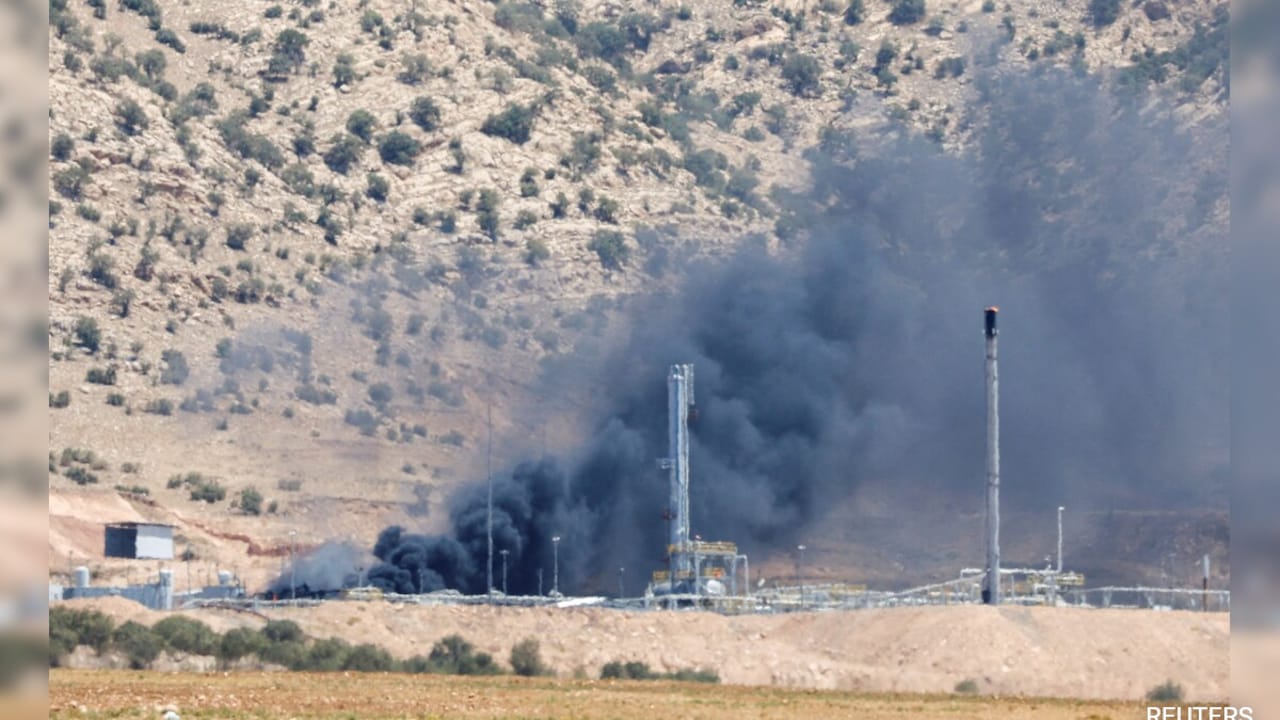
Multiple explosions rocked Erbil, the capital of Iraq's Kurdistan Region, when waves of Iranian drones targeted locations near the United States Consulate and local critical infrastructure, exposing the severe fragility of Iraqi sovereignty amid widening Middle East flashpoints. The strikes, which triggered intense air defense activations and forced temporary airspace closures over Erbil International Airport, are part of a recurring pattern of aerial assaults directed at Western diplomatic and military assets in northern Iraq.
This is not a sudden accident of geography. It is the predictable outcome of a long-standing geopolitical vacuum where regional powers fight out their bitter rivalries on foreign soil.
The Anatomy of an Aerial Strike
To understand why Erbil remains a primary target, one must look closely at the tactical mechanics of these operations. Tehran and its aligned proxy networks rely heavily on low-cost, long-range loitering munitions to challenge advanced air defense architectures.
When a swarm of explosive-laden unmanned aerial vehicles crosses into Iraqi airspace, the objective extends beyond physical destruction. These attacks force the United States and its allies into an expensive, resource-heavy defensive posture. Every time a Patriot battery or a mobile counter-rocket system engages an incoming drone, millions of dollars in interceptor inventory are expended to neutralize a machine built for a fraction of that cost.
Air defense systems light up the night sky over the Kurdistan Region with regularity. Yet, the persistent threat highlights an uncomfortable reality for military planners. Complete air denial against low-altitude, slow-moving aerial threats is nearly impossible, even with sophisticated early-warning radar arrays deployed around high-value diplomatic compounds.
Sovereignty Under Siege
The Kurdistan Regional Government finds itself trapped in an untenable position. Baghdad and Erbil have spent years trying to establish institutional control and distance themselves from external conflicts, but foreign actors treat Iraqi territory as an open-air theater for retaliation.
Consider a hypothetical scenario to illustrate the diplomatic paralysis at play. When a foreign state launches missiles or drones across an international border to target local opposition groups or foreign embassies, the host government faces a stark choice. Condemn the act publicly and risk violent economic or military retaliation from a powerful neighbor, or remain silent and watch domestic sovereignty erode piece by piece.
Successive Iraqi administrations have chosen a middle path of diplomatic protests and formal investigations, yielding little practical deterrence. Armed factions operating outside state command structures further complicate the picture. These groups maintain independent operational capabilities, ensuring that central government decrees issued from Baghdad hold little weight in remote northern governorates.
The Economic and Strategic Fallout
The security crisis immediately impacts economic stability. Energy infrastructure in the region, including vital gas fields like Khor Mor in Sulaymaniyah, frequently finds itself caught in the crossfire. When production halts due to security threats, the shockwaves ripple directly through regional electricity grids and international energy markets.
Foreign investors watch these developments with growing apprehension. Capital flight is a quiet process, but it accelerates rapidly when commercial aviation hubs face sudden closures and embassies issue emergency shelter-in-place directives. The promise of economic development in the Kurdistan Region continually collides with the harsh reality of cross-border military escalations.
Washington faces its own strategic dilemma. Maintaining a diplomatic and military footprint in Erbil projects resolve and supports regional partners, but it also paints a permanent target on a civilian-heavy urban center. As long as diplomatic channels between Washington and Tehran remain strained, and regional proxy networks retain their launch autonomy, the skies over northern Iraq will remain contested space.
The explosions over Erbil are symptoms of an un-resolved regional order, echoing across a landscape where the local population bears the heaviest cost of a conflict they did not start