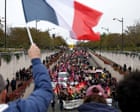
European security forces are shifting from reactive crowd control to preemptive domestic containment. As demonstrations erupt across France and Italian counter-terrorism police raid private homes in Milan ahead of scheduled marches, the real story is not isolated street unrest. It is the quiet standardization of preventative policing across the European Union. Governments are increasingly using anti-terror statutes and administrative surveillance to neutralize political dissent before a single banner reaches the pavement.
For decades, European protest management followed a predictable script. Unions or activist coalitions filed permits, municipal authorities negotiated routes, and riot police stood by to contain flashpoints once marchers gathered. That model is dying. What is happening simultaneously in Paris and Milan reveals a coordinated, continent-wide doctrine that treats mass mobilization as an insurgency threat rather than a democratic pressure valve.
The Anatomy of Preemptive Policing
Look closely at the mechanics of the Milan raids. When Italian police execute dawn searches on activists' residences before a demonstration even begins, they are deploying a legal tactic known as preventative disruption. Historically reserved for organized crime syndicates like the 'Ndrangheta or cells planning imminent physical attacks, these powers allow magistrates to authorize seizures of phones, laptops, and printed materials based on intelligence assessments of "potential public order disturbances."
The operational goal is simple. Break the logistical spine of a movement before it mobilizes.
Without encrypted messaging devices, organizational spreadsheets, or sound equipment, local organizers lose the ability to coordinate feeder marches or manage crowd safety. Even if no formal charges stick—and in a high percentage of preventative raids across Western Europe, prosecutions are quietly dropped months later—the state achieves its immediate objective. The protest is decapitated before dawn.
In France, the mechanism looks different on the surface but serves the exact same strategic purpose. French authorities rely heavily on administrative bans (interdictions de manifester) and preventative identity checks at transit hubs. Under laws expanded over the past decade, local prefects can declare entire city centers off-limits to gatherings with only hours of notice. Police stationed at regional train stations and highway tollbooths intercept suspected protesters, confiscate protective gear like goggles or saline solution, and issue on-the-spot fines or dispersal orders.
This is not merely about preventing property damage. It is a calculated effort to raise the personal cost of civic participation until ordinary citizens stay home.
Why France and Italy Are Mirroring Each Other
On paper, the political triggers in France and Italy appear distinct. French demonstrations routinely coalesce around pension reforms, agricultural subsidies, labor protections, and purchasing power. Italian mobilizations often center on austerity budgets, housing costs, labor precarity, and opposition to hardline executive decrees. Yet the state response in both nations has converged into an identical tactical playbook.
Why? Because both governments face the same structural bind.
Macroeconomic pressures across the Eurozone—stubborn inflation in essential goods, tightening fiscal rules from Brussels, and stagnant real wages—have eroded the traditional buffers European states used to buy social peace. When governments cannot offer economic concessions, they default to security management.
Consider the timeline of legal expansion in both countries:
- France's Security Creep: Emergency powers enacted following the 2015 terrorist attacks were largely absorbed into permanent ordinary law in 2017. Subsequent legislation, including the 2021 Global Security Law, expanded drone surveillance and broadened police authority to detain individuals suspected of intending to cause disturbances.
- Italy's Security Decrees: Successive governments in Rome have passed sweeping Decreti Sicurezza (Security Decrees) that criminalize road blockades, increase penalties for resisting public officials, and classify passive resistance during protests as an aggravated offense.
- Cross-Border Intelligence Sharing: Through Europol and bilateral interior ministry channels, European police forces routinely share blacklists of suspected "agitators," resulting in border turn-backs and coordinated pre-event raids whenever major summits or continental days of action are announced.
When an Italian magistrate signs off on pre-dawn searches in Milan on the exact same morning French CRS riot units lock down transit corridors in Paris, it reflects a shared institutional mindset. Interior ministries across the continent view domestic economic anger as a contagious security risk that must be quarantined at the source.
The Legal Gray Zone of "Pre-Crime" Enforcement
To understand why civil liberties groups and constitutional lawyers are sounding the alarm, you have to look at the evidentiary threshold required for these operations.
In a traditional criminal investigation, law enforcement gathers evidence that a crime has occurred, presents it to a judge, and obtains a warrant to arrest a suspect or search a property. Preemptive protest policing flips that sequence upside down. Police intelligence units compile dossiers based on social media posts, attendance at prior demonstrations, or associations with radical political collectives. They present these dossiers as indicators of future risk.
Magistrates, acutely aware of the political fallout if a riot occurs after they denied a warrant, overwhelmingly defer to police intelligence assessments.
This creates a dangerous legal gray zone. Citizens are subjected to invasive home searches, asset seizures, and temporary detention not for what they have done, but for what state analysts predict they might do. Furthermore, the surveillance tools used to build these predictive profiles—such as IMSI-catchers that sweep up mobile phone data in specific neighborhoods and automated facial recognition cameras—operate largely outside public scrutiny.
The defense offered by interior ministries is straightforward and, to many voters, persuasive. Authorities argue that radical fringe groups—often referred to as Black Bloc elements—regularly hijack peaceful demonstrations to smash storefronts, burn vehicles, and injure police officers. From the perspective of a police commander in Paris or Milan, waiting until bricks are thrown means losing control of the streets. Intervening early protects merchants, bystanders, and peaceful marchers.
That argument carries real weight. Urban riots inflict genuine economic harm on small business owners and stretch emergency services to their breaking point. Ignoring the reality of organized street violence would be dishonest.
Yet the operational reality on the ground shows that preemptive tactics rarely distinguish between violent instigators and legitimate organizers. When police raid apartments in Milan or kettle entire blocks in Paris, the net catches student union leaders, environmental activists, independent journalists, and casual observers alongside anyone looking for a fight.
How Militant Tactics and State Force Feed Each Other
There is an uncomfortable dynamic at the heart of modern European street politics that neither government officials nor protest leaders like to admit. Heavy-handed preemptive policing does not eliminate radicalism; it accelerates it.
When authorities ban peaceful marches at the last minute or raid organizers' homes before a demonstration, moderate participants are the first to drop out. Teachers, nurses, retirees, and families will not risk a dawn police raid or a tear-gas canister to voice an economic grievance.
Who remains on the streets when the moderates stay home? The most militant, organized, and confrontational factions.
This creates a self-fulfilling prophecy for state security apparatuses:
- Preemptive repression drives away mainstream, peaceful demonstrators who fear arrest or injury.
- The remaining crowd is smaller, younger, and far more willing to clash directly with riot police.
- Television cameras capture intense street battles between black-clad youths and heavily armored police units.
- Politicians point to the footage as proof that their initial raids and bans were completely justified, unlocking funding for even tougher measures next time.
Veteran protest monitors across Europe have documented this exact cycle repeatedly over the last decade. By dismantling the traditional union marshals and established activist networks that historically policed their own marches, states inadvertently create chaotic, leaderless street confrontations that are far harder to contain.
The Quiet Normalization of Emergency Powers
What makes the current wave of enforcement in France and Italy particularly significant is how routine it has become. Twenty years ago, dawn raids on political activists ahead of a domestic protest would have triggered a national parliamentary crisis and weeks of front-page outrage. Today, it is absorbed into a rolling live-blog update alongside traffic delays and weather forecasts.
This normalization happens through incremental bureaucratic shifts rather than dramatic constitutional overhauls. A municipal ordinance here, an expanded anti-terror definition there, a new procurement contract for surveillance software. Each step appears technical and reasonable in isolation. Combined, they fundamentally alter the relationship between the European citizen and the state.
Consider the practical reality for anyone organizing a major political demonstration in Western Europe right now. Organizers must assume their phones are monitored, their residences are mapped, and their transit routes are watched. They must prepare legal defense funds before printing a single flyer. In countries that pride themselves on being the global standard-bearers for human rights and democratic expression, the right to assemble is increasingly treated as a revocable privilege granted only when it poses no disruption to daily commerce.
What Happens When the Pressure Valve Breaks
Democratic societies rely on visible, noisy, and occasionally disruptive street protests for a very practical reason. Demonstrations serve as an early warning system for political elites. They measure the depth of public anger long before it metastasizes into institutional collapse or extremist electoral waves.
When governments use counter-terrorism infrastructure to suppress domestic protests, they do not eliminate the underlying economic or social grievances. They simply blindfold themselves to the scale of the discontent. Suppression forces anger underground, where it hardens into cynicism, institutional alienation, and volatile political polarization.
The police vans parked outside Milan apartment buildings and the riot lines forming across French boulevards are symptoms of a governing class that no longer trusts its ability to persuade its own citizens. Security forces can clear a square in an afternoon, confiscate hard drives before sunrise, and hold a perimeter until the cameras pack up, yet no interior ministry has ever successfully policed its way out of an economic crisis.