Tens of thousands of protesters across France are flooding streets, blocking schools, and marching against budget-driven reforms while riot police deploy tear gas, curfews, and mass security sweeps. Yet standard headline summaries treat the smoke and clashes as an isolated explosion of anger over a single policy. That misses the structural trap underneath. France is caught in a fiscal and political vise where a debt-strained state cannot fund the public promises citizens expect, every proposed reform triggers street pushback, and parliamentary gridlock turns routine budget arithmetic into existential street warfare ahead of the April 2027 presidential election.
After covering labor standoffs, budget showdowns, and European fiscal politics for decades, the pattern in Paris feels painfully familiar yet sharper in its urgency. When a government tries to trim deficits on a welfare model built for a different demographic and economic era, the bill arrives first in the streets. Tear gas clears a junction for twenty minutes. It does not balance a ledger or restore faith in institutions. Learn more on a similar topic: this related article.
Why Street Unrest Keeps Returning to French Boulevards
The unrest that escalated across late summer and autumn 2026 did not spring out of thin air. It began in classrooms, ports, and workplaces where everyday strain had already reached a breaking point. High school pupils blocked entrances over unfilled teaching posts, overcrowded rooms, and shortages of support staff, while fishermen, health workers, farmers, and unionized employees staged walkouts and blockades over wages, cost of living, and stretched public services.
What turned localized grievances into a national crisis was scale and spillover. A mid-October mobilization drew more than half a million marchers across the country, followed by evening clashes, looted storefronts in Paris, arson attacks in cities including Limoges and Lyon, curfews, and thousands of arrests. By mid-November, retirees were marching across Paris's Left Bank from Montparnasse toward Les Invalides over pension adjustments and tax allowances in the draft 2027 budget. Further journalism by The New York Times delves into comparable perspectives on the subject.
The core mechanic is straightforward. Households squeezed by inflation and stagnant real purchasing power see every proposed budget restraint as a direct theft from their paycheck, classroom, or retirement check. Meanwhile, ministers staring down steep deficits and European fiscal scrutiny argue that unlimited spending is no longer mathematically possible.
| Pressure Point | What Citizens Feel on the Ground | What Ministers See on the Balance Sheet |
|---|---|---|
| Schools and Universities | Missing teachers, crowded classrooms, thin support staff, high-stakes admissions stress | Rising payroll commitments against tight education budgets and slow multi-year facility upgrades |
| Pensions and Taxation | Eroded purchasing power, fears of frozen adjustments, disputes over tax allowances | Multi-billion-euro deficit pressure and an aging population expanding long-term payouts |
| Wages and Cost of Living | Higher daily expenses outpacing pay growth and squeezing working families | Limited fiscal room for broad state subsidies without widening sovereign debt |
| Public Order and Policing | Tear gas clouds, curfews, closed venues, and friction between demonstrators and security forces | Pressure to contain disorder rapidly while avoiding escalation that deepens political alienation |
The Reform Trap Between Debt Arithmetic and Street Veto
Reform in France rarely fails because policymakers cannot draft a spreadsheet. It stalls because every line item carries a political fuse. When governments propose slowing benefit growth, tightening tax rules, or rationing public expenditure, affected groups mobilize immediately because they know from history that sustained street pressure frequently forces concessions or delays.
In late October, for example, authorities rolled out education measures including a future replacement for the Parcoursup admissions platform slated for 2028, phased class-size caps starting in 2027 for disadvantaged first-year high school classes, and state-backed regional renovation loans. Student groups dismissed the package as insufficient, while critics questioned how distant implementation timelines and borrowed funds would ease immediate classroom strain.
Then came the November budget maneuvering around pensions. Senators moved to strip a proposed pension freeze on first reading while weighing changes to the ten percent tax allowance to offset lost savings, leaving a joint legislative committee racing against a late-November deadline and the threat of executive or National Assembly override mechanisms. Every twist in parliament signals to voters that nothing is settled until the streets weigh in.
That dynamic creates a vicious cycle. Governments hesitate to enact deep structural changes early in a mandate, wait until fiscal pressure becomes acute, and then introduce abrupt measures that ignite mass opposition. By the time compromise arrives, both sides have paid a heavy price in trust.
Why Parliamentary Gridlock Turns Budgets Into Street Battles
A healthy legislature absorbs social tension through negotiation and clear trade-offs. In recent years, fractured parliamentary blocs and rapid prime ministerial turnover have made durable majorities harder to build and hold. When lawmakers cannot pass coherent multi-year fiscal adjustments through routine consensus, executive moves and eleventh-hour budget compromises feel imposed from above.
The approaching April 2027 presidential contest magnifies every calculation. Ruling officials warn against disorder and blame political rivals for inflaming tensions, while opposition camps on both the left and the right accuse the government of mismanaging public services and squeezing ordinary households. Instead of cooling tempers, campaign positioning turns every street clash and budget vote into a proxy battle for the next presidency.
What Tear Gas Hides About Policing and Credibility
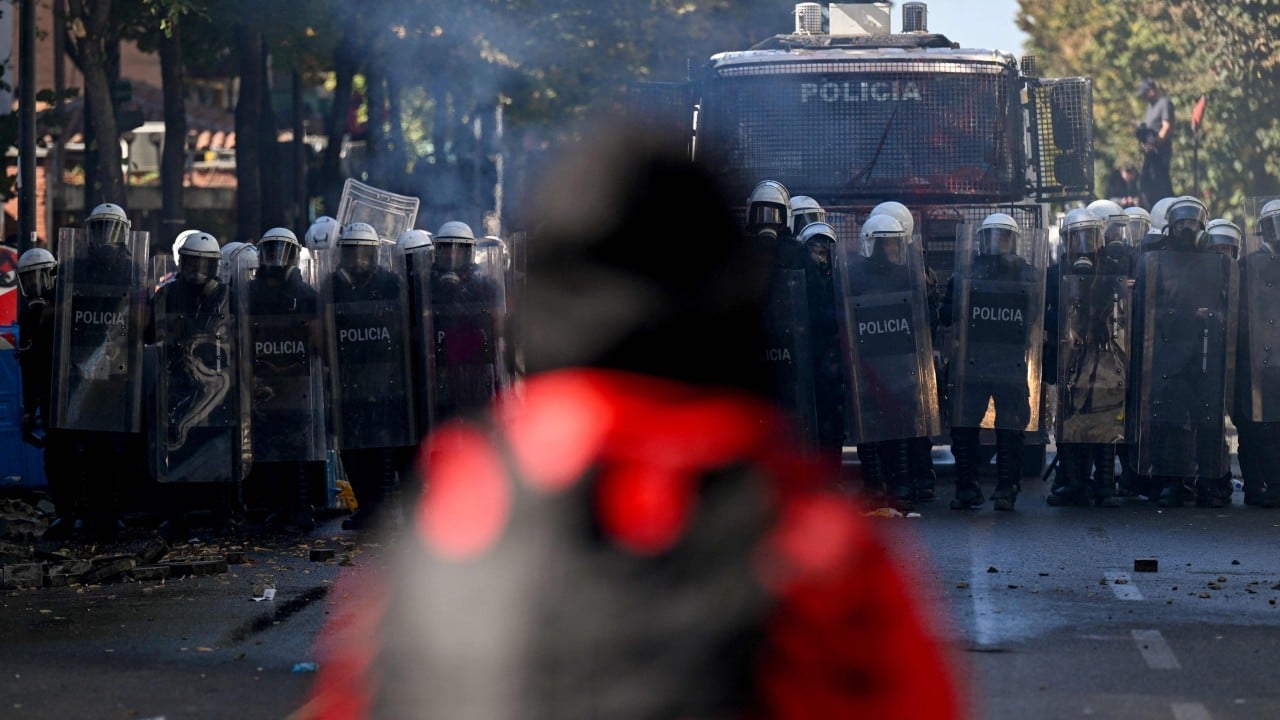
Television clips of riot police firing tear gas canisters and clearing avenues dominate international coverage because smoke and sirens travel fast. Yet focusing solely on tactical clashes obscures a deeper governance problem: heavy security deployment can contain physical disorder temporarily while eroding state legitimacy over the long run.
During October's wave of unrest, authorities deployed tens of thousands of officers nationwide, imposed curfews in hard-hit areas, restricted gatherings near sensitive sites, and pursued fast-tracked prosecutions for offenses committed during the riots. Shopkeepers and local residents caught near vandalized streets or burned vehicles often welcomed visible protection when order broke down. Nobody wants their neighborhood ransacked.
At the same time, collateral impacts undercut the message of calm authority. Accounts of tear gas drifting toward peaceful bystanders and cultural performers, combined with clashes at school blockades, leave moderate citizens uneasy about both rioters and heavy-handed crowd control.
Consider a hypothetical example to see how credibility erodes even when police restore order by midnight. Suppose a mid-sized city sees peaceful marchers in the afternoon followed by a smaller group breaking windows and lighting fires after dark. If authorities respond with sweeping dispersal tactics and broad curfews without visible follow-through on the underlying grievances—such as unfilled clinic shifts or school staffing gaps—residents may feel safer for a week while remaining convinced the state only answers complaints with force.
In policing, tactical control is not the same thing as political resolution. You can push a crowd off a square, yet the frustration that brought people out in the first place walks home with them.
Overlooked Fault Lines Beyond the Capital
Coverage of French unrest often treats Paris as the entire story. That is a mistake. While central boulevards, ministerial quarters, and major squares draw the heaviest camera crews, grievances in overseas territories, regional towns, and suburban schools frequently ignite early or carry distinct pressures.
School blockades and infrastructure complaints surfaced in overseas departments like French Guiana and Mayotte alongside suburban high schools in the Paris region, often receiving far less national spotlight at first than marches in the capital. Out in coastal ports and industrial corridors, economic anxiety looks different than in central Paris: livelihoods depend on fuel costs, maritime access, transport links, and local jobs rather than cultural debates.
Generational friction adds another layer that simple left-right labels miss. Younger workers and students face housing costs, entry-level wages, and educational bottlenecks, while some pensioners worry about losing purchasing power or tax breaks. Even among protesters, priorities collide over who should bear the cost of fixing public finances and who is already carrying too much of the weight.
The Real Cost to Business and Public Services
Prolonged strikes and unrest impose a quiet tax across the economy that outlasts any single day of marching. Retail shops lose peak sales when marches force closures or deter foot traffic, transport delays disrupt commuters and supply chains, and international visitors pay close attention to travel advisories and museum closures.
More damaging still is institutional wear and tear. Schools lose instructional days to blockades, hospitals and municipal offices contend with strained morale, and investors watch parliamentary budget brinkmanship to judge whether France can stabilize its debt trajectory without triggering another round of street reversals.
There are no painless shortcuts out of a fiscal squeeze when debt service is high and public expectations remain elevated. Any credible path requires honest trade-offs between spending commitments, tax fairness, and productivity—plus enough political durability to stick with reforms past the next news cycle. Until leaders pair firm budget discipline with tangible, near-term improvements in everyday public services, every reform proposal in France will keep walking straight into a wall of tear gas.