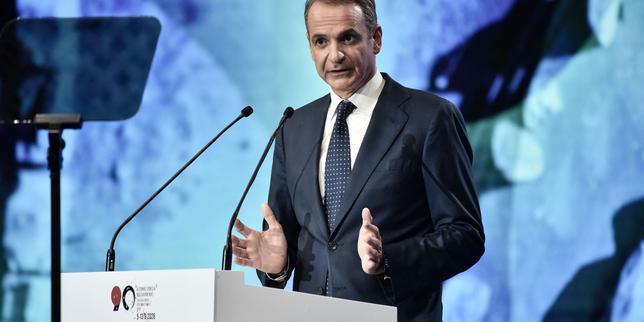
Athens has decided to spend its way out of a political trap. Prime Minister Kyriakos Mitsotakis rolled out a sweeping €2.2 billion tax and relief package slated for 2027, engineered to salvage public support during an intense cost-of-living squeeze. The initiative features targeted perks: an annual €400 bonus for pensioners, €500 payouts for public servants, income tax exemptions for low-income farmers and larger families, and lower advance tax obligations for self-employed professionals.
The timing is far from random. Years after nearly crashing the eurozone, Greece now boasts a macroeconomic profile that leaves other European capitals envious. The economy grows at roughly two percent annually, comfortably outpacing the broader eurozone average. Even more striking is the projected primary surplus, hovering near four percent of gross domestic product.
Yet, numbers on a spreadsheet rarely match the reality of a grocery receipt.
The Cost of Living Chasm
Walk down any neighborhood street in Athens, and the macroeconomic triumph feels entirely abstract. Prices for basic goods, rent, and energy have surged over recent years, leaving ordinary wage earners behind. While corporate balance sheets and tourism revenues recovered robustly, household disposable income remained stagnant.
This disconnect explains why the government’s political standing has eroded. Mitsotakis secured a commanding 40.5 percent majority in 2023 on a platform of economic competence and wealth creation. Recent polling, however, shows that support sliding below the 30 percent threshold.
Voters do not care about a four percent primary surplus when utility bills consume half a monthly paycheck. The new package is an explicit admission that structural growth alone will not pacify an electorate exhausted by years of austerity followed by persistent inflation.
Anatomy of the Relief Plan
To understand how the administration plans to distribute €2.2 billion—roughly one percent of GDP—one must look at the specific constituencies being courted.
Pensioners receive an annual €400 stipend. Public sector workers get €500. Families with three children and low-income agricultural workers are promised a zero income tax rate. Additionally, the minimum wage is targeted to climb to €950 a month, marching toward a stated goal of €1,000 by 2028. Meanwhile, pension contributions will drop by 0.5 percentage points, and self-employed individuals will see relief on advance tax payments.
Every single measure points directly at the ballot box. Public servants, retirees, small business owners, and families form the backbone of the center-right party's traditional electoral coalition. By throwing financial lifelines to these exact demographics ahead of elections next year, the administration is attempting to repair fractures before they turn into major electoral losses.
The Fiscal Tightrope
Critics argue that deploying a fiscal stimulus while inflation remains sticky risks reigniting price pressures. Brussels is watching closely. European fiscal rules have tightened significantly, and even though Greece currently enjoys strong fiscal space due to its oversized surplus, permanent spending commitments are difficult to reverse if growth slows down.
Consider a hypothetical scenario where external shocks—such as a disruption in Mediterranean shipping lanes or an energy spike—stall the European economy. A fixed obligation like higher minimum wages and recurring annual bonuses cannot simply be cancelled without triggering severe social backlash.
Furthermore, international credit rating agencies have maintained a cautious stance. While agencies like DBRS have shifted outlooks to positive and kept investment-grade ratings intact, they regularly warn about the fragile political arithmetic facing the country. Coalition dynamics after the upcoming vote could easily complicate fiscal discipline.
Beyond the Balance Sheet
The deeper vulnerability lies in the structural composition of the Greek economy. Tourism and real estate remain the primary engines of cash flow, sectors notorious for seasonal volatility and lower median wages. Tax cuts and targeted handouts provide temporary oxygen, but they do not solve the structural lack of high-value industrial production or technological export capacity.
Mitsotakis is betting that voters will reward immediate relief over long-term structural anxieties. If the plan succeeds, it cements his legacy as the architect of Greece’s post-crisis normalization. If it fails, history will remember it as an expensive political gamble that mortgaged future stability for a fleeting moment of electoral survival.
The money is allocated. The targets are chosen. The real test begins the moment those checks clear in bank accounts across the country, just as citizens head toward a pivotal political reckoning.



