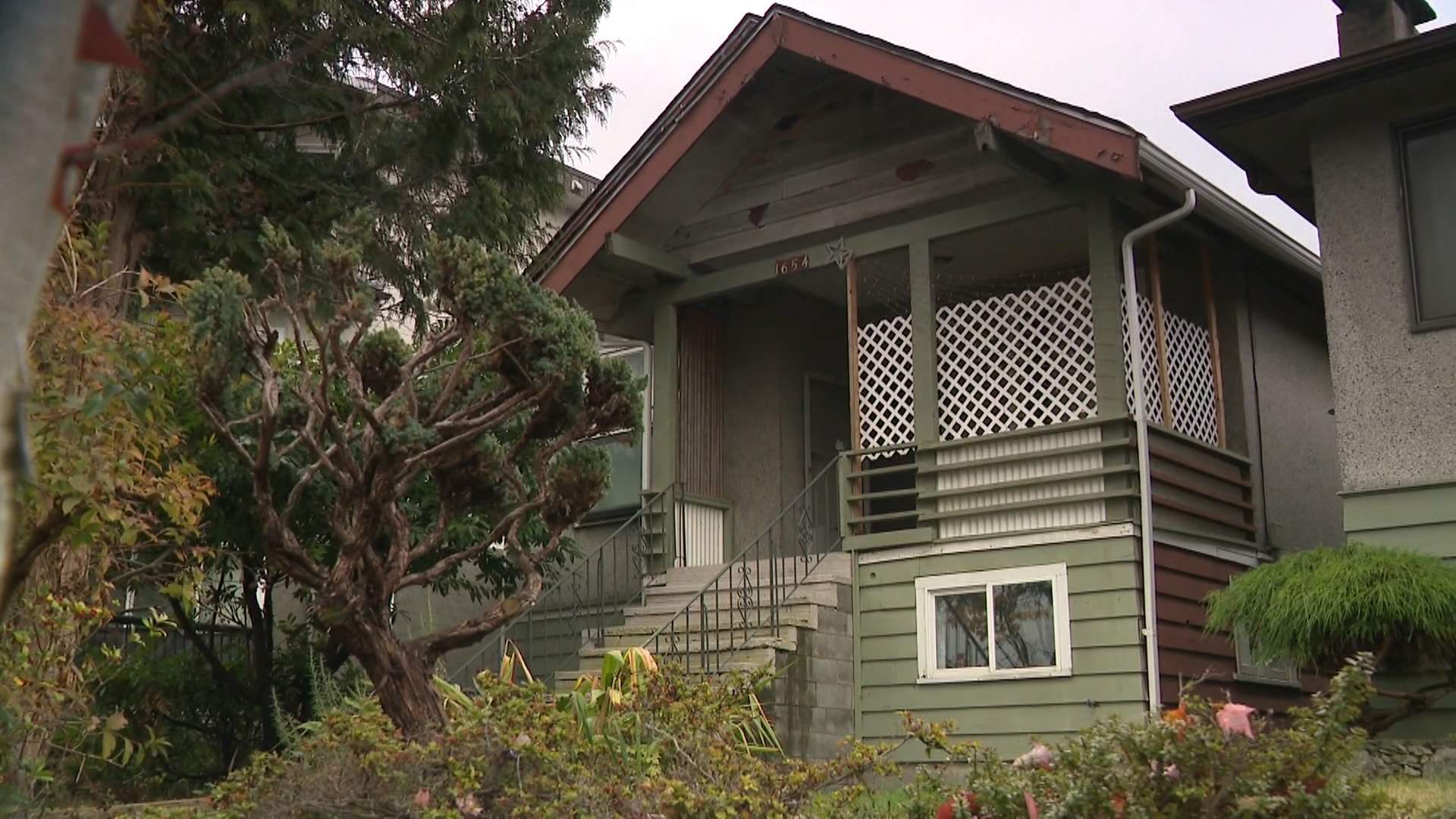
Harare demolitions are stripping thousands of Zimbabwean families of their homes because a broken, politicized land-allocation system allows informal "land barons" to sell state and municipal plots illegally, only for city councils and central government authorities to bulldoze the resulting brick structures years later without compensation. What gets framed in local coverage as a sudden clash between city bylaws and desperate squatters is actually the final, violent stage of a predictable real estate trap. Families pour their life savings into concrete and corrugated iron, often with tacit approval from local officials, before the bulldozers arrive to clear the land for connected developers or state projects.
The rubble in high-density suburbs like Budiriro, Glen View, Kuwadzana, and Epworth is not merely a housing failure. It is an economic extraction machine.
How the Land Baron Trap Works
To understand why families build permanent houses on land they do not legally own, you have to follow the money through Harare's shadow property market. Formal housing delivery in Zimbabwe collapsed decades ago under hyperinflation, currency volatility, and municipal bankruptcy. With the City of Harare unable to service new stands—meaning it cannot lay water pipes, sewer lines, or tarred roads—a massive supply vacuum opened up.
Enter the land barons. These are politically connected brokers, cooperative leaders, and rogue officials who carve up council-owned wetlands, school sites, recreational parks, and peri-urban farms. They form housing cooperatives, print official-looking receipt books, and sell residential stands to low- and middle-income earners for cash.
To a buyer working in the informal economy, the transaction looks legitimate. There is a cooperative chairperson, a peg in the ground, a stamped allocation letter, and neighbors already laying foundations.
For three, five, or even ten years, the state does nothing. Municipalities sometimes even collect monthly rates or waste-collection fees from these unregularized settlements, creating a paper trail that residents reasonably interpret as de facto recognition. Families spend every spare dollar buying cement bag by bag, roofing sheets one at a time, slowly constructing four- and five-room brick homes.
Then the political winds shift, or a well-connected private developer acquires the title deed to the same parcel. Suddenly, the residents are labeled illegal settlers. Armed riot police arrive at dawn alongside municipal front-end loaders, flattening years of accumulated wealth into dust within hours.
A Pattern Set in Concrete Since 2005
Anyone who has covered Southern African urban policy over the past two decades recognizes this playbook. The current wave of Harare demolitions is the direct descendant of Operation Murambatsvina ("Restore Order"), the 2005 state campaign that destroyed homes and informal markets across Zimbabwe, displacing roughly 700,000 people according to United Nations estimates at the time.
Back then, the government claimed it was cleaning up urban squalor and enforcing colonial-era town planning laws. In reality, the campaign broke up opposition voting blocs in urban centers and reasserted central state control over municipal space.
Twenty years later, the mechanics have evolved from a single nationwide blitz into a rolling, localized cycle of tolerance and destruction.
Consider the structural pattern that repeats every electoral cycle in Harare:
- Pre-election tolerance: In the twelve to eighteen months leading up to national or municipal elections, enforcement vanishes. Cooperative leaders aligned with political factions distribute stands aggressively to secure voter loyalty.
- Post-election crackdowns: Once ballots are cast, environmental agencies, the Ministry of Local Government, and the City of Harare suddenly rediscover the Regional, Town and Country Planning Act.
- Selective enforcement: Brick homes belonging to working-class families on wetlands are pulverized, while sprawling commercial complexes, fuel stations, and gated mansions built on adjacent protected wetlands remain untouched.
This selective application of the law exposes the core hypocrisy of the urban cleanup narrative. When bulldozers crush a teacher's three-bedroom house in Ridgeview or Budiriro because it sits on a wetland, yet leave a neighboring shopping mall on the exact same water table standing, the issue is clearly not ecological preservation. It is power and capital.
The Institutional Tug-of-War Behind the Bulldozers
Another layer missing from surface-level reporting is the jurisdictional warfare between Zimbabwe's central government and the opposition-led City of Harare. Since the early 2000s, Harare's municipal council has largely been controlled by opposition parties, while the central government—and specifically the Ministry of Local Government and Public Works—remains firmly in the hands of the ruling ZANU-PF party.
This split governance paralyzes urban planning and creates a convenient blame loop whenever demolitions spark public outrage.
When the excavators roll in, central government officials point fingers at corrupt opposition councilors for failing to enforce bylaws or for colluding with housing cooperatives. Simultaneously, city officials accuse central government ministries of overriding municipal master plans, parceling out state land to party-aligned land barons without council approval, and then forcing the municipality to execute court orders obtained by private developers.
Both accusations carry truth. Corruption in Harare's land administration is bipartisan and deeply entrenched. Audits and commissions of inquiry—most notably the Justice Uchena Commission of Inquiry into the Sale of State Land in and around Urban Areas, whose findings were submitted in 2019—documented billions of dollars in lost state revenue and widespread illegal land sales involving politicians, council bureaucrats, and cooperative executives across the spectrum.
Yet years after the Uchena Commission handed over its report, almost none of the major land barons have faced meaningful prison time or asset forfeiture. The architects of the fraud keep their cash and their mansions. The victims lose their roofs.
What Happens When a Household Loses Its Only Asset
In economies with mature financial systems, a house is backed by title insurance, mortgage regulation, and enforceable consumer protections. In Zimbabwe, where decades of currency collapses have repeatedly wiped out bank savings and pension funds, brick and mortar is the only reliable store of value.
People do not build houses in Harare merely for shelter; they build them because a bag of cement holds its value better than money in a bank account.
When a demolition crew knocks down a family's home, it executes a total financial wipeout. There is no homeowner's insurance payout. There is no municipal relocation package, save for the occasional dump of families onto bare, unserviced open veld miles away from schools, clinics, and transport routes.
The secondary shocks hit immediately:
- Intergenerational poverty: Families who had finally escaped the trap of paying monthly rent in foreign currency are thrust back into overcrowded lodging rooms, paying $150 to $300 a month for two small spaces while sharing a single outdoor tap and toilet with multiple other households.
- Education disruption: Children pulled out of neighborhood schools in the middle of a term often drop out entirely when families scatter to rural homesteads or distant peri-urban squatter camps.
- Public health emergencies: Destroying homes without providing alternative sanitation forces displaced residents into makeshift plastic shacks with zero water or sewer infrastructure, directly fueling recurring outbreaks of cholera and typhoid during the rainy season.
Let us take a hypothetical example to illustrate the math of this destruction. Imagine a civil servant earning $350 a month who spends seven years buying building materials incrementally, investing roughly $14,000 into a modest four-room house in a Harare suburb after paying $2,500 to a housing cooperative. When that structure is demolished, $16,500 in liquid and fixed capital vanishes in forty-five minutes. At their current salary, assuming they could save twenty percent of their income—an impossibility while paying rent—it would take nearly twenty years just to recover the raw cash lost, before accounting for inflation.
The Legal Shield That Rarely Protects the Poor
On paper, Zimbabwe's 2013 Constitution offers strong protections against arbitrary evictions. Section 74 explicitly states that no person may be evicted from their home, or have their home demolished, without an order of court made after considering all the relevant circumstances. Furthermore, Section 28 obligates the state to take reasonable legislative and other measures, within the limits of the resources available to it, to enable every person to have access to adequate shelter.
In practice, legal protections fail low-income residents at three critical chokepoints.
First, demolition notices are frequently served improperly or vaguely, sometimes pasted on a single tree or issued with forty-eight hours' notice—far too little time for working-class families to pool money, hire a lawyer, and file an urgent High Court interdict.
Second, private developers and state agencies routinely obtain default eviction judgments against cooperatives without individual homeowners ever realizing their specific plot is under litigation. By the time residents see the court stamp, the sheriff is already accompanied by riot police.
Third, even when human rights lawyers secure urgent court orders halting demolitions, enforcement on the ground often outpaces the paperwork. Once a wall is crushed, a piece of paper from a judge cannot put the mortar back together.
Why Regularization Keeps Failing
Every few years, authorities announce a sweeping regularization program—a policy framework meant to survey existing informal settlements, issue formal title deeds or lease agreements, and charge residents a fee to retrofit roads, water, and sewer networks.
On paper, regularization is the only sane policy response. You cannot bulldoze away a housing backlog exceeding 1.5 million units nationwide.
Yet regularization stalls repeatedly for three reasons:
- Prohibitive retrofitting costs: Laying sewer trunk lines and tarred roads after houses have already been built haphazardly—often blocking road servitudes and drainage channels—costs vastly more than servicing virgin land. Neither the cash-strapped City of Harare nor residents surviving hand-to-mouth can fund the capital expenditure.
- Overlapping claims: Many contested parcels have multiple layers of ownership—an original farm title, a municipal master plan designation, a cooperative layout, and a private developer's deed. Untangling these claims takes years in congested courts.
- Perverse incentives: As long as land barons face zero criminal consequences and buyers believe the government will eventually regularize illegal settlements out of political necessity, the cycle of illegal subdivision continues unchecked.
There are no clean, painless fixes left in Harare's urban footprint. Allowing unchecked construction on wetlands genuinely threatens the city's already collapsing water supply, since wetlands act as natural filtration sponges feeding Lake Chivero, Harare's primary water source. At the same time, mass demolitions without alternative serviced land or prosecution of the sellers simply transfers the cost of state failure onto the most vulnerable citizens.
Until Zimbabwe's justice system begins seizing the bank accounts and properties of the land barons who pocket the money—rather than sending bulldozers to crush the bricks bought by their victims—every newly cleared field in Harare will simply become the site of the next illegal subdivision, waiting for the next election cycle to begin the trap all over again.