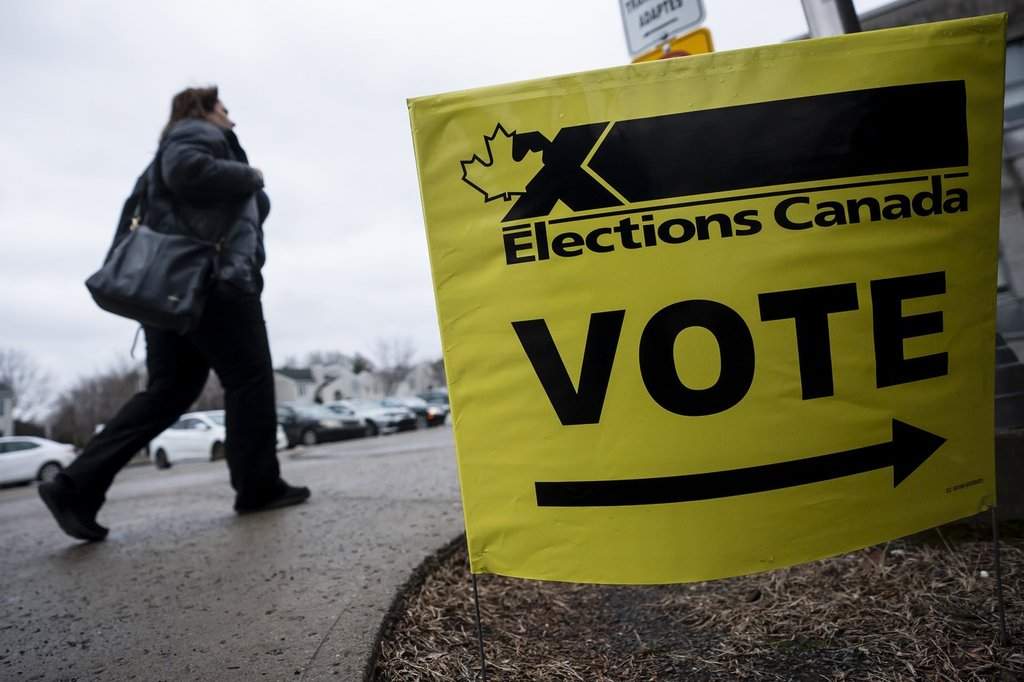
Prime Minister Mark Carney has triggered a critical triple threat of electoral contests, setting August 31 as the date for federal byelections in the ridings of Beaches-East York in Ontario, Chicoutimi-Le Fjord in Quebec, and North Vancouver-Capilano in British Columbia. This move forces political parties into an aggressive late-summer campaign sprint while testing voter fatigue against a backdrop of acute economic anxiety and looming trade pressures.
Political watchers treat routine electoral announcements as mere calendar management. This one is different. It is an accelerated stress test of institutional stability. Don't miss our previous post on this related article.
The Mechanics of Vulnerability
Electoral maps are never neutral. They are living battlegrounds shaped by demographic shifts, local grievances, and national headwinds.
Consider a hypothetical scenario where an incumbent party holds a paper-thin margin in Parliament. Every single seat functions as a structural pillar. Pull one out, and the ceiling starts to sag. Prime Minister Carney's administration faces a shifting House of Commons where legislative survival requires absolute operational discipline. These three targeted contests are not spaced out across a comfortable autumn timeline. They are compressed into a single, high-stakes August polling day that restricts the opposition's ability to redeploy central war-room resources effectively. If you want more about the history here, NBC News offers an in-depth breakdown.
Voter turnout in summer contests traditionally plummets. Vacation season competes with political rallies. Lawn signs fight for space against patio umbrellas. Yet, low-turnout environments distort traditional polling models entirely. Ground game execution matters more than national macro-messaging. The party machinery that knocks on the most physical doors, rather than the one running the slickest digital ad spend, usually carries the day when the electorate is half-asleep on a late-August Monday.
Regional Fault Lines and Local Realities
Each of the three selected ridings represents a distinct micro-climate of Canadian discontent and aspiration.
Beaches-East York carries the weight of urban Ontario's housing affordability crisis and municipal service strains. Voters here live downstream from interest rate decisions and federal-municipal friction. A misstep by any major party on housing supply metrics echoes loudly through these suburban-urban streets.
Chicoutimi-Le Fjord opens a window into the complex soul of regional Quebec. Economic security, resource development, and cultural protection dominate kitchen table conversations in this riding. Federal parties cannot rely on generalized slogans here. They must speak fluently to regional industrial identity and localized economic pride.
North Vancouver-Capilano tests the shifting political sands of coastal British Columbia. Environmental policy, cost-of-living pressures, and infrastructure bottlenecks collide in this affluent yet economically squeezed riding. Environmental consciousness battles fiercely against pragmatic economic anxiety. The candidate who successfully bridges that psychological gap wins the ballot box.
The Opposition Dilemma
For the opposition parties, these byelections present a brutal tactical bind. Pour maximum financial and human capital into all three races, and risk exhausting resources ahead of a potential general election. Underspend, and risk handing the government uncontested momentum or, worse, critical parliamentary leverage.
Party war rooms spend decades building intricate mathematical models to predict voter behavior. But models break down when human beings face immediate, tactile pressures like grocery prices, mortgage renewals, and cross-border trade threats. National leaders often project absolute confidence in television interviews. Behind closed doors, regional organizers know that a single local scandal or an unscripted gaffe can flip a hundred-year-old stronghold in forty-eight hours.
The Deeper Economic Undercurrent
Elections do not happen in a vacuum. They occur while households calculate the real-world impact of potential foreign tariffs and shifting global supply chains. When voters walk into a community centre or a church basement on August 31, they are not just evaluating local candidates. They are rendering an informal verdict on national competence.
Governments call byelections when they calculate that the political weather is navigable. Sometimes, however, the barometer fails. The calculation to drop three writs across three distinct provinces simultaneously demonstrates a calculated boldness from the Prime Minister's office. It challenges opponents to match an aggressive national tempo while forcing local campaigns to sink or swim based on grassroots mobilization alone.
The ballots will be counted after the summer heat breaks. By midnight on August 31, the parliamentary arithmetic will have shifted, and the political class will immediately begin parsing the wreckage to divine what comes next for a minority parliament walking a permanent tightrope
Mark Carney calls byelections for 3 ridings in Ontario, Quebec and B.C.
This video provides an in-depth look at the mechanics behind the federal byelection race and what is at stake for the government in Parliament.