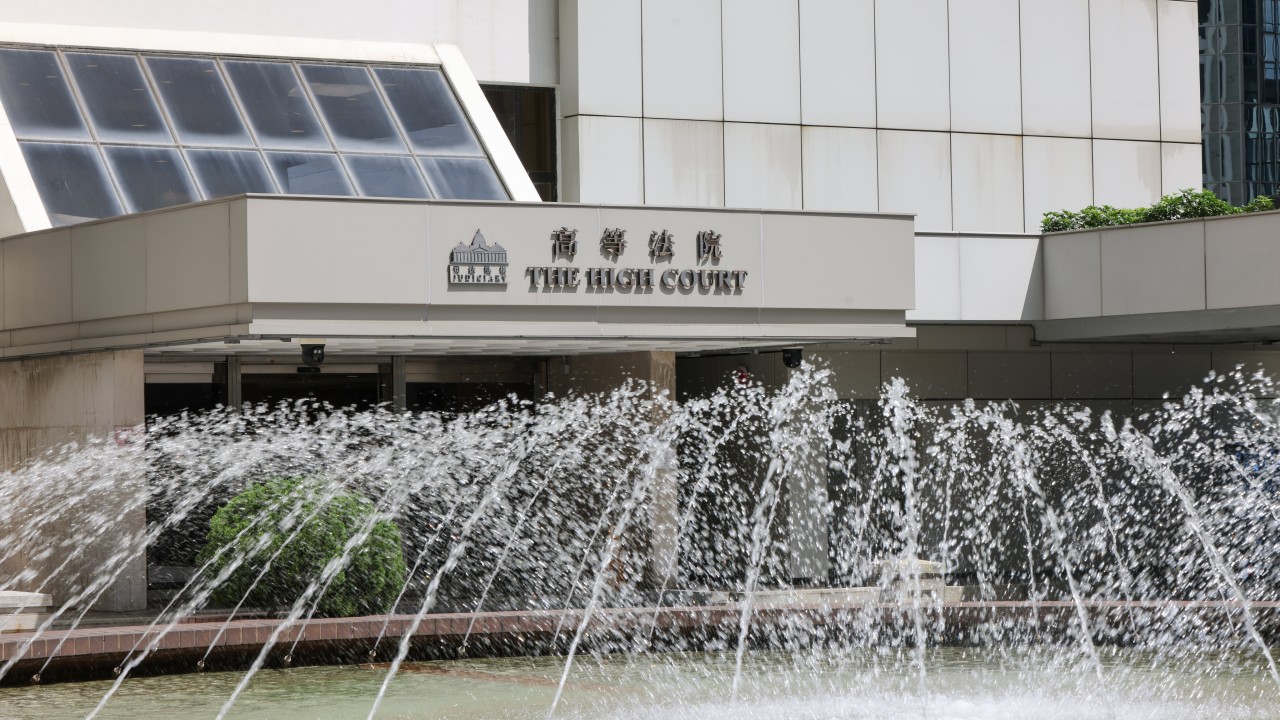
Hong Kong’s judicial system is hitting a structural wall. Facing an unprecedented wave of complex fraud and money-laundering prosecutions, legal practitioners and policy observers are increasingly urging the judiciary to introduce evening court sessions to clear a mounting case backlog that threatens the city's reputation as a premier financial center.
The numbers tell a stark story, even without pulling proprietary docket sheets. Over the last several years, a ruthless convergence of cross-border cybercrime, sophisticated shell-company networks, and aggressive regulatory enforcement by the Hong Kong Police Force and the Independent Commission Against Corruption (ICAC) has flooded the District Court and the High Court. Prosecutors are bringing forward massive, multi-defendant indictments that do not take days to try. They take months. Sometimes they stretch across multiple years.
When a single money-laundering trial consumes a courtroom, a judge, and a team of court clerks for six months straight, every other civil dispute, commercial arbitration challenge, and routine criminal matter gets pushed to the back of the queue. Justice delayed is not just a cliché in legal circles. In an international financial hub where capital moves at the speed of fiber-optic cables, a three-year wait for a commercial fraud ruling is a direct tax on doing business.
The Anatomy of a Bottleneck
To understand why the benches are buckling, you have to look at how financial crime itself has changed. Twenty years ago, a typical fraud case in Hong Kong involved a forged letter of credit, a crooked warehouse manager, or a localized investment scam. The paper trail fit into a few cardboard boxes. A seasoned barrister could cross-examine the key witnesses in a week.
Today, the typical money-laundering prosecution is a sprawling digital nightmare. Consider a hypothetical example of a modern syndication case. A syndicate sets up forty local shell companies using stooge directors recruited off encrypted messaging apps. Funds stolen via business email compromise in Europe are routed through virtual banks in Hong Kong, converted into stablecoins on unregulated over-the-counter desks, and layered back into fiat currency through luxury goods brokers.
By the time the Commercial Crime Bureau arrests the low-level money mules and mid-tier operators, the prosecution file contains terabytes of server logs, tens of thousands of WhatsApp screenshots, and bank records spanning a dozen jurisdictions. Under Hong Kong’s common law rules of evidence, every single piece of that digital trail must be authenticated, disclosed to the defense, and scrutinized in open court.
The defense has every right to test the prosecution's case. That is the bedrock of the rule of law. Yet the practical result is procedural gridlock. Pre-trial applications regarding admissibility of electronic records alone can burn through weeks of court time before a jury is even empaneled or a judge hears opening arguments.
The Enforcement Surge Meets Finite Infrastructure
Law enforcement in Hong Kong has become remarkably efficient at freezing assets and laying charges. Banks, terrified of massive regulatory fines from the Hong Kong Monetary Authority, file Suspicious Transaction Reports at record volumes. The Joint Financial Intelligence Unit processes these alerts and feeds them to investigative teams. Arrests follow. Charges are laid under the Organized and Serious Crimes Ordinance.
The bottleneck happens the moment those files cross the threshold of the judiciary. You can hire a thousand more financial investigators and train them to trace blockchain transactions. You cannot conjure new High Court judges or build new courtrooms in Central or Wan Chai overnight.
Physical space is a hard constraint. Hong Kong’s historic court buildings and newer judicial complexes have a finite number of rooms equipped to handle high-security, multi-defendant trials with bulky electronic presentation systems. When ten defendants sit in the dock, each represented by their own solicitor and barrister, the sheer physical footprint of the trial eliminates smaller courtrooms from consideration. Those mega-trials monopolize the largest venues.
The Case for Night Courts
This brings us to the radical proposal gaining traction in legal corridors—running the courts after dark.
The logic is seductive in its simplicity. Courtrooms sit empty after 5:00 PM. Why let multi-million-dollar judicial infrastructure go dark for sixteen hours a day when defendants are sitting in remand and commercial litigants are staring at years of delay?
Advocates for evening sessions point to historical precedent. Hong Kong has used extended hours before, notably during periods of intense civil unrest or acute administrative backlogs, to handle initial mentions, bail applications, and procedural hearings. Expanding that concept to run dedicated evening shifts for financial crime trials—say, from 6:00 PM to 10:00 PM—looks on paper like an instant doubling of capacity without laying a single brick.
It would allow deputy judges—experienced private-sector barristers appointed temporarily to the bench—to preside over trials after finishing their daytime chambers work. It could clear out the procedural underbrush, such as pre-trial reviews and straightforward sentencing hearings for guilty pleas, freeing up daytime slots for heavy, contested trials.
Why the Legal Profession Is Divided
Ask a veteran criminal defense barrister about night courts, and you will likely get a weary sigh followed by a sharp critique. Turning the justice system into a 24-hour factory sounds great to efficiency consultants, yet it collides violently with the realities of practicing law at a high level.
Trial advocacy is an exhausting cognitive sport. A barrister does not simply walk into court at 6:00 PM, read from a script, and go home at 10:00 PM. Every hour in front of a judge requires three to four hours of preparation. Counsel must review transcripts, draft cross-examinations, confer with instructing solicitors, and take instructions from clients held in correctional facilities.
If a lawyer finishes a daytime hearing at 4:30 PM and has to be back on their feet in a different courtroom at 6:00 PM, quality inevitably suffers. Exhausted lawyers miss critical contradictions in witness testimony. Tired judges make errors of law that invite costly, time-consuming appeals—which only feed back into the very backlog the system is trying to cure.
The Hidden Infrastructure Trap
Beyond the human toll on lawyers and judges lies an administrative hurdle that proponents often gloss over. A courtroom does not run on a judge and two lawyers alone. It requires an entire ecosystem of support staff.
- Court Clerks and Interpreters: Hong Kong trials frequently operate bilingually, requiring simultaneous or consecutive translation between Cantonese, Putonghua, and English. Highly skilled court interpreters are already in short supply. Running night shifts would require recruiting and paying overtime to a massive pool of specialized staff.
- Correctional Services: Moving remanded defendants from Lai Chi Kok Reception Centre or Stanley Prison to courtrooms at night creates severe logistical and security headaches for the Correctional Services Department. Escort vehicles, holding cell staffing, and late-night return processing would stretch prison budgets and manpower to the breaking point.
- Legal Aid: Most low-level money-laundering defendants—the so-called "stooges" who sold their bank accounts for a few thousand dollars—rely on the Legal Aid Department. Funding evening sessions means renegotiating fee structures and convincing private practitioners on legal aid panels to sacrifice their evenings for fixed government rates.
The Stooge Dilemma and Prosecutorial Strategy
Digging deeper into the crisis reveals that the backlog is not purely a scheduling problem. It is also a charging problem.
Over the past few years, Hong Kong authorities have pursued an aggressive deterrence strategy against money laundering. Rather than waiting years to build an airtight case against the elusive masterminds sitting in offshore jurisdictions, police have systematically prosecuted the account holders at the bottom of the pyramid. A university student or an unemployed worker who hands over their ATM card and PIN to a syndicate is swiftly arrested and charged with dealing with property known or believed to represent proceeds of an indictable offense.
These cases are legally straightforward yet procedurally heavy. Many defendants contest the charges, claiming they were duped or coerced, forcing full trials over relatively small sums of money. When thousands of these lower-tier prosecutions hit the District Court simultaneously, they create a massive traffic jam.
Some senior legal figures quietly argue that the solution is not night courts, but smarter prosecutorial triage. Diverting low-level, first-time offenders into alternative resolution mechanisms, or streamlining plea-bargaining guidelines to encourage early guilty pleas before trial dates are fixed, would clear the docket far more effectively than forcing judges to work under fluorescent lights at 9:00 PM.
The Economic Stakes for Hong Kong
Why does any of this matter outside the narrow world of wigs, gowns, and criminal procedure? Because Hong Kong’s entire economic value proposition rests on institutional reliability.
Global banks, private equity funds, and multinational corporations do not park their regional headquarters in Hong Kong for the weather or the cheap office rent. They operate there because contracts are enforced, property rights are protected, and disputes are resolved predictably by an independent judiciary.
When the criminal docket swells to the point where judges have to be pulled off commercial lists to hear fraud and money-laundering cases, the civil justice system feels the tremors. Insolvency petitions, shareholder disputes, and regulatory injunctions start facing longer lead times. Rival financial hubs like Singapore are watching closely, eager to pitch their own dispute resolution centers as faster, friction-free alternatives.
Moreover, international compliance watchdogs like the Financial Action Task Force (FATF) do not just look at how many arrests a jurisdiction makes. They look at the entire lifecycle of enforcement, including timely convictions and asset recovery. A justice system choked by multi-year delays risks looking sluggish on the global stage, regardless of how aggressive its police force is.
Alternative Fixes on the Table
If evening sessions prove too cumbersome to implement on a wide scale, the judiciary still has other levers to pull—though none of them are painless.
Expanding the use of technology in courtrooms is the most obvious route. While Hong Kong adopted remote hearings for certain civil matters during the pandemic, criminal trials remain stubbornly tied to physical presence and paper bundles. Forcing parties to use unified electronic trial platforms, mandating strict page limits on written submissions, and conducting routine case management conferences via video link could shave months off the calendar without changing operating hours.
Another option is dedicated financial crime courts. By grouping specialized judges, trained specifically in forensic accounting, cryptocurrency tracing, and complex banking regulations, the judiciary could drastically reduce the time spent educating the bench on basic technical concepts during trials. Right now, counsel often spend days explaining how a blockchain ledger works before they can even get to the facts of the alleged fraud.
Finally, there is the sensitive question of judicial recruitment. Filling vacancies on the District Court and High Court benches has been a persistent challenge, partly because top-tier commercial barristers take a massive pay cut to join the bench. Until the compensation gap narrows or the prestige of judicial appointment outweighs the grueling workload, the pool of available judges will remain dangerously shallow.
The Reality Check
Running night courts sounds like decisive action. It makes for punchy headlines and gives the impression that the establishment is throwing everything it has at financial crime.
Yet treating a structural overload with extended shift work is a temporary patch on a deep systemic strain. You cannot fix an overloaded pipeline merely by keeping the valves open later at night if the workers operating the machinery are burning out, the interpreters are unavailable, and the charging strategy continues to flood the system with thousands of low-tier prosecutions. Unless Hong Kong pairs any scheduling experiments with aggressive digital modernization, smarter prosecutorial filtering, and serious investment in judicial manpower, the backlog will simply spill over into the night shift too.


