The floor fell out of the diplomatic cage on Sunday night when a single Truth Social post from Donald Trump vaporized weeks of back-channel maneuvering. By calling Iran’s counter-proposal "totally unacceptable," the White House did more than just kill a draft agreement; it signaled to global energy markets that the 10-week-old war in the Middle East has no immediate off-ramp.
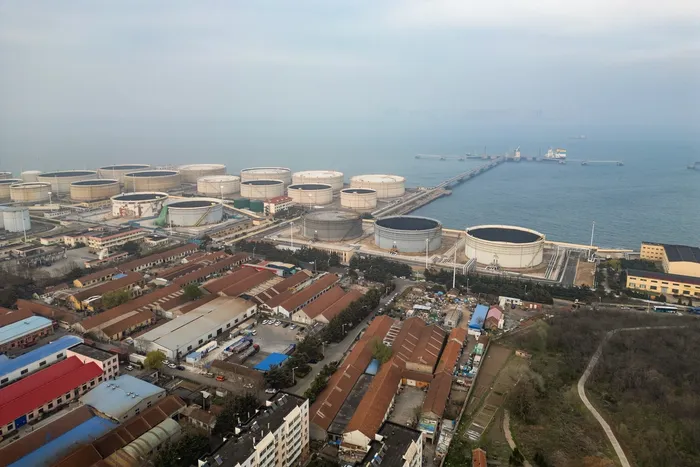
The reaction was instantaneous. Brent crude futures, which had been drifting on hopes of a de-escalation, ignited in Asian trade on Monday, May 11, 2026. Prices jumped 3.5% to hit $104.80 per barrel. WTI shadowed the move, surging toward $99 as traders realized the Strait of Hormuz—the world’s most vital energy artery—will remain a "no-go" zone for the foreseeable future. Roughly one-fifth of the world’s oil supply is currently trapped behind a wall of naval blockades and missile threats.
The Anatomy of a Non Starter
To understand why this deal died, you have to look at the massive gap between the "surrender" demanded by Washington and the "reparations" sought by Tehran.
President Trump’s primary mandate is the total dismantlement of Iran’s nuclear infrastructure. Not just a pause, and not just another inspection regime. The U.S. position, reinforced by Secretary of State Scott Bessent’s current high-stakes tour through Asia, requires the permanent removal of near bomb-grade uranium from Iranian soil.
Iran’s counter-proposal, delivered through Pakistani mediators, was never going to fly in the current White House. According to leaked details of the document, Tehran demanded:
- Full recognition of Iranian sovereignty over the Strait of Hormuz (a point that would effectively legalize their right to close it).
- The immediate lifting of all U.S. sanctions and the release of frozen assets.
- Formal war reparations for the 10-week naval and air campaign.
For a president who campaigned on "maximum pressure" and "the best deals," being asked to pay for the privilege of ending a war he believes he is winning was a non-starter. Trump’s blunt dismissal underscores a fundamental reality: the U.S. is betting that it can outlast Iran in a war of economic attrition, even if it means $5.00 gasoline at home.
The Chokepoint Tax
The Strait of Hormuz is not just a geographic feature; it is a global economic switch. Since the closure began in late February 2026, the International Energy Agency (IEA) has tracked the largest supply disruption in history.
When the Strait is closed, the math for global energy security becomes brutal. Saudi Arabia and the UAE have pipelines that can bypass the waterway, but these are limited. Combined, they cannot replace the 20 million barrels per day that usually flow through the narrows.
The result is a "Geopolitical Risk Premium" that is now hard-coded into every barrel of oil. This isn't just about supply and demand; it's about the cost of insurance, the risk of seizure, and the reality of a multinational naval mission that has yet to secure a safe passage. As long as the U.S. Navy maintains its blockade and Iran maintains its missile batteries on the coast, the "Hormuz Tax" stays on the invoice.
The Asian Front
While the headlines focus on the Washington-Tehran spat, the real pain is being felt in Tokyo, Seoul, and Beijing. These economies account for nearly 75% of the oil that typically passes through the Strait.
Trump’s timing is particularly pointed. He is scheduled to arrive in China this week for a summit with President Xi Jinping. By blowing up the peace proposal now, Trump arrives in Beijing with a massive piece of leverage. China is desperate for energy stability to fuel its post-conflict recovery. Trump, meanwhile, is using the crisis to push for a broader "Economic Security" pact that would likely involve China pulling back its support for Tehran in exchange for a resumption of energy flows.
The Fragility of the Ceiling
There is a school of thought among some floor traders that oil can’t stay above $100 forever. They point to the "demand destruction" that occurs when prices hit the triple digits. In the U.S., gasoline prices have already climbed 30% since the war began, hitting an average of $4.00 per gallon nationwide.
However, this isn't a standard market cycle. We are witnessing a systemic breakdown of the Gulf Cooperation Council (GCC) economic model. QatarEnergy has already declared force majeure on LNG exports. The loss of between 600 and 700 million barrels of production to date is a hole that cannot be filled by tapping the Strategic Petroleum Reserve alone.
The military reality on the ground—or rather, on the water—is the only thing that matters now. The U.S. has achieved significant military success in degrading Iranian naval assets, but as the President himself noted, "It’s over when it’s over."
The failure of this latest diplomatic push suggests that "over" is still a long way off. Investors should prepare for a summer of extreme volatility, where a single social media post or a stray drone in the Gulf can swing the price of a barrel by five dollars in five minutes.
The "Totally Unacceptable" declaration wasn't just a rejection of Iranian terms. It was an admission that the price of peace is currently higher than the price of war.