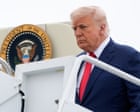
The Strait of Hormuz is bleeding oil, and the White House is running out of options. When Iran's Islamic Revolutionary Guard Corps struck two commercial oil tankers navigating the strategic chokepoint under United States military aerial escort, it wasn't merely a tactical escalation. It exposed a profound strategic failure at the heart of Washington's maritime projection capabilities. Crude oil prices have punched past ninety dollars a barrel, domestic fuel costs are punishing voters, and Donald Trump's hastily convened cabinet retreat at Camp David underscores an administration cornered by its own miscalculations.
The five-month-old conflict in the Persian Gulf has shattered decades-old assumptions about freedom of navigation. For a different perspective, check out: this related article.
The Anatomy of a Chokepoint Collapse
Every strategist in the Pentagon knew the vulnerabilities of the Strait of Hormuz before the first missile flew. Roughly twenty percent of global petroleum consumption flows through this narrow maritime artery. Yet, political leadership repeatedly bought into the hubris that overwhelming air power could permanently secure a corridor against asymmetric coastal defense systems.
Iran didn't need a blue-water navy to enforce its blockade. Instead, the IRGC deployed a dense matrix of shore-based anti-ship missiles, fast attack craft swarms, extensive sea mine networks, and aggressive electronic warfare GNSS jamming. When commercial shipping companies attempted to thread the needle using designated transit lanes backed by American air cover, they ran straight into a wall of coordinated kinetic resistance. Similar coverage on this trend has been published by Al Jazeera.
Two tankers halted after sustaining direct hits, while four others executed immediate reversals under fire. The message from Tehran was unmistakable. The United States military can provide all the aerial protection it wants, but it cannot guarantee immunity in a confined coastal zone saturated with low-cost asymmetric threats.
The Political Fallout in Washington
The strategic deadlock on the water has triggered an immediate political crisis on land. Five months into a war originally marketed as a brief punitive campaign, public support has cratered to roughly thirty percent. Lawmakers on Capitol Hill are facing intense pressure from constituents as inflation spikes at the pump and grocery store.
A recent War Powers resolution vote in the Senate narrowly failed, but the razor-thin margin revealed a fractured legislative base losing patience with an open-ended military commitment. Cabinet officials arriving at Camp David are grappling with an intractable dilemma. Escalating the bombing campaign has failed to compel Tehran to reopen the strait, while backing down hands adversaries a historic geopolitical victory.
Midterm elections loom large over these calculations. Economic pain remains the primary weapon of the opposition party, and every barrel of crude trapped behind the Iranian blockade translates directly into lost political capital for the incumbent administration.
The Maritime Insurance Reality
Beyond the geopolitical posturing lies a quieter, more devastating reality for global commerce: the complete withdrawal of maritime risk underwriting. Commercial insurers refuse to cover vessels transiting a war zone where naval escorts prove incapable of preventing missile strikes.
Without hull and machinery insurance, shipping companies simply anchor their fleets rather than risk billion-dollar assets. The International Maritime Organization's halting of emergency escort operations signals a tacit admission that traditional naval protection models are obsolete in narrow, missile-threatened waters.
Naval escorts work when dealing with isolated piracy or low-intensity harassment. They fail entirely when pitted against a sovereign state actor wielding precision-guided munitions designed specifically to deny access to confined seas.
The Path Ahead
The administration faces a narrowing window to stabilize energy markets before economic damage becomes irreversible. Force projection has reached its physical limits in the Persian Gulf. As tankers sit idle and crude inventories tighten globally, the illusion of effortless maritime dominance has evaporated against the rocky coast of Oman and the southern Iranian shore.
The tankers turn back, the cabinet debates behind closed doors, and the price ticks upward.
Iran's IRGC Strikes 2 Oil Tankers Under U.S. Escort in Strait of Hormuz!
This short video covers the immediate developments regarding the IRGC's targeting of commercial tankers under U.S. air escort and the subsequent shock to global energy markets.


