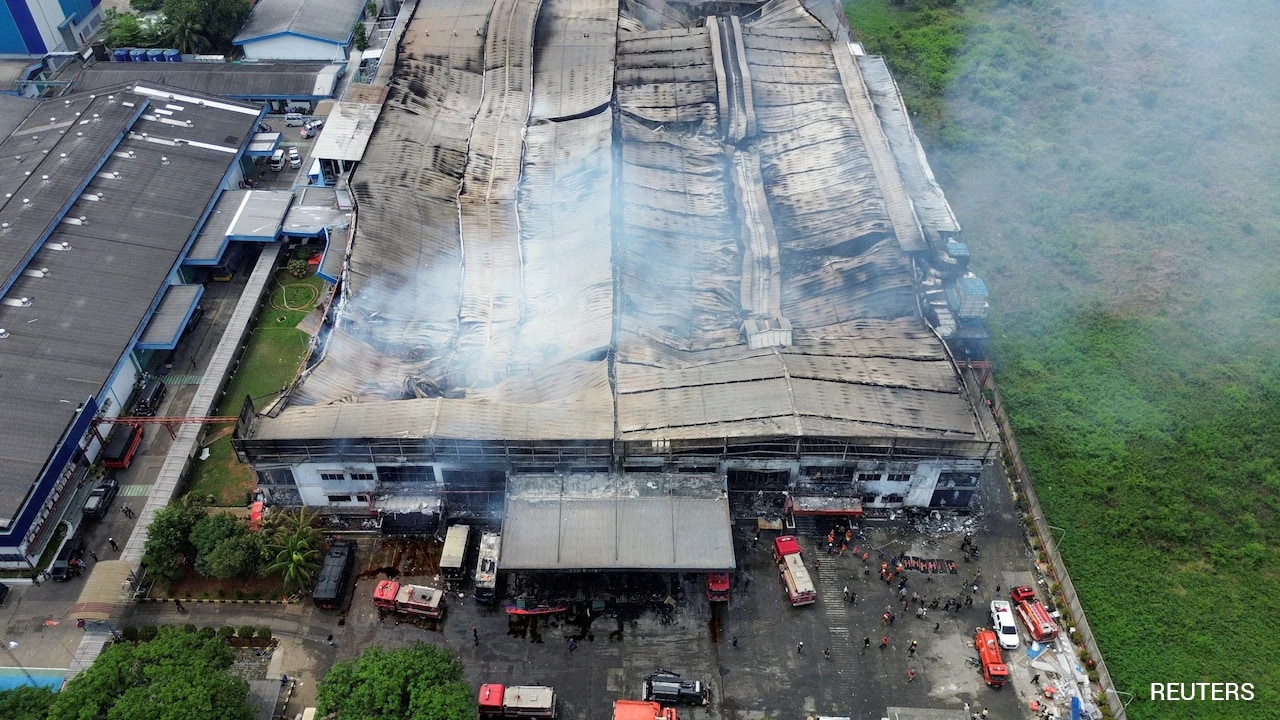
Twenty-four dead. At least thirty still missing. Those numbers are the immediate, visceral toll of another catastrophic Indonesia factory fire, a tragedy that follows a grimly predictable script across Southeast Asia's booming manufacturing corridors. When a blaze rips through an industrial facility in Java or Sumatra, the initial news cycle focuses on body counts, frantic rescue crews, and weeping families gathered outside charred perimeter walls. Within days, the headlines fade, leaving behind the structural rot that turned a workplace into a crematorium in the first place.
If you spend enough decades covering global supply chains and industrial safety, you stop viewing these events as freak accidents. They are systemic failures. The immediate trigger might be an electrical short circuit, a welding spark near volatile chemicals, or a ruptured fuel line, but the mass casualties happen because the building itself was engineered to trap people inside.
The Architecture of a Death Trap
Fire does not kill twenty-four people in minutes unless the escape routes are compromised. In modern industrial architecture, compartmentalization and rapid egress are basic, non-negotiable standards. Fire-rated doors, pressurized stairwells, sprinkler systems, and clear exit corridors give workers a fighting chance when smoke begins to billow.
In countless mid-tier and subcontracted factories across Indonesia, those standards exist only on paper, if they exist at all.
Consider a hypothetical example of how an illegal structural modification turns fatal. A facility receives an initial building permit for light assembly, complete with four wide double-door exits. Two years later, to prevent inventory theft or unauthorized breaks, management welds steel security bars over the ground-floor windows and padlocks three of the four fire exits from the outside. When an electrical fire ignites a pile of synthetic raw materials on the shop floor, thick, toxic cyanide and carbon monoxide smoke fills the ceiling space in under ninety seconds. Workers sprint toward the locked doors, piling up in the dark as visibility drops to zero. The single unlocked exit becomes a bottleneck, and panic does the rest.
This is not speculation about how industrial fires become mass-casualty events; it is the documented autopsy of almost every major factory blaze in the developing world over the past thirty years. From the 1993 Kader Toy Factory fire in Thailand to the 2017 Tangerang fireworks factory explosion in Indonesia—which killed forty-nine people when workers were trapped behind a single locked gate—the mechanics of the tragedy remain identical.
Why Regulatory Oversight Fails on the Ground
Indonesia possesses comprehensive labor and workplace safety laws. On the books, Law No. 1 of 1970 on Occupational Safety and subsequent ministerial decrees mandate strict fire prevention protocols, regular inspections, and heavy penalties for non-compliance. The gap between Jakarta's legislative chambers and an industrial estate in Bekasi, Tangerang, or Karawang is vast.
The enforcement apparatus is chronically understaffed. A single regional labor inspector is often responsible for auditing hundreds of registered facilities, leaving thousands of smaller, informal, or subcontracted workshops entirely off the radar. Even when inspections occur, they frequently rely on scheduled visits rather than surprise audits. A factory manager given two weeks' notice can easily unlock the fire doors, clear pallets out of the hallways, and hang fresh fire extinguishers on the walls—only to revert to hazardous practices the moment the inspector's car pulls out of the gate.
Petty corruption further erodes the system. When compliance costs more than a quiet payoff, undercapitalized factory owners routinely choose the cheaper route. Building occupancy certificates and fire safety clearances become administrative checkboxes rather than genuine engineering verifications.
The Subcontracting Shield
To understand why dangerous conditions persist, you have to follow the money up the supply chain. Major multinational corporations and global brands routinely trumpet their strict Environmental, Social, and Governance (ESG) compliance and zero-tolerance safety policies. They audit their Tier-1 suppliers rigorously.
The problem lies in Tier-2 and Tier-3 subcontracting. When a Tier-1 factory faces a tight deadline or a surge in orders, it quietly offloads the excess production to smaller, unvetted local workshops. These shadow factories operate on razor-thin margins. They cannot afford automated fire suppression systems, explosion-proof electrical wiring, or certified safety officers. Because global brands rarely have visibility below their primary suppliers, the economic pressure for cheap, fast manufacturing cascades downward, landing squarely on the backs of workers in uninspected buildings.
The Toxic Reality of Modern Industrial Materials
Even when a building has basic fire extinguishers, the nature of modern manufacturing has outpaced local firefighting capabilities. Older factories mostly processed natural fibers, wood, or raw metals. Today's industrial facilities are packed with petrochemicals, synthetic polymers, lithium batteries, adhesives, and industrial solvents.
When these materials burn, they do not produce ordinary wood smoke. They undergo rapid pyrolysis, releasing superheated gases that cause flashovers—a phenomenon where every combustible surface in a room ignites simultaneously.
- Flashover speed: A fire involving polyurethane foam or synthetic textiles can reach flashover in less than three minutes, well before local municipal fire brigades can navigate congested industrial traffic.
- Chemical toxicity: Burning plastics release hydrogen cyanide and phosgene gas. Two breaths of air laden with these compounds can render an adult unconscious, long before flames ever touch their skin.
- Water incompatibility: Many chemical and metal fires cannot be extinguished with standard water hoses. Applying water to certain burning solvents or reactive metals causes violent steam explosions, spreading the fire faster and endangering rescue personnel.
Local municipal fire departments in rapidly urbanizing industrial zones often lack the specialized foam agents, heavy breathing apparatus, and thermal imaging cameras required to penetrate a chemical-heavy industrial blaze. Firefighters arrive on the scene to find an inferno they can only contain from the outside, watching helplessly while dozens of workers remain unaccounted for inside.
The Myth of Worker Complicity
A common, cynical counter-argument heard in business circles after these disasters is that workers themselves ignore safety rules—propping open fire doors, smoking near flammable materials, or failing to wear protective gear.
That argument confuses symptom with cause. Safety culture does not start on the assembly line; it starts in the boardroom. When factory workers are paid piece-rate wages where every minute away from the machine cuts into their ability to feed their families, they will naturally take shortcuts. When management provides no fire drills, no evacuation maps, and no protection against retaliation for reporting hazards, workers have zero agency. You cannot expect minimum-wage laborers to enforce building codes that their employers actively subvert.
What Genuine Accountability Actually Looks Like
Following every deadly Indonesia factory fire, government officials promise sweeping investigations, police arrest a few low-level site managers, and industry associations pledge to review safety protocols. Six months later, the media spotlight moves on, and the structural incentives remain untouched.
If Indonesia—and the global companies sourcing from its factories—wanted to end mass-casualty industrial fires, the fixes are straightforward, though economically uncomfortable.
First, criminal liability must pierce the corporate veil. Arresting a shift supervisor does nothing to deter bad actors. Owners, majority shareholders, and the municipal officials who signed off on fraudulent safety permits must face severe prison sentences and asset forfeiture when locked exits or missing suppression systems contribute to worker deaths.
Second, fire safety audits must be decoupled from local bureaucracy. Independent, third-party fire protection engineers, funded through an industry-wide levy rather than direct payments from the factory being inspected, should conduct unannounced inspections. Any facility found with locked emergency exits or blocked evacuation routes must face immediate, mandatory shutdown until the violation is corrected.
Third, supply chain transparency cannot stop at Tier-1. Global buyers must be held legally and financially liable for fires in subcontracted facilities producing their goods. When brands face direct financial penalties for unauthorized subcontracting, they suddenly find the resources to map their entire supply chain and fund safety upgrades at the bottom tiers.
Until those mechanisms are enforced, the math remains brutally simple. Rapid industrial growth combined with hollowed-out safety enforcement guarantees that this latest tragedy will not be the last, and the families waiting outside the police tape for news of the thirty missing will eventually be joined by others at another burned-out factory down the road.