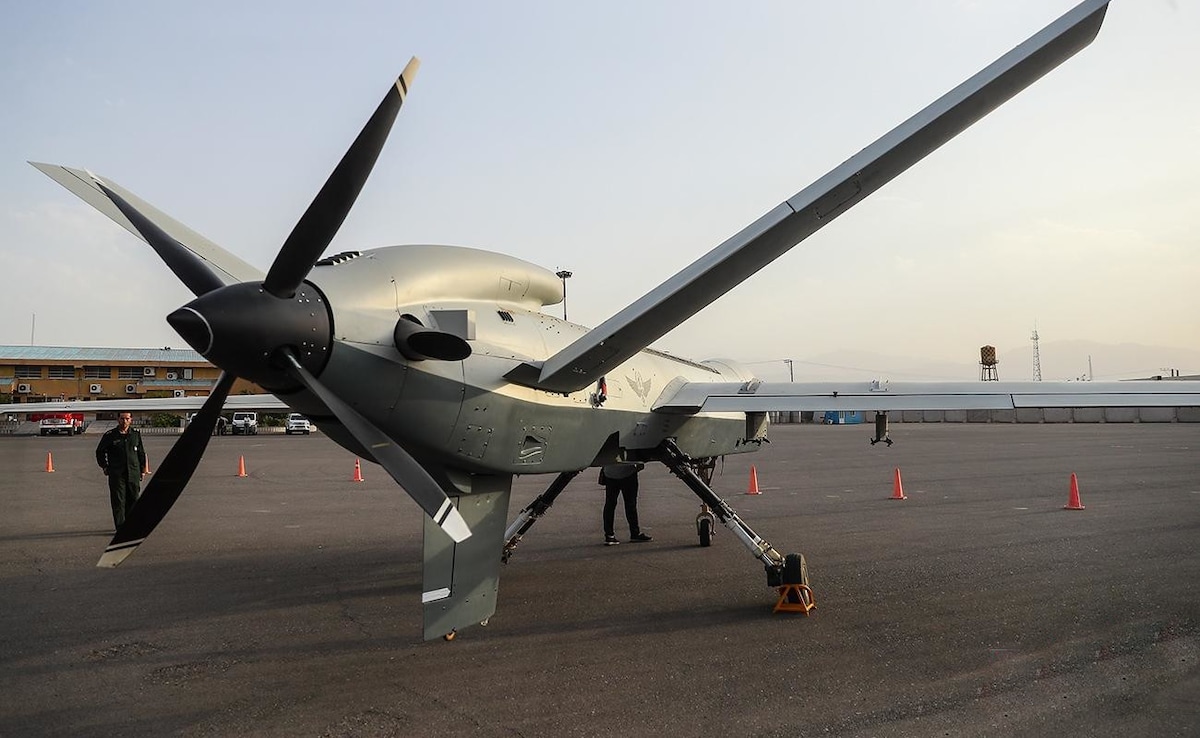
Iran has restarted its drone production lines and is rapidly rebuilding its military industrial base during the current ceasefire, completely shattering initial Western intelligence estimates. While the Pentagon publicly claimed that a joint U.S.-Israeli bombing campaign had crippled Tehran's defense architecture for years, a classified consensus now warns that Iran could fully restore its drone strike capabilities within six months. The failure to permanently degrade Iran’s weapons network stems from a fundamental misunderstanding of decentralized manufacturing, resilient supply chains backed by Russia and China, and overblown battle damage assessments from Operation Epic Fury.
The disconnect between public triumphalism and clandestine reality became undeniable this week. Testifying before Congress, CENTCOM Commander Admiral Brad Cooper stated that allied strikes had destroyed 90 percent of Iran’s defense industrial base. Yet, internal intelligence assessments circulated simultaneously revealed that nearly two-thirds of Iran's ballistic missile launchers and roughly half of its drone fleet survived the conflict entirely untouched. Tehran did not achieve a miraculous industrial recovery. It simply never suffered the catastrophic losses Washington claimed to have inflicted.
The Myth of the Centralized Factory
Western military doctrine remains anchored to the concept of high-value targeting. Planners look for massive manufacturing hubs, large assembly plants, and sprawling warehouses that can be flattened with precision-guided munitions. This approach works against twentieth-century industrial models, but it fails against modern asymmetric defense production.
Iran does not build drones in a single, easily targeted complex.
The manufacturing process for platforms like the Shahed series is intensely decentralized. Fiber-glass hulls are molded in unmarked civilian workshops. Commercial-grade electronic components are soldered in small urban facilities. Final assembly requires little more than a subterranean room and a handful of technicians with basic hand tools. When U.S. and Israeli stealth fighters struck known industrial sites during Operation Epic Fury, they frequently obliterated empty warehouses or decoy facilities, while the true infrastructure remained distributed across hundreds of commercial nodes.
Because these components are small and modular, Iran began moving assembly equipment into reinforced underground bunkers long before the first bombs fell. The six-week ceasefire that began in early April did not give Iran time to build new factories from scratch. It gave them a window to pull machinery out of storage, reconnect localized supply chains, and resume assembly.
Supply Chains That Survive Naval Blockades
The rapid resumption of drone manufacturing exposes the limitations of the current U.S. naval blockade in the Strait of Hormuz. President Donald Trump has maintained strict pressure on vessels entering Iranian ports, yet critical components continue to trickle into the country through alternative channels.
- The Caspian Route: Maritime traffic between Russian ports and northern Iranian hubs like Anzali bypasses Western naval power entirely, keeping technical blueprints, specialized machinery, and raw components flowing.
- The Overland Transit: Dual-use electronic components sourced from Chinese markets transit through Central Asian rail networks, crossing friendly borders where maritime interdiction is impossible.
- Commercial Transshipment: Microchips, miniature fuel pumps, and small engines are routinely routed through third-party logistics hubs in the Middle East under the guise of agricultural or consumer electronics imports.
Israeli Prime Minister Benjamin Netanyahu recently pointed out that Beijing continues to supply Tehran with essential components for missile and drone manufacturing. While Chinese officials rejected the accusation as baseless, tracking data and recovered debris from previous engagements show a steady reliance on commercial-tier Chinese electronics. These are not restricted military-grade parts subject to strict export controls. They are the same consumer-grade microchips found in civilian quadcopters and household appliances, making them nearly impossible to regulate.
The Strategic Pivot to Unmanned Warfare
The acceleration of drone production serves a vital strategic purpose for Tehran. While Iran's ballistic missile infrastructure suffered more significant degradation than its drone program, long-range missiles are expensive, slow to manufacture, and highly dependent on specialized solid-fuel mixing facilities that take time to rebuild.
Drones are the opposite. They offer a cheap, mass-producible alternative to maintain regional deterrence.
If hostilities resume, a severely diminished inventory of ballistic missiles can be augmented by swarms of low-cost drones. These uncrewed systems are intended to saturate sophisticated air defense networks like Israel’s Iron Dome or the naval Aegis systems protecting U.S. assets. By forcing an adversary to expend a $2 million interceptor missile on a drone that costs $20,000 to assemble, Iran retains the ability to wage an asymmetric war of economic attrition.
Furthermore, Iran’s coastal defense cruise missiles remain largely operational. Combined with a rapidly replenishing stockpile of one-way attack drones, Tehran retains the capability to disrupt commercial shipping lanes and threaten regional energy infrastructure at a moment’s notice, regardless of how many conventional military bases were cratered in the initial air campaign.
The Mounting Toll of Underestimating the Adversary
The intelligence failure regarding Iran’s industrial resilience mirrors the broader economic costs of the conflict. While Washington projected a quick, decisive degradation of Iranian power, the financial and material toll on U.S. forces has been substantial.
According to recent data from the Congressional Research Service, Operation Epic Fury resulted in the damage or destruction of at least 42 American military aircraft, including over two dozen MQ-9 Reaper drones, surveillance assets, and refueling tankers. Acting Pentagon Comptroller Jules W. Hurst III noted that operational expenditures have ballooned to $29 billion, largely driven by the replacement of depleted munitions and the repair of frontline hardware.
This expenditure looks increasingly problematic when weighed against the actual results on the ground. Washington spent billions of dollars deploying premium ordnance to destroy targets that Iran is replacing for a fraction of the cost within a matter of months. Supreme Leader Mojtaba Khamenei has reportedly blocked any diplomatic efforts to transfer enriched uranium stockpiles out of the country, viewing the retention of strategic materials as non-negotiable after the recent strikes.
The Western assumption that a sustained bombing campaign could force a highly resilient, ideologically committed regime into industrial paralysis has proven false. By treating a decentralized, adaptable logistics network as if it were a conventional military apparatus, planners designed a campaign optimized for a war that Iran simply does not fight. Washington is now left with a fragile ceasefire, an adversary that has already recovered its primary offensive leverage, and an intelligence community forced to rewrite its timelines in real-time.