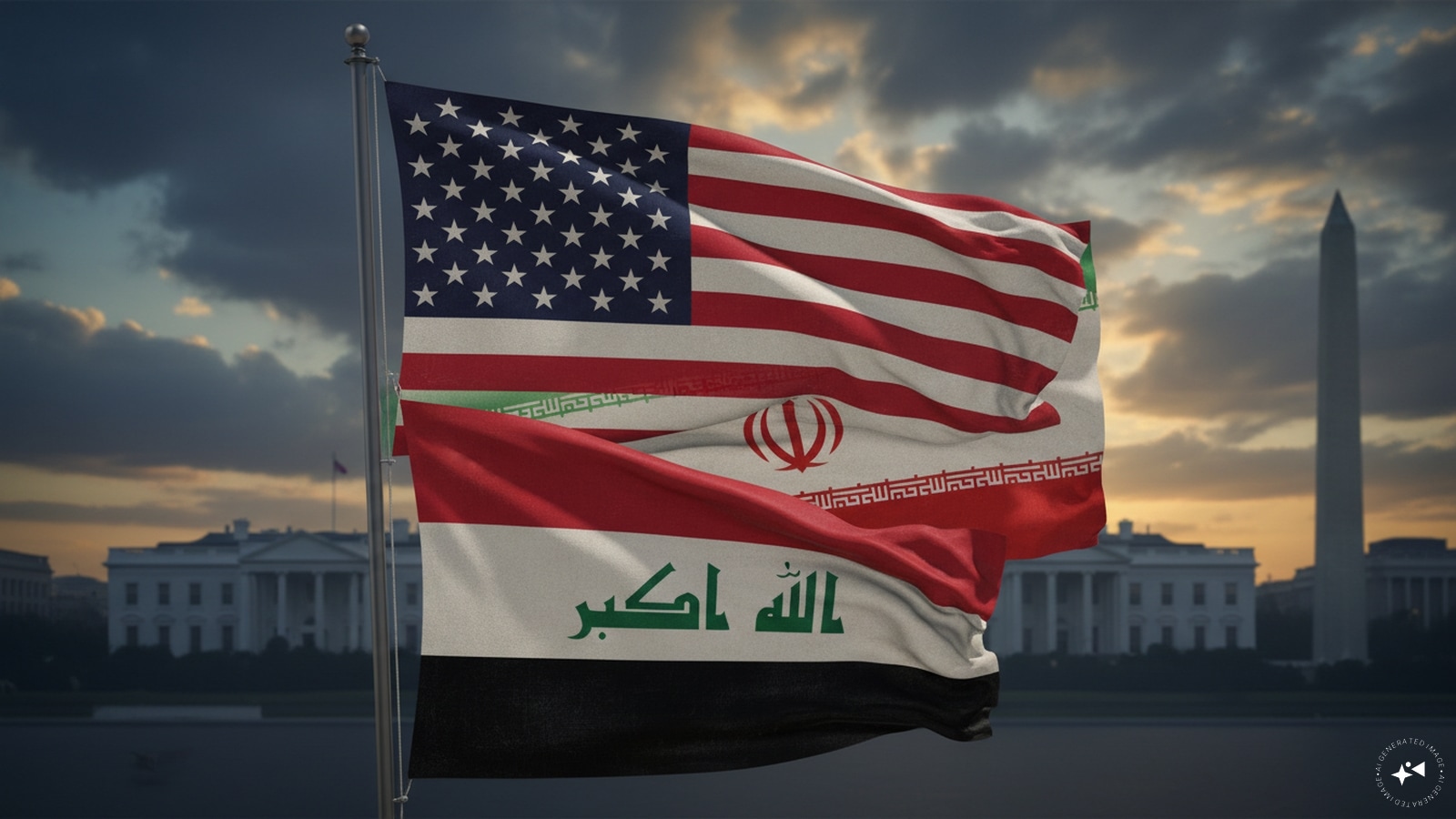
Iraqi Prime Minister Ali al-Zaidi arrives in Washington this week under the pretense of statecraft, but his true mission is to survive a clash between American economic ultimatums and Iranian geopolitical gravity. Confronting a White House that demands immediate disarmament of pro-Iran militias and a total pivoting of Iraq’s energy sector toward Western corporations, the novice prime minister must prove he is a transactional partner capable of delivering assets, not just promises. For Baghdad, this meeting is about unlocking suspended federal cash reserves and avoiding crippling economic collapse. For Washington, it is a cold assessment of whether Iraq is a useful instrument to choke off Tehran’s regional influence or a lost cause.
Decades of observing Middle Eastern diplomacy teach us that the official communiqués out of the Oval Office are always secondary to the ledger. Al-Zaidi, a businessman and political outsider dubbed by local insiders as the "Trump of the Middle East," has framed his debut international trip as an economic renaissance tour. The reality on the ground is far more precarious. The United States is no longer operating on the neoconservative assumption of nation-building or historical obligation. The current administration views Iraq through a simple metric: tangible compliance in exchange for economic oxygen.
The Sovereignty Price Tag
Baghdad is functionally broke and chronically short of electricity, a vulnerability exacerbated by recent disruptions in the Strait of Hormuz during the regional war. To secure the political survival of his young administration, al-Zaidi is bringing an extraordinary offering to Washington: a proposal to funnel 500,000 barrels of crude oil per day into a dedicated fund in exchange for American assistance in rebuilding Iraq's decrepit power grid.
This is not a traditional trade agreement. It is a structured receivership.
For the past twenty years, Iraq’s oil revenues have been deposited directly into the Federal Reserve Bank of New York, a legacy mechanism of the 2003 invasion that gives Washington the power to halt cash shipments at will. When the White House froze those greenback deliveries earlier this year to protest Iraqi complacency regarding armed factions, the shockwaves nearly brought down the Iraqi banking sector. Though the administration temporarily resumed cash transfers as a gesture of support for al-Zaidi’s appointment, the message was unmistakable: the financial sovereignty of Iraq exists solely at the pleasure of the American executive branch.
By offering half a million barrels a day to American energy companies, al-Zaidi is attempting to bypass political friction with corporate guarantees. Major memorandum of understanding signings are planned, aimed at expanding production and mapping bypass export routes that avoid Iranian maritime choke points. Yet, history dictates that American multinational corporations do not invest billions in infrastructure where local security forces are outgunned by independent paramilitary organizations.
The September Deadline
The central friction point of the Washington summit is the demand that Baghdad enforce a absolute state monopoly on violence. Al-Zaidi has publicly committed to a September 30 deadline for all pro-Iran armed groups to surrender their weaponry and integrate into the official state apparatus, a date deliberately aligned with the planned termination of the US-led anti-jihadist coalition mission.
On paper, several political factions within the Shia Coordination Framework have expressed a willingness to disarm. In practice, this is a calculated redeployment. These militias—collectively organized under the Popular Mobilization Forces—are not mere insurgent outfits; they are deeply entrenched corporate, political, and social institutions. They control lucrative cross-border smuggling networks, real estate, and municipal contracts. Expecting them to dissolve because an unelected, compromise prime minister signed a paper in Washington displays a profound misunderstanding of how power operates in Baghdad.
The Trump administration’s calculus is simple. If al-Zaidi fails to disarm these groups by autumn, the United States is fully prepared to walk away from security cooperation and re-apply severe economic leverage. Washington has already formally designated the conflict with Iran as a primary theater, granting the executive broad latitude for regional military maneuvers without legislative sign-off. Iraq is caught directly in the crossfire of this confrontation.
The Iranian Ceiling
While al-Zaidi sits in the Oval Office trying to charm an administration that prizes transactional reciprocity, his true boundaries are set in Tehran. The recent Middle Eastern war may have degraded Iran’s forward military infrastructure, but its political and intelligence networks inside Iraq remain functionally intact. Iraq relies heavily on Iranian natural gas imports to keep its lights on during the blistering summer months, a reality that successive Iraqi governments have tried and failed to alter.
Senior Iraqi political figures acknowledge privately that an economic tilt toward the West does not imply a strategic betrayal of Iran. Iraq cannot afford to turn its back on a neighbor with a shared 1,000-mile border and deep sectarian ties. Al-Zaidi’s predecessor, Mohammed Shia' al-Sudani, found his tenure constantly undercut by this impossible balancing act. Every concession made to the US Treasury Department regarding anti-money laundering protocols triggers a corresponding squeeze from pro-Iran factions within the Iraqi parliament.
The fundamental flaw in Washington's current approach is the assumption that pressure alone can force a structural divorce between Baghdad and Tehran. True reform would require dismantling the entire post-2003 political order, an order based on sectarian consensus that inherently favors actors backed by regional powers. By demanding immediate, sweeping changes to foreign corporate ownership laws and the immediate dissolution of heavily armed brigades, the US risks destabilizing the very political outsider they chose to back.
The path ahead for al-Zaidi is narrow and unforgiving. He must offer the White House immediate, highly visible economic victories—such as fast-tracked oil concessions and lucrative defense contracts—while buying enough time to manage the inevitable domestic backlash from factions that view American corporate expansion as a soft occupation. If he returns to Baghdad with nothing but empty praise and conditional promises, the political framework that elevated him will quickly look for a replacement who is far less eager to please Washington.