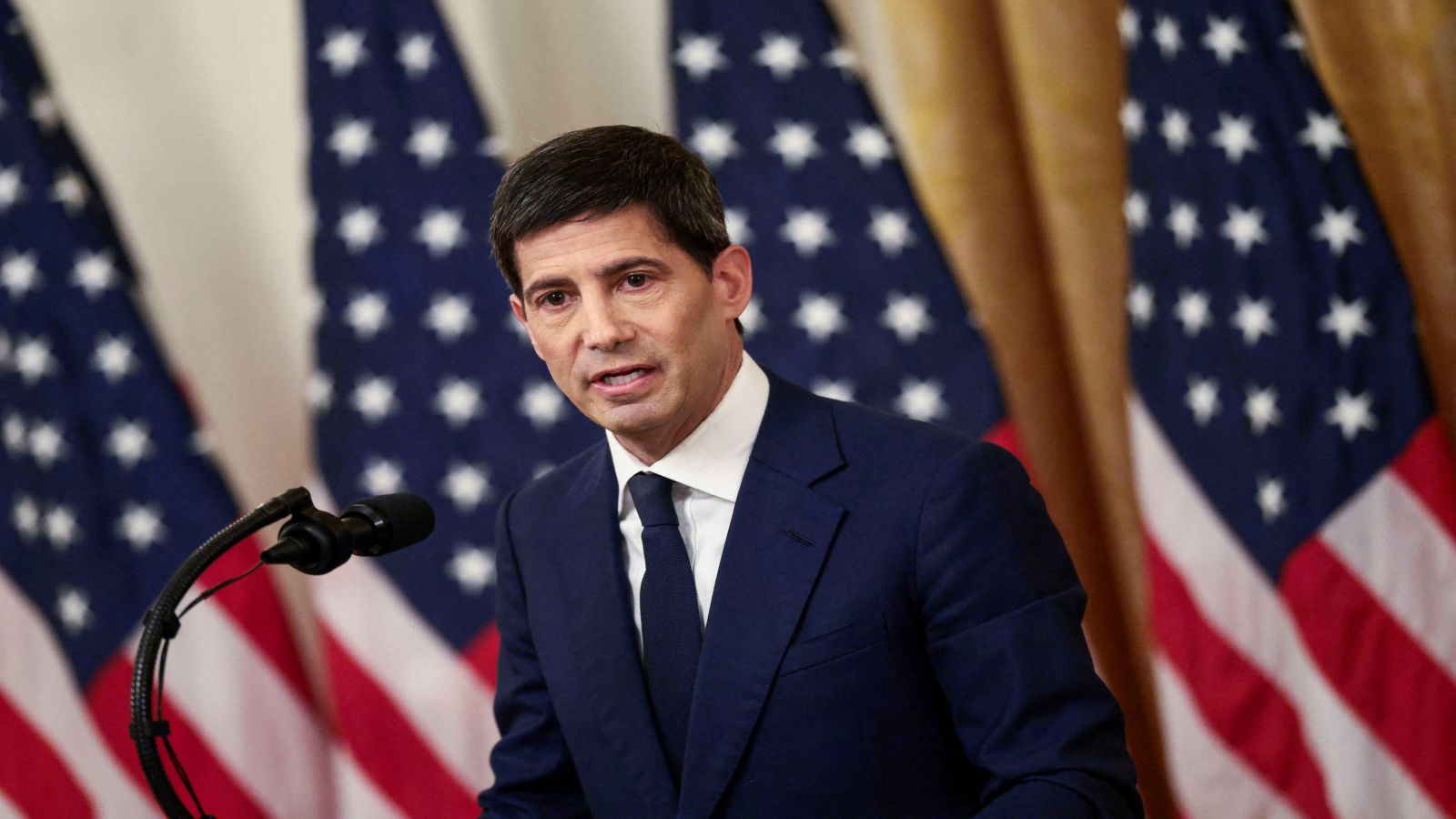
Federal Reserve Chair Kevin Warsh used his inaugural Jackson Hole keynote to deliver a sobering message to Wall Street, acknowledging that underlying price pressures remain stubbornly above the central bank's target while signaling that borrowing costs may need to rise further. Standing before an audience of international central bankers in Wyoming, Warsh conceded that the institutional obsession with explicit forward guidance has expired, leaving financial markets to decipher a shifting economic reality without a roadmap.
The stakes could hardly be higher. With the personal consumption expenditures price index lingering at 3.7 percent and more than half of the basket's components climbing at an annualized rate exceeding 3 percent, the Federal Reserve finds itself pinned between a resilient corporate sector and an over-leveraged federal government.
The Anatomy of Sticky Prices
For years, mainstream economic commentary treated inflation as an acute shock, a temporary fever brought on by pandemic stimulus and disrupted supply chains. That narrative has officially collapsed. Warsh noted that the underlying trend lines have failed to register meaningful improvement over consecutive quarters.
Consider the arithmetic of the PCE basket. In the two decades preceding the pandemic, roughly 32 percent of the goods and services tracked by the central bank experienced price increases greater than 3 percent annually. Today, that figure sits at 54 percent.
Prices are not merely elevated; broad pricing power has institutionalized itself across the corporate landscape. Companies maintaining margins through persistent cost passthroughs have rewritten the baseline expectations for consumer goods. Warsh pointed out that current interest rates do not appear genuinely restrictive when juxtaposed against aggressive corporate capital expenditures in artificial intelligence infrastructure and heavy industrial automation.
Traditional monetary theory assumes that a federal funds rate hovering between 3.5 and 3.75 percent acts as a brake on economic velocity. Yet, asset prices remain buoyant and credit creation persists. This dynamic exposes a dangerous disconnect between standard econometric models and observable reality.
The Death of Forward Guidance
Wall Street spent the weeks leading up to the Jackson Hole symposium searching for a comfort blanket. Traders wanted explicit declarations about whether the rate-setting committee would hike or hold at the upcoming September meeting. Instead, they received a philosophical indictment of central bank communication strategies.
Warsh declared that the era of chronic forward guidance is over. Born out of the emergency liquidity measures of the 2008 financial crisis, predictable signaling mechanisms have morphed into a crutch that strips policymakers of their necessary flexibility.
By telegraphing every prospective move months in advance, previous iterations of the Federal Reserve essentially outsourced monetary policy to algorithmic traders and short-term speculators. Markets priced in cuts or hikes before the underlying data even materialized, forcing the central bank into reactive corners.
The abandonment of this policy leaves investors flying blind. Without a predictable reaction function, capital allocators must re-learn how to price risk based on raw data prints rather than central bank whispers. Short-term Treasury yields reacted violently to the vacuum, demonstrating that the financial system remains addicted to explicit assurances.
The Fiscal Dominance Elephant in the Room
Missing from the conventional analysis of Warsh's address is the looming shadow of federal indebtedness. Washington crossed a grim milestone as gross national debt eclipsed 40 trillion dollars.
A central bank cannot pursue aggressive price stability in a vacuum when the fiscal authority is running structural deficits that require continuous, massive debt issuance. Treasury Secretary Scott Bessent's recent interventions—expanding long-term debt repurchase operations to calm a roiling bond market—reveal an underlying panic in government financing mechanics.
When long-term borrowing costs hover near multi-decade peaks, the Treasury's interest payments consume an expanding share of tax receipts. If the Federal Reserve validates this fiscal expansion by keeping monetary policy loose, inflation becomes permanent. If the central bank tightens aggressively to crush sticky price increases, the federal government's debt servicing costs spiral out of control.
Warsh attempted to thread this needle by asserting the primacy of the price-stability mandate. Yet, the institutional tension remains unresolved. The central bank operates as an independent entity in theory, but it functions within an ecosystem dominated by government borrowing needs.
Market Realities and the Road Ahead
The immediate pricing in federal funds futures tells a volatile story. Traders adjusted their expectations following the Jackson Hole address, driving up the implied probability of a rate increase before the end of the year.
This is not a policy environment suited for passive investment strategies. As structural inflation proves impervious to superficial monetary adjustments, the cost of capital will find its true equilibrium driven by supply and demand rather than regulatory fiat.
The Federal Reserve has reclaimed its autonomy at the expense of market comfort, choosing open-ended uncertainty over comforting illusions. How long asset markets can maintain their composure without a central bank safety net remains the defining question for the monetary cycle ahead.