Former Brazilian President Jair Bolsonaro broke his silence from Orlando, Florida, just days before the end of his presidential term, framing his sudden departure to the United States as a tactical retreat rather than an admission of defeat. Addressing supporters outside a rented vacation home in Kissimmee, Bolsonaro defended his administration's record, lamented his narrow election loss to Luiz Inácio Lula da Silva, and urged followers to remain mobilized within constitutional boundaries. Yet behind the familiar populist rhetoric lies a complex web of legal exposure, diplomatic friction, and shifting political allegiances that threatens to redefine right-wing politics across Latin America.
The Mechanics of an Unprecedented Departure
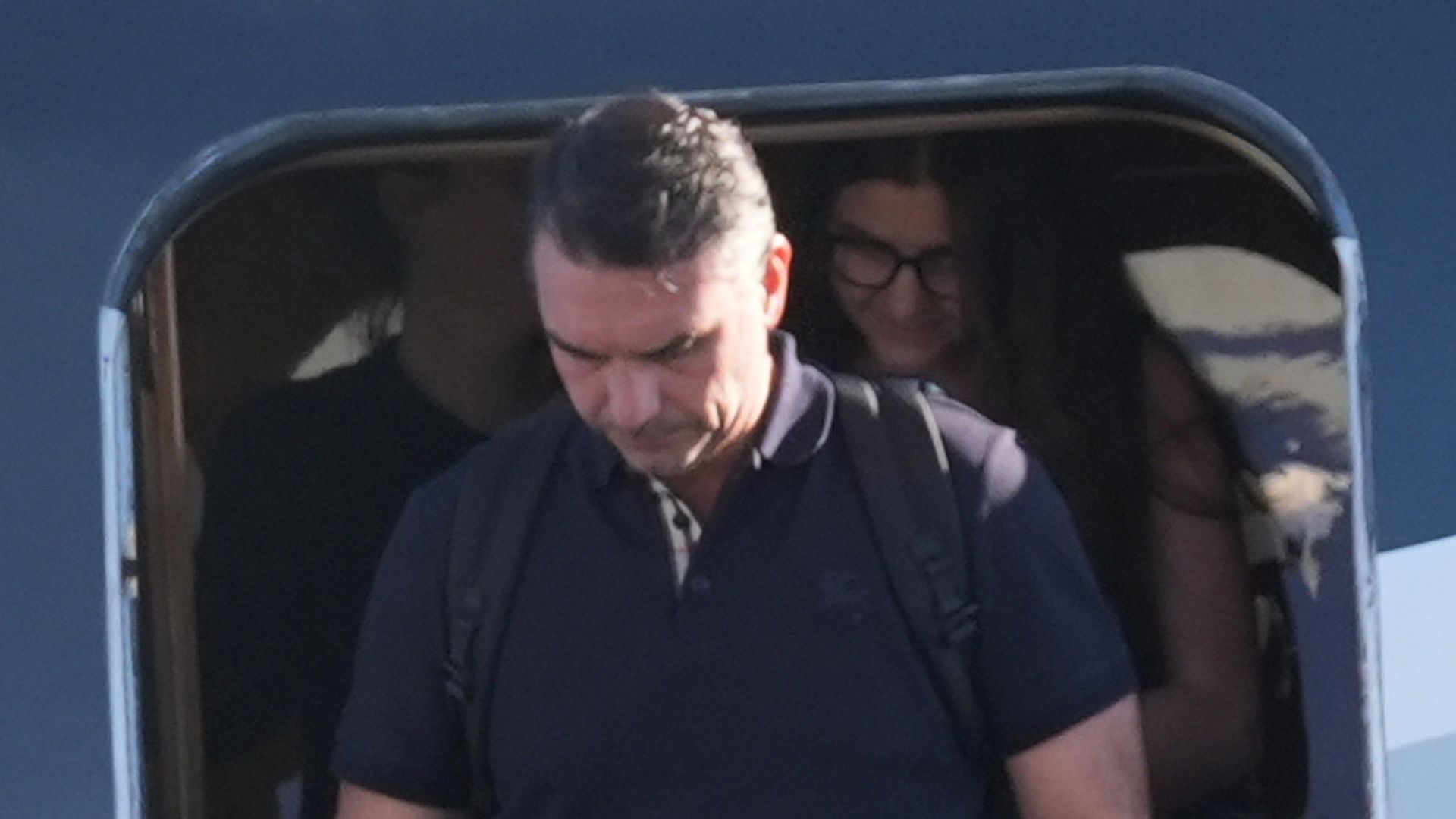
On December 30, 2022, roughly 48 hours before he was constitutionally required to hand the presidential sash to his successor, Jair Bolsonaro boarded a Brazilian Air Force plane bound for Florida. He did not attend Lula's January 1 inauguration in Brasília. By doing so, he broke a democratic tradition observed continuously since Brazil returned to civilian rule in 1985. Also making waves recently: What Most People Get Wrong About Working With Big Cats After a Fatal Leopard Attack.
To understand why Bolsonaro left when he did, one must look at the mechanics of Brazilian constitutional law. In Brazil, sitting presidents, cabinet ministers, and members of Congress enjoy a form of legal protection known as foro privilegiado—privileged jurisdiction. Under this rule, high-ranking officials can only be investigated and tried by the country's Supreme Federal Court, a process notoriously slow and burdened by procedural bottlenecks.
The moment Lula took the oath of office on January 1, Bolsonaro became an ordinary citizen. His legal shield vanished overnight. Any active investigations into his conduct—ranging from his handling of the COVID-19 pandemic to alleged dissemination of disinformation regarding Brazil's electronic voting machines—could immediately be transferred to lower federal courts, where judges move faster and pretrial detention is far more common. Additional details on this are detailed by NBC News.
The Legal Storm Waiting in Brasília
Legal analysts in São Paulo and Brasília have pointed out that Bolsonaro's departure was closely tied to the timeline of these judicial transfers. At the time of his flight, Supreme Court Justice Alexandre de Moraes was already overseeing multiple inquiries involving the former president and his inner circle.
- The Electoral Disinformation Inquiry: Investigators were examining whether Bolsonaro abused his office by using state resources to cast unfounded doubts on the integrity of Brazil's electronic ballot boxes during a July 2022 meeting with foreign ambassadors.
- The Fake News Network: Federal police were mapping a suspected digital militia accused of spreading coordinated attacks against democratic institutions and Supreme Court justices.
- Pandemic Mismanagement Allegations: A Senate parliamentary inquiry had previously recommended criminal charges against Bolsonaro, including charlatanism and crimes against humanity, over his government's delayed vaccine procurement and promotion of unproven treatments.
By relocating to Florida before his immunity expired, Bolsonaro bought himself time. Extradition between the United States and Brazil is governed by a bilateral treaty signed in 1961, which requires dual criminality—meaning the alleged offense must be recognized as a serious crime in both jurisdictions. Political offenses are explicitly excluded. Consequently, charges related to speech, political mobilization, or administrative misconduct face steep hurdles in U.S. courts, giving Bolsonaro a temporary buffer while his legal team assesses the political climate back home.
What Bolsonaro Actually Said in Orlando
When Bolsonaro finally stepped out to greet small crowds of supporters in Kissimmee, his tone was noticeably calibrated. Gone was the fiery, combative cadence that characterized his rallies on Paulista Avenue in São Paulo. Instead, he projected the image of an elder statesman unjustly sidelined.
Speaking to reporters and onlookers gathered behind metal barricades, Bolsonaro insisted that his administration had left Brazil in strong economic shape and argued that the October 2022 runoff election—which Lula won by less than two percentage points—left the country deeply divided. He acknowledged that mistakes had been made during his four years in office, a rare concession for a leader whose political brand was built on never backing down.
At the same time, he stopped short of explicitly endorsing the encampments of hardline supporters outside Brazilian army barracks who were demanding a military intervention to overturn the election results. Yet he also avoided forcefully dismantling the narrative that the vote had been compromised. According to political observers cited by major Brazilian outlets like Folha de S.Paulo and O Globo, this deliberate ambiguity served a dual purpose: it insulated him from immediate accusations of inciting a coup while keeping his most fervent base emotionally invested in his eventual return.
The January 8 Attack and the Turning Tide
Any strategy Bolsonaro had for a quiet, extended stay in Florida collapsed on January 8, 2023. Just over a week after Lula's inauguration, thousands of Bolsonaro supporters breached security cordons in Brasília, storming and vandalizing the National Congress, the Supreme Federal Court, and the Planalto presidential palace.
The images of shattered glass, destroyed historical artworks, and rioters occupying the seats of government power drew immediate international condemnation. For Bolsonaro, sitting thousands of miles away in a gated community near Disney World, the political fallout was instantaneous.
On social media, Bolsonaro condemned the pillaging and invasion of public buildings, comparing the events to protests carried out by the political left in 2013 and 2017. However, he rejected Lula's accusation that his rhetoric had directly instigated the mob.
Diplomatic Pressure in Washington
The events of January 8 shifted the conversation in Washington from immigration procedure to foreign policy liability. Within days, a group of more than 40 Democratic members of the U.S. House of Representatives sent a letter to President Joe Biden urging the administration to revoke Bolsonaro's visa.
The lawmakers argued that the United States should not provide a safe haven for an authoritarian figure whose followers had just attempted to subvert a democratic transfer of power. Legal experts noted that Bolsonaro had likely entered the United States on an A-1 diplomatic visa, which is reserved for heads of state and senior government officials traveling on official business. Once he ceased to be president on January 1, the legal basis for that visa evaporated.
The U.S. State Department declined to comment on individual visa records, citing federal confidentiality laws. Behind closed doors, however, diplomats faced a delicate balancing act. Revoking the visa of a former head of state from a major regional ally carries significant diplomatic weight, yet allowing him to remain indefinitely risked straining relations with the incoming Lula government—an administration Washington viewed as a key partner on climate change and Amazon preservation.
Life Inside the Kissimmee Bubble
While geopolitical debates raged in Washington and Brasília, Bolsonaro's daily routine in central Florida took on an almost surreal quality. He stayed at a property owned by José Aldo, a retired Brazilian mixed martial arts fighter and vocal supporter.
Videos circulating on social media showed the former commander-in-chief of Latin America's largest economy wandering the aisles of a local Publix supermarket, eating fried chicken alone at a KFC, and posing for selfies with tourists in suburban strip malls. For critics, these images symbolized a humiliating fall from grace—a leader reduced to a suburban tourist while his followers faced mass arrests back in Brazil.
For his supporters, however, those exact same images reinforced his core political appeal. Throughout his career, Bolsonaro cultivated an anti-establishment persona, presenting himself as an ordinary, unpretentious man who shared the tastes and frustrations of average citizens. Seeing him eat fast food and wear casual polo shirts in Florida only deepened the loyalty of diaspora voters in South Florida, a demographic that had overwhelmingly backed him in the 2022 election.
The Fracturing of the Brazilian Right
Bolsonaro's prolonged absence created an immediate power vacuum within Brazil's conservative movement. During his presidency, Bolsonaro deliberately avoided building a formal, institutionalized political party structure, preferring instead to rely on personal loyalty and direct communication via social media.
When he left the country, the coalition that had propelled him to victory began to splinter into competing factions:
- The Pragmatic Governors: Figures like Tarcísio de Freitas, the newly elected governor of São Paulo and Bolsonaro's former infrastructure minister, quickly signaled a willingness to work constructively with Lula's federal government on economic and infrastructure projects. For Freitas and other state leaders, governing required federal cooperation, not endless ideological warfare.
- The Parliamentary Hardliners: Members of Bolsonaro's Liberal Party (PL) in Congress, led by figures such as party president Valdemar Costa Neto, recognized that Bolsonaro remained their strongest electoral asset for future municipal elections. Yet they also needed to navigate legislative negotiations with Lula's coalition to secure committee chairmanships and budget amendments.
- The Ideological Purists: Centered around Bolsonaro's sons—Senator Flávio Bolsonaro, Federal Deputy Eduardo Bolsonaro, and Rio de Janeiro City Councilor Carlos Bolsonaro—this faction focused on maintaining ideological purity and framing any compromise with the judiciary or the Lula administration as treason.
Without Bolsonaro physically present in Brasília to mediate disputes or enforce discipline, these three groups frequently worked at cross-purposes. As weeks turned into months, conservative commentators in Brazil began openly questioning whether the movement could survive long-term under remote leadership from Florida.
The Historical Precedent of Exile in Latin American Politics
Bolsonaro's decision to decamp to the United States fits into a long, complicated history of Latin American leaders seeking refuge abroad during periods of acute political or legal vulnerability. Historically, Miami and central Florida have served as staging grounds for ousted or departing politicians from across the hemisphere, from Cuban and Venezuelan opposition figures to former presidents of Peru, Ecuador, and Bolivia.
Yet history offers a sobering lesson for leaders who attempt to direct domestic political movements from abroad. Distance erodes relevance. In 2019, former Bolivian President Evo Morales fled to Mexico and later Argentina following disputed elections and civil unrest, attempting to guide his Movement for Socialism (MAS) party from exile. While his party eventually returned to power under Luis Arce, Morales found upon his return that the domestic political landscape had shifted beneath him, leading to a bitter internal rift between mentor and protégé.
Similarly, former Peruvian President Alberto Fujimori fled to Japan in 2000 amid corruption scandals, faxing his resignation from a Tokyo hotel room. Though his political movement, Fujimorismo, remained a potent force in Peruvian Congress for decades, Fujimori himself was eventually arrested during a visit to Chile, extradited to Peru, and sentenced to prison for human rights abuses and corruption.
Bolsonaro's situation differs in critical ways—most notably because he left office at the conclusion of a full constitutional term rather than being deposed by a coup or impeachment. Nevertheless, the underlying political physics remain the same: in hyper-local, personality-driven politics, physical absence weakens leverage over allies and emboldens rivals to build independent power bases.
The Endgame Neither Side Can Fully Control
By applying for a six-month U.S. tourist visa in late January 2023 to regularize his immigration status, Bolsonaro signaled that his stay in Florida was an open-ended calculation rather than a brief vacation. Every move he made from Orlando was weighed against two competing pressures: the desire to remain relevant as the undisputed leader of Brazil's opposition, and the certainty that stepping off a plane in Brasília would mean facing a judiciary determined to hold him accountable for the democratic turbulence of his final months in office.
In Brasília, Supreme Court investigators continued expanding their inquiries, gradually tracing the financial networks and political actors behind the January 8 riots. Meanwhile, Lula's administration used the crisis to consolidate institutional support across Congress and the military high command, isolating hardline elements within the armed forces.
Bolsonaro's defiance in Florida demonstrated that he still commanded the loyalty of millions of Brazilians who viewed him as a victim of judicial overreach and media hostility. Yet shouting defiance from a suburban cul-de-sac in Kissimmee is fundamentally different from wielding executive power in the Planalto Palace, and the longer Bolsonaro stayed away from the arena he once dominated, the more Brazil's political center of gravity learned to move without him.