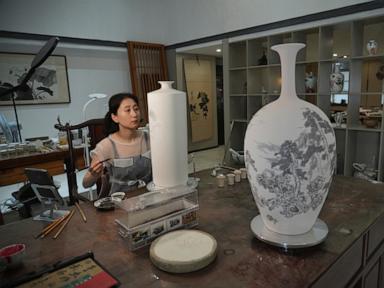
For over a millennium, Jingdezhen held a quiet, absolute grip on the global appetite for ceramic perfection. The smoke from its thousands of kiln fires once signaled an imperial monopoly, supplying fine white-and-blue vessels across continents long before modern international supply chains existed. Today, the city is marketed as a romantic haven of heritage craftsmanship, a place where young artisans allegedly abandon corporate careers in Beijing and Shanghai to throw clay on a wooden wheel and rediscover their cultural roots.
The reality is far more fractured.
Beneath the glossy social media videos of pristine ceramic studios and minimalist tea sets lies an industrial pressure cooker. Jingdezhen is caught in a violent collision between ancient artisanal traditions and hyper-aggressive digital commerce. The city must either adapt to algorithm-driven mass consumption or risk turning into a hollowed-out museum of its own past.
The Myth of the Romantic Artisan
Visitors walking down the narrow alleys of the Sanbao Ceramic Valley or the Taoxichuan Creative Plaza encounter a curated fantasy. Young creators in linen aprons gaze thoughtfully at freshly glazed earthenware while lo-fi beats drift from boutique cafes. It is a compelling aesthetic, carefully packaged for urban tourists seeking an escape from desk jobs.
Step away from the tourist zones, and the economics of modern craftsmanship turn grim.
True mastery of traditional Jingdezhen porcelain requires decades of apprenticeship. Shaping high-kaolin clay demands precise physical intuition regarding shrinkage, temperature gradients, and chemical reactions during wood or gas firing. Yet, the current market does not reward patience. E-commerce live-streams on platforms like Douyin demand constant novelty. Artisans are pressured to push out rapid batches of trendy, flawed vessels simply to appease short attention spans and keep pace with platform algorithms.
The generational handoff is not a smooth transition of wisdom. It is a survival test. Veteran throwers watch helplessly as their labor-intensive techniques are digitized, copied, and churned out by automated slip-casting molds down the street. The young generation is forced to choose between starving for authenticity or selling out to mass-production trends.
The Economics of the Kiln
Porcelain is an unforgiving medium. Every step—from sourcing the raw stone in Gaoling to managing the reduction atmosphere inside a dragon kiln—carries a high failure rate. In the commercial district, a tea cup can sell for hundreds of dollars based purely on the artist's digital clout. Meanwhile, the factory workers and kiln masters handling the heavy lifting see fractional returns.
Energy costs have skyrocketed. Traditional wood-firing, prized for producing the unpredictable, organic iron spots and flashing effects collectors crave, faces severe environmental regulations. Local authorities have clamped down on uncontrolled emissions, pushing workshops toward electric or clean gas kilns. While necessary for air quality, this shift alters the physics of the burn. Master potters argue that clean energy strips the porcelain of its soul, turning organic art into sterile, industrial output.
Counterfeit goods compound the crisis. A famous maker's mark can be laser-etched onto cheap, commercially molded clay within minutes. Buyers halfway across the world purchase what they believe is an authentic Jingdezhen handmade artifact, only to receive a mass-produced impostor. Legal recourse is slow, expensive, and largely ineffective across fragmented provincial jurisdictions.
The Global Hunger for Authenticity
Despite these fractures, global demand for genuine Jingdezhen porcelain remains staggering. Luxury brands and high-end interior designers still look to this Jiangxi province hub for material innovation. The secret lies in the unique composition of the local clay—a natural blend of kaolin and petuntse that fires into a resonant, translucent white body capable of holding razor-thin walls.
The survival of the city depends on how it handles the digital marketplace. Some workshops have bypassed traditional middlemen entirely, using short-form video to build direct-to-consumer relationships. Collectors in New York, London, and Tokyo watch live unglazed pots transform in real-time through the screen before purchasing them with a single tap.
This hyper-visibility cuts both ways. While it provides immediate capital, it accelerates creative burnout. An artist cannot spend months perfecting a single glaze recipe when an audience expects a new collection every two weeks.
The Road Ahead
Jingdezhen is not dying, but it is mutating. The romantic narrative of an isolated mountain town untouched by time is a marketing fiction designed to sell lifestyle goods to the urban middle class. The real city is loud, fiercely competitive, and economically ruthless.
The ancient craft will survive because the raw materials and the muscle memory of the masters cannot be easily replicated by software. Yet, the cultural cost of turning imperial heritage into fast-moving consumer goods is only beginning to surface. The smoke still rises from the kilns along the river, but the fire is fueled by a desperate race to stay relevant in a world that consumes beauty faster than it can be created.