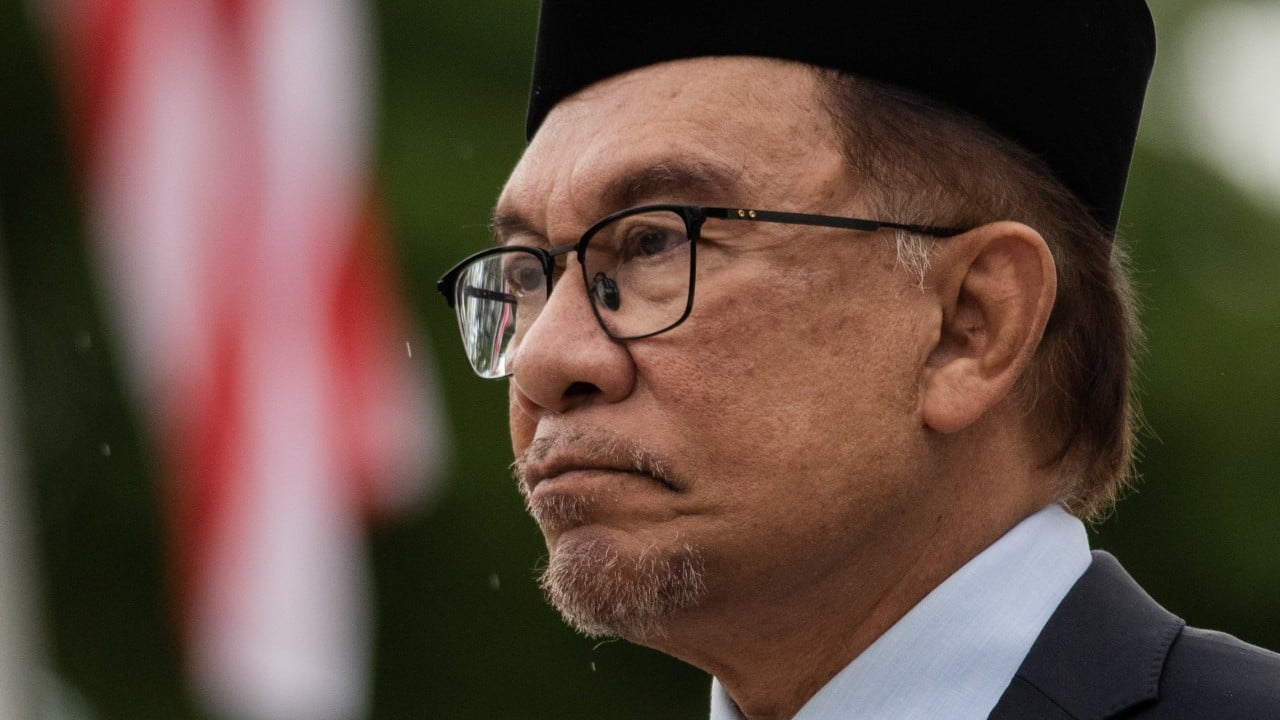
Malaysian Prime Minister Anwar Ibrahim secured the highest office in late 2022 by promising a new era of governance, yet his coalition government now faces deep systemic fractures as the United Malays National Organisation (UMNO) systematically reasserts its dominance from within. Decades of anti-corruption rhetoric built around the Reformasi movement have collided with the harsh arithmetic of parliamentary survival, leaving the administration caught between compromised alliances and a disillusioned voter base.
To understand why the current administration appears paralyzed on key structural changes, one must examine the mechanics of the unity government formed in the wake of an inconclusive general election. Anwar did not win an outright majority. Instead, he engineered an uneasy coalition incorporating old rivals, most notably UMNO, the very political machine his career was defined by opposing. This marriage of convenience was sold to the public as a mandatory stabilization measure. Over time, however, the junior partners have discovered that holding the balance of power grants them disproportionate leverage over judicial accountability, institutional appointments, and policy direction.
The Cost of Expediency
Political survival exacts a heavy toll on ideological purity. When high-profile legal cases involving politically connected figures began seeing favorable outcomes or reduced sentences, the public reaction went beyond mere frustration. It signaled a return to transactional politics.
Consider a hypothetical scenario to illustrate this dynamic. Imagine a coalition built on anti-corruption pledges that relies entirely on a faction facing active corruption trials to maintain its parliamentary quorum. If the prime minister pushes too hard for independent prosecutorial powers or uncompromised institutional oversight, that faction withdraws its support, collapsing the government overnight. The executive is left with a stark choice: pursue absolute institutional reform and lose power instantly, or compromise on integrity to keep the lights on in Putrajaya. Anwar chose the latter, calculating that incremental control of the state apparatus was better than total opposition exclusion.
This calculus created a profound cognitive dissonance among urban voters and civil society groups who spent decades marching under the Reformasi banner. They expected structural overhauls, such as separating the roles of the prime minister and the finance minister—a dual hat Anwar famously wore himself despite past criticisms—and establishing absolute legislative independence for anti-corruption watchdogs. Instead, structural inertia took hold.
The UMNO Playbook
While the public focuses on policy delays, UMNO has been quietly executing a long-term rehabilitation strategy from inside the cabinet. Stripped of its historic absolute majority in previous cycles, the grand old party of Malaysian nationalism realized that direct confrontation with Anwar would only fragment Malay voter support further.
Instead, UMNO leadership adopted a strategy of institutional embedding. By controlling key ministries and leveraging regional networks, the party has positioned itself as the indispensable guardian of Malay-Muslim interests within the administration. This has forced Anwar's own party, the People's Justice Party (PKR), into a defensive posture. Every time progressive policies or civil liberties reforms are floated, conservative pushback coordinated through coalition channels effectively stalls them.
Laws restricting online speech and media oversight have not seen the sweeping liberalization that activists anticipated. Rather, administrative controls have occasionally tightened under the guise of maintaining public order and religious harmony. The political survival manual in Kuala Lumpur dictates that to appease the Malay heartland, a progressive government must out-conservative its nationalist critics. This dynamic leaves reform-minded citizens wondering whether the current government resembles the old regime wearing a different jersey.
Fractured Horizons
The structural weakness of the unity government becomes starker when looking at regional electoral dynamics and the rising tide of opposition forces. Perikatan Nasional continues to capture significant portions of the Malay electorate by painting Anwar as a puppet of compromised elites. Simultaneously, Pakatan Harapan’s traditional base grows increasingly apathetic, threatening low voter turnout in upcoming state contests.
Anwar’s inner circle insists that stability is a prerequisite for economic recovery, pointing to foreign investment inflows and regional diplomatic achievements. Yet economic indicators mean little to a populace grappling with persistent cost-of-living pressures and stagnant institutional trust. When the average citizen sees political elites escaping accountability while everyday administrative hurdles multiply, cynicism deepens.
The fundamental contradiction of the administration remains unresolved. A government founded to dismantle a patronage network cannot survive by feeding it. As pressures mount ahead of the next mandatory general election cycle, the administration faces a narrowing runway. The machinery of the state is functioning, but the soul of the reform movement has been traded away, leaving behind a fragile status quo vulnerable to the next political shock.
Malaysian PM Anwar Ibrahim and the Politics of Snap Polls provides deeper analysis into how escalating electoral pressures and coalition realignments continue to shape the stability of the current administration.


