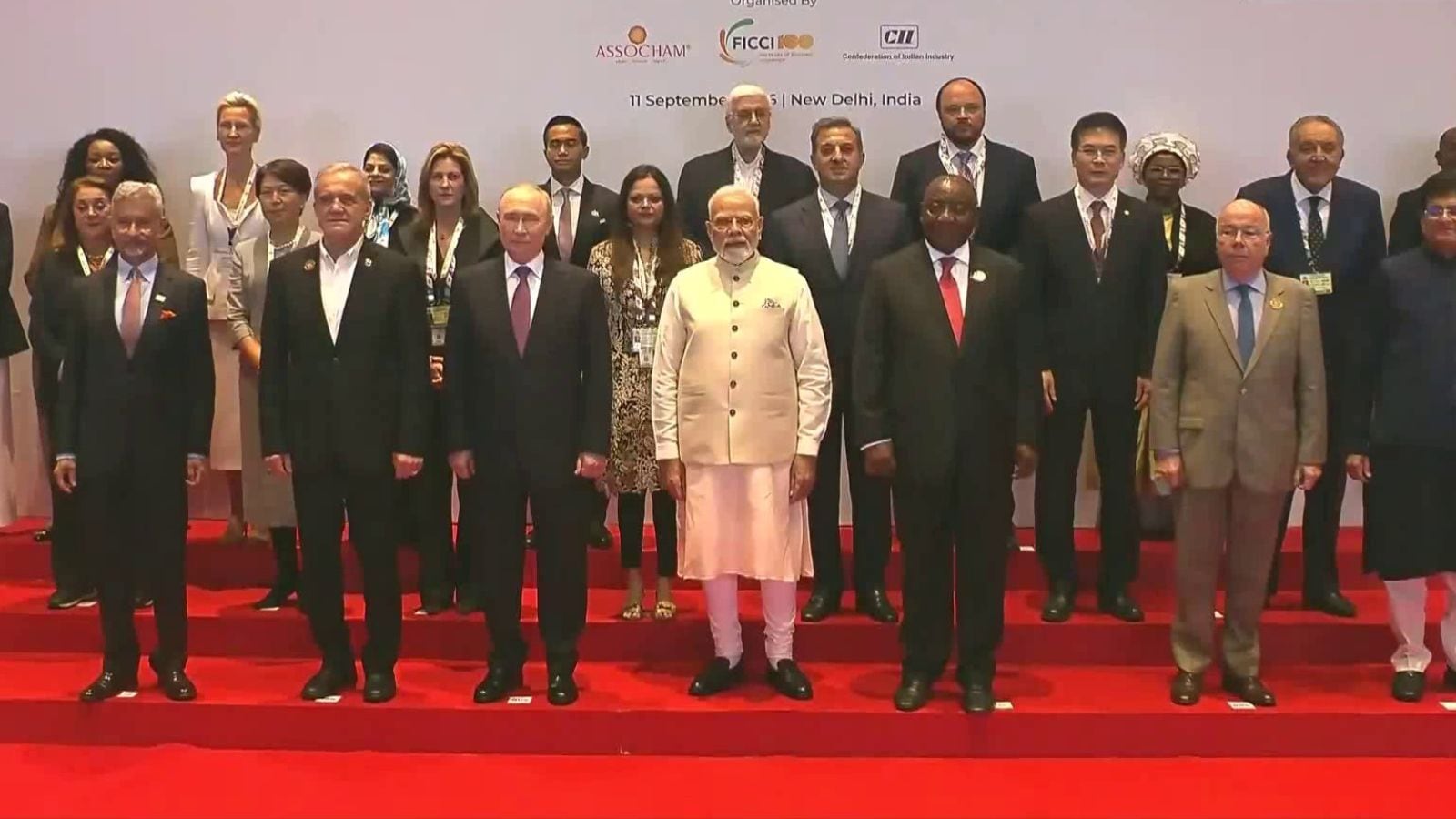
The conference rooms of New Delhi's Bharat Mandapam were heavy with exhaustion when the breakthrough finally arrived at four o'clock in the morning. Months of cautious posturing and rigid diplomatic positioning collapsed into a fragile, hard-won compromise just hours before the 18th BRICS Summit. Bureaucrats, senior delegates, and foreign ministers had spent the better part of twenty hours locked in marathon text-by-text negotiations. Their primary objective was straightforward to state yet agonizingly difficult to achieve. They had to draft a unified joint declaration for a bloc whose internal fault lines run deeper than at any point in its modern expansion.
When the bloc expanded to include regional heavyweights from the Gulf alongside established powers, optimists cheered a monumental shift in planetary economics. Realists understood that bringing Tehran, Riyadh, and Abu Dhabi under a single institutional umbrella was an exercise in geopolitical tightrope walking. Those competing interests nearly tore the New Delhi summit apart before it officially commenced. Iran arrived demanding explicit, unvarnished condemnation of military actions targeting its territory, framing the text as a non-negotiable test of solidarity against Western and allied pressure. The United Arab Emirates pushed back with equal firmness, seeking acknowledgment of sovereign grievances stemming from regional security dynamics and cross-border threats. Recently making waves recently: Why Netanyahu Suing Over A Foreign Warning Misses The Real Intelligence Failure.
The stakes for India's presidency were exceptionally high. A failed consensus would have shattered the narrative of the bloc as a coherent voice for the Global South, reducing the summit to a glorified photo opportunity. Indian diplomats orchestrated a frantic series of closed-door interventions at both official and political levels throughout the night. By stripping out specific country names while universally condemning unilateral military escalations and trade-distorting tariffs, the drafting committees found the narrow semantic needle required to satisfy everyone and alienate no one.
The Anatomy of the Compromise
Drafting a consensus statement for eleven distinct nations requires a mastery of diplomatic ambiguity. Words like sovereignty, territorial integrity, and restraint became the currency of the night. Every paragraph was scrutinized for hidden implications. Tehran wanted its specific security vulnerabilities highlighted as unique violations of international architecture. Gulf partners insisted that any mention of regional instability must account for multi-directional threats. Further information into this topic are explored by The New York Times.
The resulting New Delhi Declaration successfully sidestepped direct accusations while delivering broad institutional messaging. It voiced deep concern over escalating tensions in the Middle East, called for the protection of civilian infrastructure, and urged a return to multilateral, diplomatic resolutions. By refusing to name individual actors, the text allowed each member state to return home and interpret the consensus through the lens of its own foreign policy priorities.
This style of consensus management keeps disparate coalitions together, but it exposes a fundamental structural limitation. When an organization expands to incorporate bitter regional rivals, its foundational documents inevitably tilt toward generality. The shared ambitions—such as reforming global financial governance, reducing reliance on traditional Western payment architectures, and challenging unilateral trade restrictions—provide the glue. Yet, whenever local security crises intrude upon the agenda, the friction points immediately test the limits of unity.
Trade Realities and Economic Friction
Beyond the high-stakes debates over West Asian security, the summit zeroed in on economic survival mechanisms against a backdrop of intensifying global trade restrictions. The final declaration took direct aim at unilateral tariff and non-tariff measures, branding them as distortions that violate World Trade Organization frameworks. For emerging economies facing fluctuating commodity prices, supply chain chokepoints, and aggressive monetary policies from traditional Western centers, this shared economic grievance remains the most reliable anchor for cooperation.
Consider a hypothetical nation heavily reliant on agricultural exports that suddenly faces sudden import tariffs from a major Western market. While individual bilateral negotiations often stall due to asymmetrical leverage, a unified bloc lobbying for transparent, rules-based trade dispute mechanisms provides a collective shield. The New Delhi text emphasized the immediate need to restore a functional WTO dispute settlement mechanism, signaling that economic pragmatism often succeeds where political alignment fails.
De-dollarization discussions also featured prominently in the background conversations, though approached with pragmatic caution rather than revolutionary fervor. Member states are keenly aware that building alternative financial clearing systems requires insulation against secondary sanctions. Yet, creating a functional alternative to established SWIFT networks among countries with vastly different capital controls and currency stability profiles remains a monumental engineering puzzle. The summit avoided sweeping monetary announcements, focusing instead on local currency settlements and bilateral trade agreements that bypass traditional currency intermediaries without triggering immediate systemic shocks.
Institutional Ambitions and Global Governance
The push for structural reform within legacy international institutions received a clear endorsement in the New Delhi text. India and Brazil secured backing for their longstanding bids for permanent seats on an expanded United Nations Security Council. This demand underscores a central grievance of the grouping. The architecture of global governance was designed in the middle of the twentieth century and no longer reflects contemporary economic reality.
When the collective output of emerging markets outpaces legacy industrialized economies, the administrative control of institutions like the International Monetary Fund and the World Bank feels increasingly anachronistic to the Global South. By emphasizing structural modernization and fairer representation, the bloc positions itself not merely as an alternative club, but as a revisionist force attempting to rewrite the rules of international order from within.
Achieving these institutional goals requires a disciplined diplomatic front that resists external attempts at fragmentation. The successful conclusion of the New Delhi talks demonstrates that despite deep-seated bilateral mistrust among select members, the perceived utility of collective bargaining outweighs the short-term satisfaction of walking away from the table.
As delegations packed their bags on Saturday afternoon, the relief among organizers was palpable. The marathon sessions proved that unity within the expanded grouping is not automatic. It must be forged repeatedly, line by disputed line, under the harsh fluorescent lights of extended midnight negotiations.


