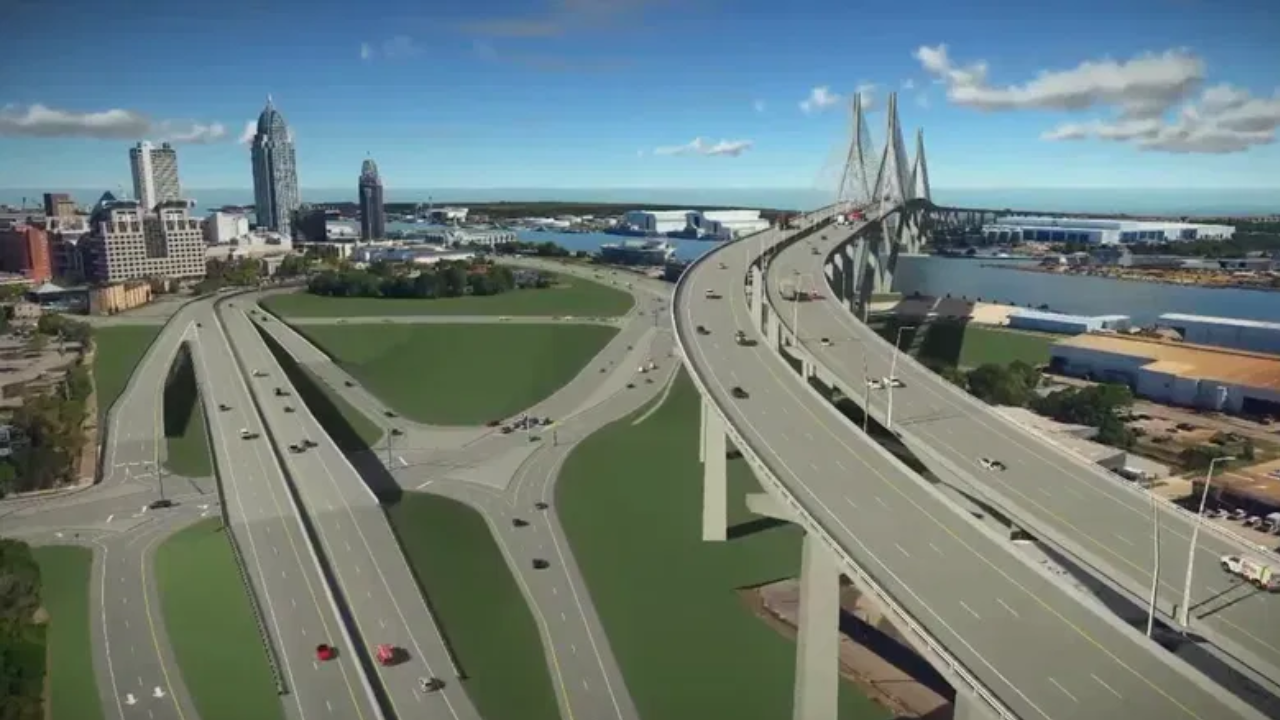
The Mobile River Bridge and Bayway Project represents the single largest infrastructure overhaul in Alabama history. Secured by a staggering $2.52 billion federal transportation loan announced by federal officials, the initiative aims to dismantle a notoriously obstructive Gulf Coast traffic bottleneck. Yet beneath the celebratory rhetoric of smoother commutes and expanded freight corridors lies a complex financial engineering act and decades of regional friction over tolls, routing, and economic equity.
For years, Interstate 10 traffic through Mobile, Alabama, has choked at the George Wallace Tunnel. Commuters, tourists, and commercial haulers face daily delays that routinely stretch travel times during peak hours. More critically, the tunnel's strict federal and state safety regulations prohibit the transport of hazardous materials. Tankers and trucks carrying restricted industrial chemicals are forced to exit the interstate entirely, lumbering through downtown Mobile streets and residential neighborhoods just to bypass the underwater crossing.
The structural solution involves constructing a brand-new bridge across the Mobile River alongside a substantial reconstruction of the low-lying Bayway structures spanning Mobile Bay. Engineers designed the new Bayway path to sit safely above historical 100-year storm surge levels, drastically hardening the region's hurricane evacuation network. Additionally, the initiative widens the existing 7.5-mile Bayway corridor from two lanes to three in each direction, directly addressing the regional freight bottlenecks impacting access to the Port of Mobile.
Financing a project of this magnitude requires layering multiple funding instruments. The federal loan package follows a previous $550 million Federal Highway Administration Bridge Investment Program grant secured for the same corridor. State infrastructure bonds and upcoming toll mechanisms will cover the remaining balance, creating an ongoing debate regarding user fees for local drivers. While commercial logistics firms stand to gain millions in optimized supply chain efficiency, daily commuters face the reality of toll-funded concrete.
Construction timelines project ground-breaking phases moving forward rapidly, with initial milestones targeted for completion early in the next decade. Whether the massive financial infusion will genuinely clear the Gulf Coast corridor without imposing undue economic burdens on everyday motorists remains the central question as the state begins moving dirt.


