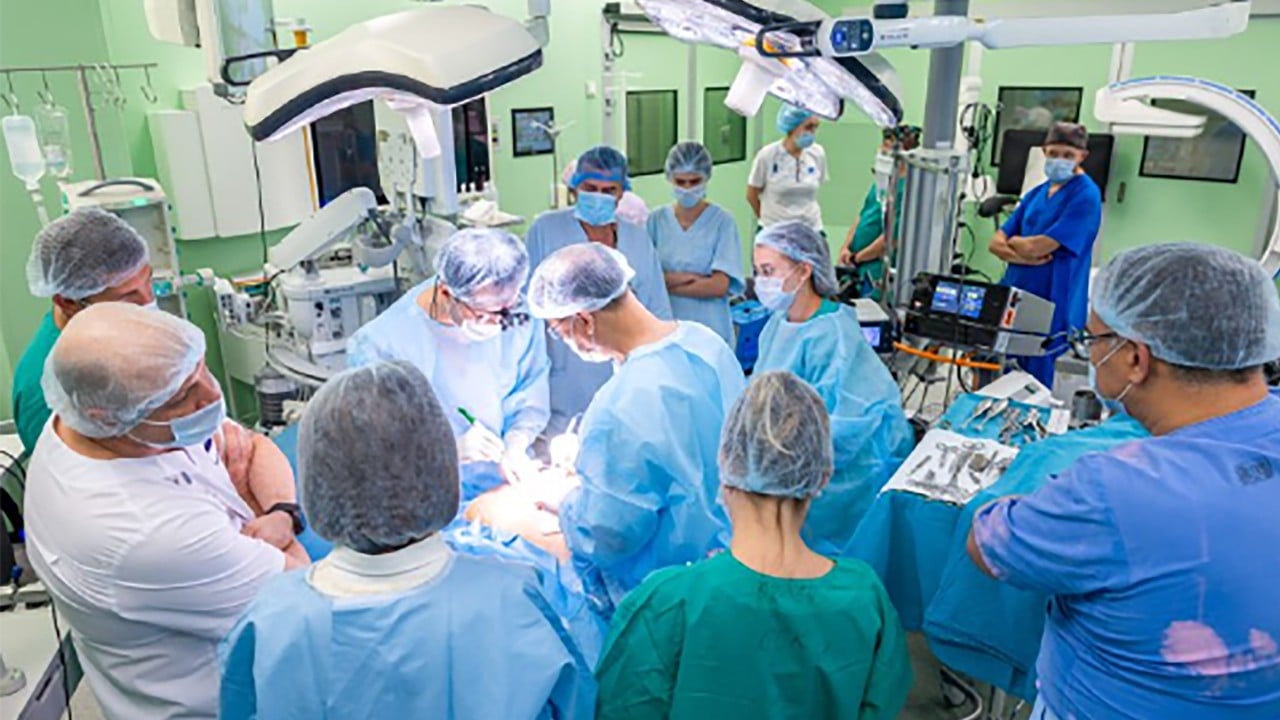
In mid-October 2026, Chinese surgeon Ren Xiaoping and a Russian medical team reportedly completed a 12-hour spinal cord transplant in Moscow. The operation excised a segment of a paralyzed patient's spinal cord—damaged by trauma three years earlier—and replaced it with tissue from a brain-dead donor.
Headlines rushed to call it a landmark medical milestone. That label does a disservice to patients and science alike.
An operation took place at Moscow's Sklifosovsky Research Institute of Emergency Care. Officials celebrated it. Yet as of late November 2026, no peer-reviewed clinical data or independent neurological proof has shown that nerve signals can travel across the transplanted segment or restore meaningful function.
I have watched experimental medicine chase big headlines for decades. Grand announcements always arrive ahead of long-term follow-up, and hope routinely outruns proof. When the surgeon leading the charge is Ren Xiaoping—long known globally as a vocal advocate for human head transplants—the gap between surgical ambition and verified biological recovery demands closer scrutiny.
Why Replacing Tissue Is Only Half the Battle
Paralysis looks like a wiring break from the outside. Inside the central nervous system, it is a biological war zone.
When a spinal cord suffers severe trauma, the immediate mechanical crush or severing is only the beginning. Secondary cascades trigger inflammation, cell death, ischemia, and scar formation. Over months and years—especially in a chronic injury three years old—the environment around the lesion becomes hostile to axonal regrowth.
Standard solid-organ transplants solve a plumbing problem. A donor kidney or liver filters blood or performs metabolic work once blood flow is restored.
Spinal cord transplantation is a signaling problem. Millions of ascending and descending nerve fibers carry motor commands from the brain and sensory data back up. Dropping a donor segment into a gap does not automatically restore that traffic. Even if surgeons physically align the ends under a microscope, axons must survive, establish functional connections, and conduct signals reliably across two new interfaces.
Consider a hypothetical example to see why speed matters in neurological repair. Imagine a major fiber-optic trunk line along a mountain highway collapses in a landslide. Crews clear the rubble the next morning and splice fresh cable into clean ends; traffic resumes once the splices are tested. Now imagine that same pass has sat buried for three years while rockfalls compacted the terrain, water corroded nearby junctions, and local roads rerouted around the ruin. Swapping in a new section of cable alone cannot fix three years of downstream decay.
Chronic spinal cord injury in humans presents that exact compounding difficulty. Acute animal models—where researchers cleanly cut a cord and apply treatment right away—rarely mirror the messy reality of a multi-year human trauma.
The PEG Promise and the Limits of Chemical Fusion
Reports around the Moscow operation point to microsurgery paired with polyethylene glycol, commonly known as PEG.
PEG is a synthetic polymer widely used in medicine and laboratory research. In spinal cord experiments, proponents use it as a membrane fusogen—a chemical agent intended to help damaged cell membranes seal and fuse rather than die off after being cut.
The concept has attracted attention in experimental neurobiology. Animal studies testing PEG protocols have reported encouraging signs in specific settings, prompting ongoing debate over how much functional recovery can actually be achieved.
Skepticism remains high for good reasons. Animal experiments involving PEG do not prove that human spinal cords can be reconnected reliably enough to reverse paralysis. Bridging a gap in a controlled laboratory model is worlds apart from restoring voluntary motor control or sensation in a human patient years after injury.
Three biological hurdles stand right in front of any transplanted spinal segment:
- Signal conduction: Surviving or newly sprouted nerve fibers must form functional circuits capable of carrying meaningful motor and sensory signals across both ends of the graft.
- Blood supply: Delicate neural tissue starves quickly without rapid, adequate microvascular perfusion to keep cells alive.
- Immune rejection: Donor central nervous system tissue is foreign tissue, meaning the recipient's immune system can mount an attack unless managed carefully—and systemic immunosuppression carries serious long-term risks of its own.
Feeling stable or comfortable shortly after a major operation is not the same thing as regaining movement. Nerve recovery is slow, uncertain, and measured over months or years of rehabilitation rather than hours in an operating theater.
From Head Transplant Provocations to Moscow Headlines
To understand why the Moscow report drew instant pushback, you have to look at Ren Xiaoping's track record.
Over the past decade, Ren became synonymous with audacious, polarizing claims around head and body transplantation, including high-profile collaborations and public debates that drew sharp criticism from neurosurgeons and ethicists worldwide. A planned human head transplant involving Russian volunteer Valery Spiridonov never happened. Critics repeatedly pointed out that reconnecting the spinal cord—and preventing catastrophic neurological and immunological failure—remained unresolved.
| Dimension | Official & Media Reports | Independent Scientific Standard |
|---|---|---|
| Procedure | 12-hour surgery in Moscow using donor spinal cord tissue and PEG | Requires full surgical protocol, imaging, and operative documentation |
| Milestone Status | Described in reports as a world-first spinal cord transplant | Remains an unverified experimental attempt until peer-reviewed |
| Patient Condition | Reported stable after surgery; potential for recovery cited | Stability is not proof of nerve reconnection or motor recovery |
| Evidence Base | Statements from the team and Moscow officials | Demands objective neurological exams, electrophysiology, and long-term data |
In October 2026, the announcement carried political weight as well. Moscow Mayor Sergei Sobyanin publicly highlighted the joint Russian-Chinese effort at the Sklifosovsky institute as a showcase of international medical cooperation and technology transfer.
That official endorsement amplifies visibility. It does not substitute for scientific evidence. Governments and hospitals routinely celebrate ambitious medical initiatives long before clinical outcomes are proven.
What Overlooked Factors Shape Real Progress
Coverage of dramatic surgeries often ignores the unglamorous realities that determine whether a patient's life actually improves.
More than 15 million people worldwide live with spinal cord injuries, according to the World Health Organization. Many live with chronic pain, spasticity, autonomic complications, bladder and bowel challenges, and pressure injuries alongside paralysis. Any intervention that asks a patient to endure a 12-hour operation and potential immune risks must clear a high bar of safety and functional benefit.
Transparency is another sticking point. Without independent clinical evaluation, standardized neurological scoring, and peer-reviewed publication, outside researchers cannot tell whether an experimental technique failed quietly, produced minor sensory shifts, or offered genuine insight into spinal repair.
What Patients and Observers Should Watch Next
Desperation makes people vulnerable to premature breakthroughs. Families living with paralysis have heard countless promises of imminent cures over the years, only to see exciting headlines fade without clinical translation.
A single reported case—even one backed by prominent surgeons and city officials—cannot establish safety or efficacy. Standard medical care, physical rehabilitation, and established clinical research remain essential while experimental approaches are tested.
Real progress in spinal cord repair will show up in verifiable data, not press releases. Watch for peer-reviewed surgical details, objective long-term neurological assessments, and transparent reporting of both complications and functional gains before treating Moscow's 12-hour operation as a cure for paralysis.