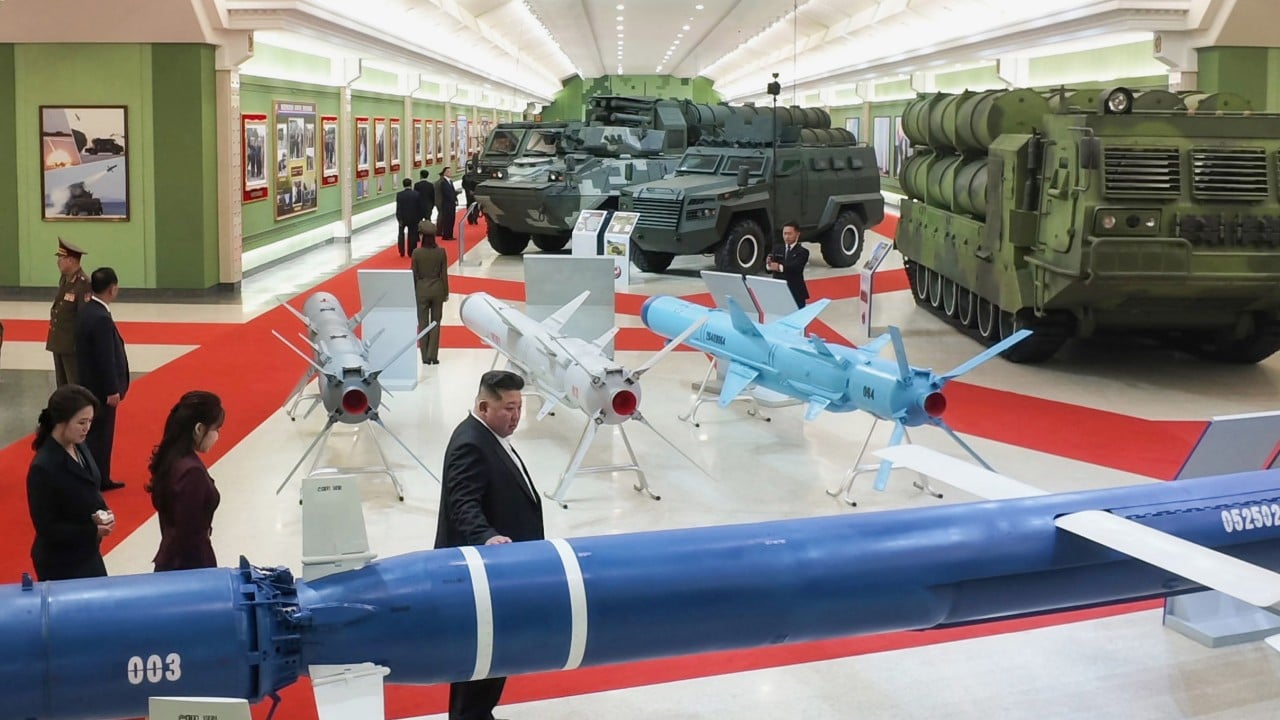
Pyongyang just opened a massive new exhibition space that blurs the line between a state shrine and an international arms showroom.
When North Korean leader Kim Jong Un cut the ribbon for the National Defense Revolution Museum, he wasn't just catering to domestic pride. State media photographs revealed tunnel-like halls packed with intercontinental ballistic missiles, hypersonic systems, and uncrewed attack drones. It's a calculated display designed to send an unmistakable message to Washington, Seoul, and global buyers alike.
If you want to understand how Pyongyang plans to leverage its military-industrial complex in the coming years, you have to look closely at what is filling these new display halls.
The Hardware On Display
The scale of the National Defense Revolution Museum is staggering. Rather than hiding its capabilities underground or in heavily restricted military test sites, Pyongyang has put its crown jewels out in the open.
The exhibition features prominent hardware like the Hwasong-20 solid-fuel ICBM, alongside older liquid-fuel workhorses. You can also spot submarine-launched ballistic missiles, massive transporter-erector-launchers (TELs), and 600-millimeter multiple rocket launch systems.
Drones occupy a surprising amount of floor space. Both reconnaissance aircraft and explosive suicide drones sit in rows, mimicking the visual language of modern defense expos held in Abu Dhabi or Moscow.
This isn't merely a museum meant to honor past achievements. It's an active catalog.
Shrine Versus Bazaar
Why call it part shrine, part arms bazaar?
On one hand, the venue functions as an ideological temple for the ruling Workers Party of Korea. It marks decades of sanctions defiance, framing nuclear weapons as sacred protectors of the state sovereignty. Family members, including Kim Jong Un's daughter Kim Ju-ae, walked the polished concrete floors alongside senior military officials, turning the tour into a masterclass in dynastic continuity and nationalist fervor.
On the other hand, the layout and presentation scream commercial pitch. By displaying global strike maps, modular missile variants, and tactical gear side-by-side, Pyongyang is showing off manufacturing maturity.
Intelligence analysts note that North Korea's deepening military ties with Russia have given its defense sector a massive financial and technical shot in the arm. Systems resembling close-range air defense arrays like Russia's Pantsir suggest active technology sharing. When a sanctioned regime opens a showroom floor featuring everything from artillery shells to advanced cruise missiles, export potential is never far from the minds of foreign observers.
What This Means For Future Negotiations
Displaying the nation's entire arsenal under one roof changes the diplomatic calculus. For years, Western intelligence had to rely on grainy satellite photos and test-launch telemetry to gauge North Korean capabilities. Now, high-resolution state media releases provide exact sizing, launcher configurations, and structural layouts.
This transparency is intentional. By showing off a diversified menu of strategic and tactical weapons—including hypersonic glide vehicles and submarine-launched platforms—Pyongyang is attempting to establish deterrence before any future administration attempts talks.
When you can point potential adversaries to a literal map of global strike ranges mounted on a museum wall, you aren't hiding your ambitions. You're daring the world to negotiate on your terms.
Take a close look at the trajectory of North Korean defense policy over the past few years. The shift from secretive development to open, proud commercial-style exhibitions proves that sanctions failed to break their manufacturing base. They built a museum to celebrate that survival, and they're ready to show off the inventory to anyone willing to look.