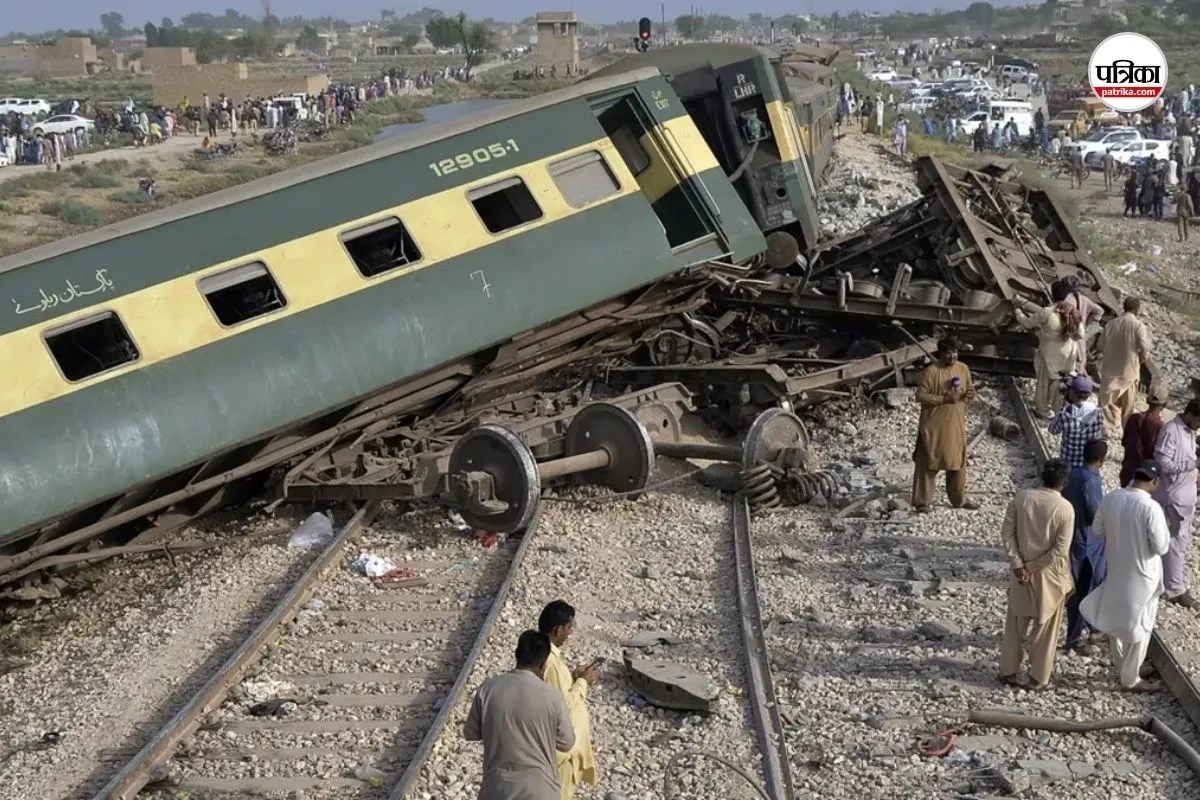
At approximately 5:15 on a Tuesday morning in the Multan district of Pakistan's Punjab province, the Rehman Baba Express completed its transition from a transit vehicle into a structural indictment. Traveling northbound from the southern port city of Karachi toward Peshawar, all fourteen coaches of the passenger train violently uncoupled from operational reality and tore off the tracks. Five people died instantly, while over thirty others sustained injuries that required immediate evacuation to Nishtar Hospital.
Yet, reducing this tragedy to a simple operational mishap or an isolated twist of fate ignores decades of predictable institutional decay.
The Anatomy of a Foretold Disaster
To understand why the Rehman Baba Express ended up scattered across an embankment in Sher Shah, one must look past the initial rescue efforts and examine the state of the infrastructure itself. Pakistan Railways operates on a network that relies heavily on nineteenth-century colonial foundations paired with twentieth-century patch jobs.
Decades of chronic underinvestment have left thousands of kilometers of track warped, poorly ballasted, and structurally compromised. Sleepers that should have been replaced years ago remain in service, holding rails that expand and contract under extreme temperature shifts without the safety margins demanded by modern transit volumes.
When a train carrying hundreds of passengers careens off the line, official statements routinely point toward an "inquiry committee" examining track geometry or mechanical failure. These investigations rarely address the root economic symptoms. Budgets allocated to the national rail carrier are frequently swallowed by operational deficits and structural debt service, leaving little capital for preventative track maintenance or electronic signaling overhauls.
The Cost of Deferred Maintenance
Iron does not fail overnight. The buckling of a rail or the shifting of an embankment is the cumulative product of months, sometimes years, of ignored inspection reports.
Consider how rail maintenance functions under optimal engineering standards. Regular ultrasound testing detects internal fissures before they fracture the surface. Ballast cleaning ensures proper load distribution beneath the ties. In an underfunded network, these non-revenue-generating procedures are the first to be deferred. Crews operate in a reactive loop, patching derailments after they occur rather than funding the continuous upkeep required to prevent them.
When the prime minister issues standard directives demanding expedited medical treatment for the injured, the political theater offers temporary comfort to grieving families while bypassing the structural changes needed to prevent the next crash. Condolences do not replace decayed concrete sleepers. Emergency press releases do not weld fractured steel joints.
The Human Toll and the Cycle of Indifference
For the ordinary commuter in Pakistan, the choice to travel by rail is governed by economic necessity rather than comfort or safety. Air travel is out of reach for the working class, and long-distance road transit carries its own grim highway statistics. Trains represent the only viable economic lifeline across the country's vast north-south axis.
Passengers boarding the Karachi-to-Peshawar run place absolute trust in a system that has repeatedly proven incapable of guaranteeing their safe arrival. Every major derailment—such as the devastating Hazara Express crash near Nawabshah that claimed thirty lives—sparks a brief cycle of media outrage, parliamentary posturing, and temporary suspensions of service. Then, the news cycle shifts, the tracks are cleared, and the underlying vulnerabilities remain untouched until the next set of coaches leaves the rails.
Until national transport priorities shift from superficial expansion projects to the unglamorous, foundational work of track rehabilitation and strict safety enforcement, the Punjab province and the rest of Pakistan's rail network will remain trapped in a recurring cycle of preventable loss.