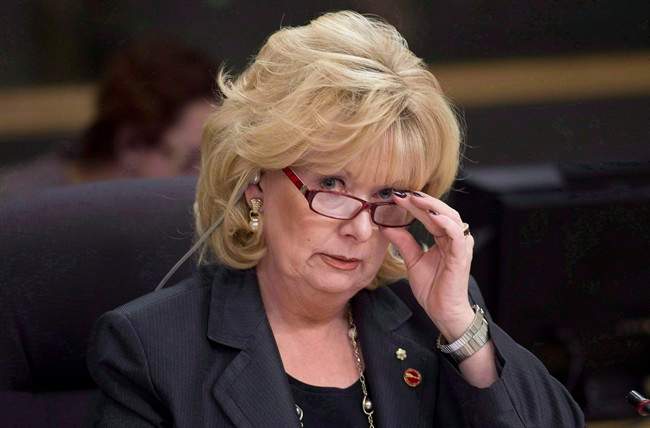
Pamela Wallin resigned her Senate seat on October 18, 2026, walking away from Canada's upper chamber two years shy of the mandatory retirement age of 75. Most coverage treats the exit as a quiet footnote at the end of a 17-year political run. Look closer and a sharper story emerges. Her departure exposes how an institution rebuilt around post-scandal compliance still struggles with life after public spectacle, shifting caucus power, and an appointment system that treats regional representation like a slow-moving chessboard.
Wallin, who turned 73 in April 2026, submitted her resignation effective Sunday, October 18, closing a chapter that began in January 2009 when former prime minister Stephen Harper tapped her to represent Saskatchewan. In brief remarks to The Canadian Press the following day, she called it a personal call, saying it simply felt like the right time after 17 years and noting, "We all know our time." That line sounds calm on paper. In Ottawa, where senators can hold lifetime-style tenure up to age 75 with steady pay, benefits, and institutional weight, leaving 24 months early rarely happens without a reason beneath the surface.
Why Walking Away Early Matters in the Red Chamber
Senators do not leave early by accident. In a chamber designed for long horizons and deliberate sober second thought, stepping down two years before the constitutional age cap is a choice to surrender platform and influence while they still exist.
Wallin had already spent years out of the loudest crossfire. After her tumultuous suspension during the 2013 Senate expense scandal ended with the dissolution of Parliament for the 2015 election, she moved from Conservative ranks to the Independent Senators Group and later sat with the Canadian Senators Group. Over the past decade, she kept a lower public profile than she did during her prime-time television years or at the height of her parliamentary clash over travel claims. Yet keeping a lower profile is different from walking out the door before the clock runs out.
A senator who leaves two years before 75 trades institutional permanence for personal autonomy—and leaves a vacant regional seat in the hands of the sitting government.
For veteran Hill watchers, early departures often signal one of three things: fatigue with grinding procedural routines, a desire to close a public chapter on one's own terms rather than waiting for an aging-out deadline, or a quiet assessment that the work ahead no longer warrants the commute and scrutiny. Wallin gave no grand manifesto on her way out. Her brevity matched the restrained tone of her later years in Ottawa.
From Broadcasting Pioneer to Embattled Senator
You cannot read Wallin's exit accurately without reckoning with the arc that brought her to Parliament Hill in the first place. Long before she wore the title of senator, she built one of the most visible careers in Canadian media.
Starting in radio in the mid-1970s and moving through print and television, she rose to become Ottawa bureau chief for CTV and, in 1992, the first woman to co-anchor a Canadian nightly news broadcast alongside Peter Mansbridge on CBC's Prime Time News. She later launched her own interview program, survived serious illness in 2001 while staying on a book tour, and served more than four years as Canada's consul general in New York beginning in 2002. Her resume carried high-voltage public authority before she ever set foot in the Senate.
Then came the expense storm that defined her middle act in public life.
- Travel scrutiny: Beginning in late 2012, Wallin's travel claims between Saskatchewan and Ottawa drew intense examination after auditors flagged frequent stopovers in Toronto and expenses tied to outside activities, including corporate boards and academic roles.
- Caucus rupture: In May 2013, she stepped out of the Conservative caucus as external auditing progressed.
- Repayment and suspension: Following an audit by Deloitte and a referral to the RCMP, Wallin repaid roughly $150,000 including interest for claims deemed inappropriate, while denouncing what she called a "lynch mob" atmosphere and unfair pre-judgment in the chamber. In November 2013, the Senate suspended her without pay alongside Mike Duffy and Patrick Brazeau.
- No criminal charges: While Duffy faced trial and acquittal, and charges against others followed different paths, the RCMP eventually closed its file on Wallin without criminal charges being laid.
| Career Phase | Key Milestone or Event | Institutional Impact |
|---|---|---|
| Pre-Senate Media and Diplomacy | Co-anchored Prime Time News in 1992; served as Consul General in New York from 2002 | Established national name recognition and public-facing polish |
| Senate Appointment (2009) | Named to represent Saskatchewan on the advice of PM Stephen Harper | Entered partisan Senate dynamics from a high-profile media perch |
| Expense Audit and Suspension (2012 to 2015) | Repaid roughly $150,000 with interest; suspended without pay in late 2013 | Triggered fierce institutional friction and lasting overhaul of expense rules |
| Later Independent and CSG Years | Sat with ISG and later the Canadian Senators Group | Operated in a more fragmented, reformed upper chamber until October 2026 |
The gray area in that history is worth stating plainly. A lack of criminal charges does not erase the institutional damage of the episode, nor does a contested audit process settle every argument about fairness. Wallin argued forcefully that the Senate acted as accuser, judge, and executioner before any court weighed in. Critics countered that public money demands strict boundaries between parliamentary duties and outside board work or personal travel. Both truths coexist in the record: she was never convicted of a crime, yet the scandal permanently altered how Canadians judged Senate perks.
The Quiet Aftermath of Senate Expense Reform
When Wallin spoke to The Canadian Press after resigning in October 2026, she said she had no interest in reliving the scandal days—but acknowledged that the reforms that followed were necessary. That concession points to an overlooked reality of modern Canadian parliamentary life.
The 2012 to 2016 expense scandal forced the Senate to replace loose traditions and ambiguous residency conventions with tighter documentation, clearer travel rules, expanded public disclosure, and independent review mechanisms. What used to pass as customary Ottawa latitude became a compliance regime.
Consider a hypothetical example of how that shift changes daily operations for any senator. Suppose a lawmaker plans a trip from a western province to Ottawa with a scheduled stop in a major business hub to attend a private industry dinner or university event. Under the older, looser norms that fueled the 2012–2013 reckoning, the line between parliamentary outreach and outside commitments could get blurry fast. Under the tighter post-scandal framework, every leg, purpose, and receipt faces stricter scrutiny and public reporting. That environment protects taxpayers better. It also strips away much of the old informal glamour that once made a Senate seat look like a gilded retirement perch.
At the same time, reform has not solved every tension inside the chamber. Debates over outside paid roles, regional ties, and the proper balance between independent caucuses and partisan alignment never truly disappear in an appointed upper house.
What Saskatchewan and Ottawa Face Next
Wallin's exit leaves a vacancy among Saskatchewan's Senate seats without an immediate replacement timeline announced by the federal government. In Canada's constitutional setup, regional seats exist to give provinces—especially smaller and mid-sized ones—dedicated representation in federal legislation.
Leaving the seat open does not stop bills from moving, yet every vacant seat alters committee bandwidth and regional voice in the chamber. For prime ministerial advisers, a sudden early resignation also rearranges appointment priorities: a seat that was supposed to open in 2028 is suddenly open in autumn 2026.
For Wallin, stepping down at 73 closes a long run that began in Saskatchewan small-town roots, moved through national television studios and diplomatic posts, weathered a bruising parliamentary storm, and settled into the quieter rhythms of a reformed Senate. She chose her own exit ramp before the constitution forced her off the road. Watch how quickly Ottawa fills that Saskatchewan seat—and whether the next appointee treats the Red Chamber as a serious legislative workshop or just another trophy on a long public resume.