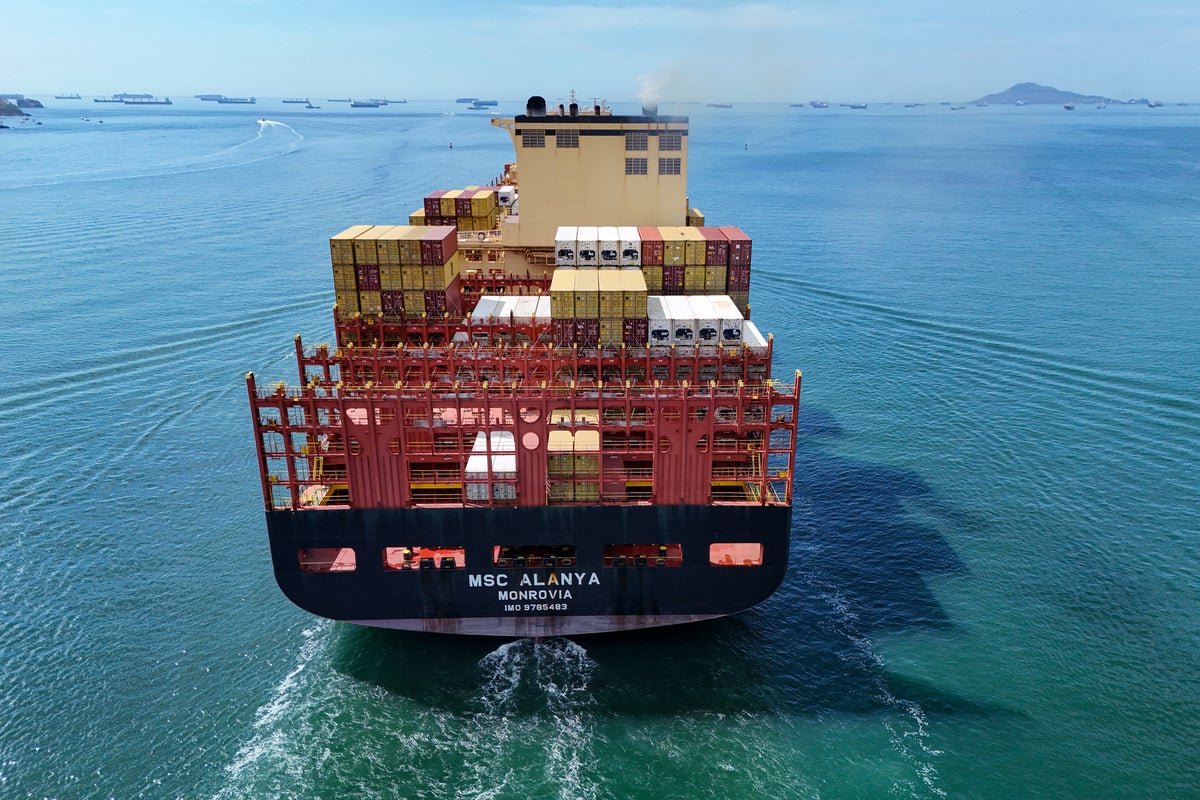
The Panama Canal Authority recently announced a seemingly minor operational adjustment: a half-foot reduction in the maximum authorized draft for vessels transiting its Neopanamax locks. Beginning July 3, the limit drops from 50 feet to 49.5 feet. To the casual observer, six inches of water sounds like a trivial administrative tweak. In the high-stakes world of global maritime logistics, however, it is an early warning siren. This subtle adjustment represents a calculated preemptive strike against an approaching "Super El Niño" that threatens to destabilize global supply chains already reeling from geopolitical blockades in the Middle East.
By shrinking the allowable draft, the canal authority forces the world's largest container ships to carry significantly less cargo to sit higher in the water, conserving the precious freshwater required to operate the locks. This move exposes a deeper, structural vulnerability. The Panama Canal, which handles roughly 5% of global maritime commerce, is fundamentally a freshwater system running out of water in an era of extreme climate volatility. For a more detailed analysis into similar topics, we recommend: this related article.
The Illusion of Full Capacity
Just weeks before this draft reduction, official statements from Panama City offered an optimistic outlook. High-ranking planners assured the shipping industry that daily transits would remain steady at 38 vessels through the end of December. On paper, the canal is operating at near-maximum capacity, buoyed by an unseasonably wet dry season that left Gatun Lake at historically high levels.
But looking at daily transit counts alone misses the point. To get more details on this issue, detailed reporting is available at Financial Times.
The true measure of the canal's capacity is not just how many hulls pass through the locks, but how much cargo those hulls can legally and safely carry. A six-inch reduction in draft directly translates to lost carrying capacity. For a massive Neopanamax vessel, losing a foot of draft can mean leaving thousands of containers behind on the docks of Shanghai or Los Angeles.
The canal authority is playing a high-stakes game of hydrological chess. By enforcing a moderate draft restriction now, during the traditional rainy season, they are trying to prevent a repeat of the catastrophic 2023 drought cycle. During that crisis, water levels in Gatun Lake plummeted so drastically that daily transits were slashed from 38 down to a staggering 22 vessels. The resulting bottleneck forced desperate shipping lines to bid millions of dollars in supplemental auctions just to secure a transit slot, while others abandoned the route entirely, offloading cargo onto trans-isthmus railways or routing ships thousands of miles around Africa’s Cape of Good Hope.
Why Rain Alone Cannot Save the Canal
To understand why a few inches of water can trigger an international logistical headache, one must understand the anatomy of the canal itself. Unlike sea-level waterways like the Suez Canal, the Panama Canal is a freshwater staircase.
[Atlantic Ocean] --(Locks Up)--> [Gatun Lake: 85 ft Above Sea Level] --(Locks Down)--> [Pacific Ocean]
                                        |
                            [Requires 50M Gallons of
                             Freshwater Per Transit]
Every single vessel transit requires approximately 50 million gallons of freshwater. This water is drawn directly from Gatun and Alhajuela lakes to fill the massive chambers, lifting ships 85 feet above sea level before flushing that water out into the ocean.
The core vulnerability of this engineering marvel is that it relies on the exact same water supply that provides drinking water to more than half of Panama's population. When an El Niño pattern emerges, it alters Pacific trade winds and spikes ocean surface temperatures. For Central America, this shift historically results in severe rainfall deficits and soaring evaporation rates.
The National Oceanic and Atmospheric Administration (NOAA) currently estimates a 96% probability that El Niño conditions will persist through the northern hemisphere winter. Worse, there is a two-thirds chance this event could manifest as a "strong" or "very strong" cycle.
Canal Administrator Ricaurte Vásquez Morales and his team are acting early because historical data shows that the most brutal impacts of El Niño do not hit during the initial warming phase. They hit the following year. The draft restriction implemented now is a desperate attempt to bank water before the dry season arrives in November.
The Desperate Search for Infrastructure Solutions
The canal authority is not blind to its structural flaws. They have implemented several short-term mitigation tactics to curb the water loss, including:
- Simultaneous lockages: Squeezing two smaller vessels into a single chamber.
- Water-saving basins: Utilizing recycling recycling technology in the newer Neopanamax locks to salvage a portion of the water used during a transit.
- Hydroelectric suspension: Halting power generation at Gatun Dam to prioritize liquid storage over electricity.
Yet, these are band-aids on a compounding wound. The ultimate survival strategy relies on a massive, $1.6 billion infrastructure project: damming the Río Indio to create an entirely new reservoir. The plan involves boring a nine-kilometer tunnel through a mountain to feed freshwater directly into Gatun Lake.
However, construction is not scheduled to begin until 2027, with a projected completion date of 2032. That leaves a dangerous five-year window where the canal is entirely at the mercy of unpredictable tropical weather patterns.
The Geopolitical Chokepoint Multiplier
If the Panama Canal crisis were happening in a geopolitical vacuum, the shipping industry might absorb the friction. But it is happening at a time when alternative global trade corridors are facing unprecedented chaos.
The ongoing conflict in the Middle East has severely restricted traffic through the Suez Canal and the Strait of Hormuz. Tankers and container carriers that previously moved goods between Asia, Europe, and the US East Coast through the Red Sea have been forced to reroute. A significant portion of that displaced traffic shifted directly to Panama. Vessel transits through the Central American waterway have jumped 8% year-over-year, driven heavily by an influx of massive energy tankers.
This surge in demand creates a dangerous paradox. The canal is facing record-high traffic volumes precisely at the moment its environmental foundations are cracking.
"The daily maximum capacity of the Panama Canal is around 36 to 40 transits," notes Filipe Gouveia, a shipping analysis manager at BIMCO. "Meaning it is currently operating close to maximum capacity."
When a system running at 100% capacity experiences even a minor operational constriction, the shockwaves are amplified across the global economy.
If El Niño intensifies and forces the canal authority to transition from moderate draft restrictions to outright transit cuts later this year, the global shipping market will face a double-chokepoint crisis. With Suez compromised and Panama restricted, ocean freight rates will surge. Importers will face soaring costs, and consumers will ultimately feel the pinch in the form of renewed inflationary pressure on everything from electronics to agricultural goods.
The half-foot draft reduction enforced this week is not a routine adjustment. It is a calculated gamble by a nation trying to ration its most valuable commodity before the sky dries up completely. For global supply chains, the margin for error has just shrunk by six inches.