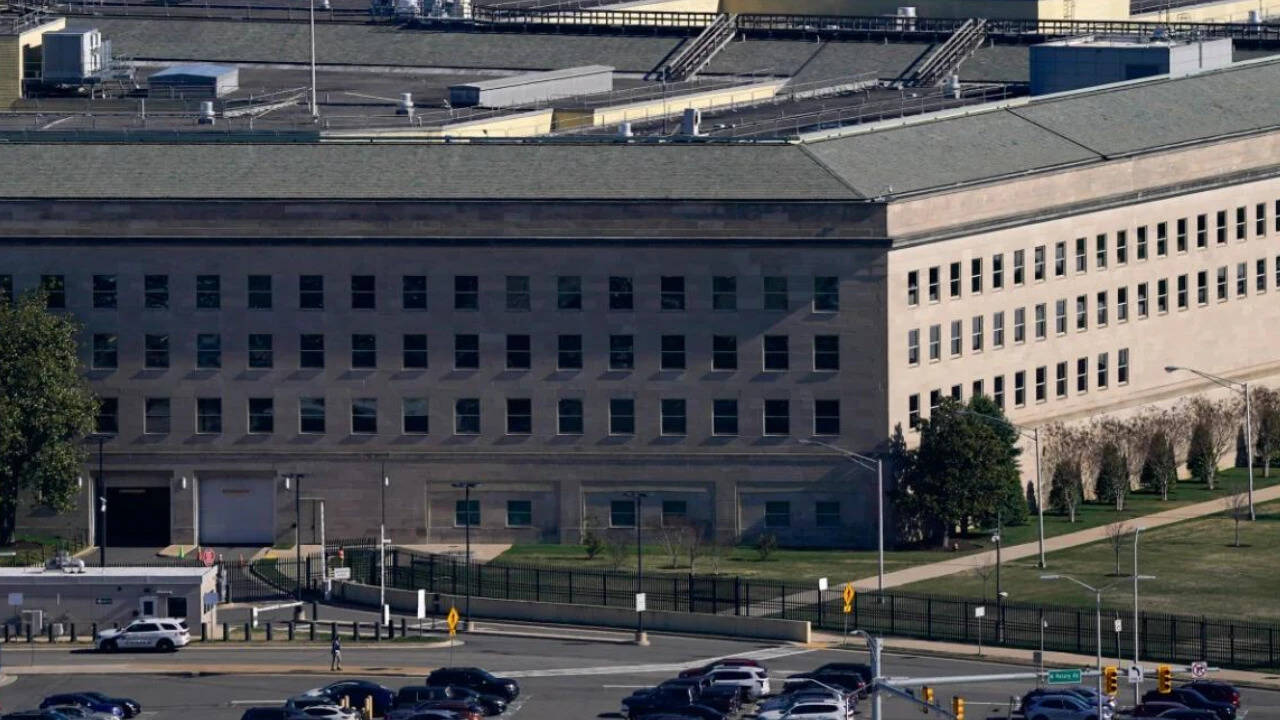
Military investigators are actively probing whether a coordinated cyberattack caused simultaneous commercial freezer failures that spoiled thousands of pounds of food across multiple United States military installations. While initial reports focused on the immediate financial loss of ruined rations, defense analysts and cybersecurity veterans recognize a much darker operational reality. Operational Technology (OT) systems—the unglamorous, often unpatched industrial controllers governing refrigeration, HVAC, and power grids—have quietly become the soft underbelly of national defense. If an adversary can remotely spoil a commissary’s meat locker without triggering a kinetic alarm, they have effectively proven they can dismantle a base’s logistics before a single troop deploys.
The Anatomy of a Cold-Chain Failure
An army marches on its stomach. Napoleon said it, and two centuries of modern warfare have failed to disprove it. Yet when a series of industrial refrigeration units across domestic military facilities suffered catastrophic temperature spikes, the initial reaction from local base commanders was mundane. Equipment breaks. Compressors burn out. Seals fail. Meanwhile, you can find other events here: The Quiet Arithmetic of a Ballot Box and a Stalled Engine.
The alarm bells only started ringing when logistics officers noticed the pattern. The failures did not follow the typical curve of mechanical wear and tear, nor were they isolated to a single aging facility or a bad batch of hardware. Instead, the malfunctions clustered across geographically dispersed bases, affecting systems tied to centralized Building Automation Systems (BAS).
In modern military infrastructure, industrial freezers are no longer standalone appliances plugged into a wall outlet. They are networked nodes. They communicate temperature telemetry, compressor cycles, and defrost schedules back to central monitoring dashboards to save energy and reduce maintenance overhead. When those dashboards began reporting normal operating temperatures while internal thermometers climbed well above freezing, investigators realized they were likely dealing with spoofed telemetry—a classic hallmark of a sophisticated cyber intrusion. To explore the complete picture, we recommend the recent report by The Guardian.
To understand how a hacker ruins a warehouse full of frozen poultry, you have to look at Programmable Logic Controllers (PLCs). These ruggedized miniature computers translate digital commands into physical actions, telling a relay when to kick on a cooling fan or open a refrigerant valve.
Consider a hypothetical scenario illustrating how an attacker exploits this architecture. An intruder gains access to a third-party HVAC contractor's corporate network via a routine phishing email. Because that contractor holds remote maintenance credentials for military base building systems, the attacker pivots directly into the base's operational network. Once inside, they do not deploy ransomware or lock up screens, which would immediately alert IT defenders. Instead, they subtly alter the PLC logic to disable the compressor’s high-temperature alarm while forcing the unit into an endless defrost cycle. The local display reads zero degrees. Meanwhile, millions of dollars in perishable supplies rot in the dark.
Why Industrial Control Systems Are Wide Open
For decades, the Department of Defense poured billions of dollars into securing its Information Technology (IT) networks. Classified communications, weapons schematics, and personnel records sit behind layers of encryption, zero-trust architectures, and continuous monitoring. The physical infrastructure keeping the lights on and the food cold received no such attention.
Historically, Industrial Control Systems (ICS) relied on a concept known as "air-gapping"—the assumption that because these machines were not connected to the public internet, they could not be hacked remotely. That assumption died years ago, killed by the relentless push for smart-grid efficiency and remote diagnostics. Today, nearly every major military installation relies on interconnected commercial off-the-shelf (COTS) hardware to manage water treatment, electrical distribution, and cold storage.
The security gap between IT and OT networks remains dangerously wide for several structural reasons:
- Legacy Hardware Lifecycles: A military server is replaced every three to five years. An industrial chiller or power transformer is expected to run for twenty to thirty years. Many PLCs currently operating on US bases run on outdated operating systems that cannot support modern antivirus software or encryption protocols.
- The Uptime Imperative: In traditional IT, if a patch breaks an email server, you reboot it. In Operational Technology, rebooting a controller might shut down a hospital's life-support ventilation or ruin an entire warehouse of temperature-sensitive medical supplies and rations. Consequently, facility managers routinely delay or ignore critical security updates.
- Vendor Backdoors: To honor warranty agreements and provide rapid troubleshooting, equipment manufacturers routinely demand persistent remote access to the systems they install. These VPN tunnels and cellular modems often bypass traditional military firewalls entirely, creating unmonitored entry points straight into base infrastructure.
When you combine twenty-year-old unpatched code with vendor-mandated remote access, you do not need a nation-state cyber superweapon to cause chaos. A moderately skilled adversary using publicly available scanning tools can find exposed building controllers, exploit default administrative passwords, and manipulate physical machinery from halfway across the globe.
The Strategic Logic of Gray-Zone Logistics Warfare
Why target freezers? To a casual observer, spoiling food looks like petty vandalism compared to knocking out a radar array or grounding a fighter squadron. To a military strategist, however, attacking the cold chain is a textbook execution of gray-zone warfare.
Gray-zone operations exist in the murky space between routine statecraft and open armed conflict. The objective is to degrade an adversary's readiness, test their defensive response times, and impose financial costs without crossing the threshold that would trigger a conventional military retaliation. If a foreign intelligence service bombs a supply depot, it is an act of war. If a mysterious software glitch ruins the food inside that depot, it becomes a bureaucratic headache wrapped in a months-long forensic investigation.
Logistics is the true center of gravity for the United States military. American power projection depends entirely on the ability to move massive quantities of fuel, ammunition, spare parts, and food across oceans at a moment's notice. Disrupting that pipeline at the source—inside domestic bases—creates immediate friction.
Spoiled food does not starve troops on American soil, where local commercial grocery chains can easily absorb the deficit. The real damage lies in the distraction and the proof of concept. Every hour that defense contractors, cyber protection teams, and base commanders spend auditing refrigeration logs and replacing ruined inventory is an hour they are not spending preparing for deployment. Worse, it forces the Pentagon to confront an uncomfortable truth: if an adversary can manipulate the temperature of a freezer at a domestic base, they can likely manipulate the fuel pumps, the munitions hoists, and the electrical substations on that exact same network.
The Contractor Blind Spot
The investigation into the base freezer failures inevitably points toward one of the Pentagon's most persistent vulnerabilities: third-party supply chain risk. The Department of Defense does not build its own refrigerators, nor does it employ enough uniformed technicians to maintain every HVAC unit across hundreds of global installations. It outsources facility maintenance to thousands of regional and national contractors.
While prime defense contractors building fighter jets and missile systems face strict compliance standards under frameworks like the Cybersecurity Maturity Model Certification (CMMC), the subcontractors servicing commercial building equipment often operate under far looser oversight. A small refrigeration company in a rural military town rarely employs a dedicated Chief Information Security Officer. Their technicians carry laptops and tablets from commercial strip malls directly onto secure military installations, plugging diagnostic cables into base networks without rigorous endpoint sanitization.
This creates a massive asymmetry in defense. The Pentagon can build a digital fortress around its command centers, only to leave the side door unlocked for the guy fixing the ice machine.
| Defense Layer | Primary Focus | Typical Security Posture | Key Vulnerability |
|---|---|---|---|
| Classified IT Networks | Command, control, intelligence | High (Zero-trust, heavy encryption) | Insider threats, sophisticated zero-days |
| Unclassified DoD Networks | Administration, email, general logistics | Moderate to High (Continuous monitoring) | Phishing, credential harvesting |
| Base Operational Tech (OT) | Power, water, HVAC, refrigeration | Low to Moderate (Legacy hardware) | Unpatched PLCs, vendor remote access |
| Subcontractor Systems | Facility maintenance, commercial supply | Low (Varied commercial standards) | Shared credentials, unvetted diagnostic tools |
Addressing this blind spot requires more than just telling contractors to use stronger passwords. It demands network segmentation—physically and digitally isolating operational systems so that a compromised HVAC controller cannot communicate with power grids, fuel depots, or administrative networks. Yet implementing true segmentation across sprawling, decades-old military bases costs billions of dollars and requires tearing up infrastructure that must remain operational twenty-four hours a day.
Forensics in the Dark
Proving definitively that a mechanical failure was actually a cyberattack is notoriously difficult in industrial environments. Unlike corporate laptops, which keep detailed logs of user logins, file transfers, and network connections, most older PLCs possess almost no internal memory for forensic logging. When a controller crashes or executes an anomalous command, it simply overwrites its tiny buffer of operational data.
Cyber investigators arriving at a base days after a freezer failure are often looking at a wiped slate. They have to reconstruct the event using indirect evidence: anomalous traffic spikes on upstream network switches, unauthorized VPN connections on a vendor's router, or subtle discrepancies between the physical state of a compressor and the digital logs recorded by the central building management server.
Even when digital footprints are found, attribution remains a political and technical minefield. Sophisticated state-sponsored threat actors routinely route their traffic through compromised home routers and commercial virtual private servers inside the United States to mask their origin. They intentionally use "living off the land" techniques—relying on legitimate administrative tools already present on the network rather than dropping custom malware that might carry a recognizable digital signature.
This ambiguity works entirely in the attacker's favor. As long as Pentagon officials cannot state with one hundred percent certainty whether a failure was caused by a foreign intelligence service, a disgruntled contractor, or a bizarre firmware bug, the response remains paralyzed in committee rooms.
The Cost of Convenience
The push toward smart bases was born out of genuine necessity. Facing tightening maintenance budgets and aging facilities, military planners embraced automation to reduce energy waste and predict equipment failures before they happened. Connecting every thermostat, meter, and freezer to a central network promised massive efficiency gains.
Nobody factored in the hidden tax of connectivity. Every sensor added to a base network expands the attack surface. Every automated dashboard creates a single point of failure that an intelligent adversary can exploit to blind human operators.
The spoiled food sitting in dumpsters across US military installations is a cheap warning shot. Replacing ruined rations costs taxpayers millions, a rounding error in an annual defense budget approaching a trillion dollars. The true cost is measured in the realization that the domestic homeland is no longer a sanctuary for military logistics. Until the Pentagon treats the mundane machinery of base infrastructure with the exact same paranoia it reserves for its nuclear command and control systems, every networked compressor, valve, and circuit breaker remains a loaded weapon waiting for someone else to pull the trigger.