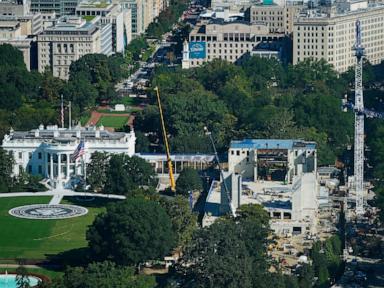
Historic preservationists have launched a dedicated legal defense fund to challenge the construction of a massive, privately financed ballroom at the White House and other sweeping architectural alterations across federal property in Washington. The initiative marks an aggressive shift from traditional advisory lobbying to direct federal litigation. Preservation groups argue that bypassing standard statutory reviews for high-profile executive projects threatens the legal guardrails protecting America’s most iconic civic buildings.
The conflict is not merely a dispute over interior design or event capacity. It is a constitutional and regulatory showdown over who actually owns the physical legacy of the federal government, and whether a sitting president can unilaterally reshape historic landmarks without submitting to the public oversight mechanisms established by Congress over the past century.
The Architecture of Executive Ambition
For decades, presidents have complained about the logistical constraints of the White House. State dinners often require pitching elaborate, climate-controlled tents on the South Lawn, a process that is expensive, weather-dependent, and disruptive to the grounds. Donald Trump has long argued that the Executive Mansion lacks a grand, permanent space worthy of hosting foreign dignitaries on a large scale, drawing from his background as a luxury real estate developer to propose a sprawling ballroom addition alongside other structural updates to the complex and nearby federal properties.
The friction lies in how these projects are conceived, funded, and executed. Unlike routine maintenance or minor interior redecorating—which fall squarely under the purview of the First Family and the White House Curator—major structural additions and alterations to the exterior footprint trigger a web of federal preservation laws.
By establishing a dedicated legal war chest, preservation advocates are signaling that they expect the administration to test the limits of executive authority. Traditional historic preservation organizations usually operate through consensus, public comment periods, and quiet diplomacy with the National Park Service. Launching a specialized legal defense fund means these groups are preparing for injunctions, Administrative Procedure Act lawsuits, and protracted courtroom battles over jurisdiction.
How Federal Oversight Actually Works
To understand why a White House ballroom triggers a legal crisis, you have to look at the statutory machinery governing Washington’s built environment. Three primary pillars regulate changes to historic federal properties, though each comes with distinct loopholes when the Executive Mansion is involved.
The National Historic Preservation Act
Enacted in 1966, the National Historic Preservation Act (NHPA) requires federal agencies to evaluate the impact of their projects on historic properties before work begins. Under Section 106 of the act, agencies must consult with state historic preservation officers, tribal nations, and the public to mitigate potential damage to historic fabric.
However, the White House occupies a unique legal gray zone. Under Section 107 of the NHPA, the White House, the U.S. Capitol, and the Supreme Court building are explicitly exempt from mandatory Section 106 review. Historically, presidents have voluntarily complied with the spirit of the law, submitting major plans to advisory bodies to maintain public trust. When an administration chooses to treat that exemption as an absolute shield rather than a courtesy, preservationists lose their primary statutory hook.
The Commission of Fine Arts and the NCPC
Even with the Section 107 exemption, major exterior changes in the capital typically pass through two critical gatekeepers: the Commission of Fine Arts (CFA) and the National Capital Planning Commission (NCPC).
Established in 1910, the CFA advises the government on matters of design and aesthetics in Washington. The NCPC serves as the federal government’s central planning agency in the National Capital Region. Both bodies rely heavily on presidential appointments. A president can reshape the ideological makeup of these commissions by replacing members whose terms expire, or even by removing sitting commissioners—a tactic that has sparked separate legal debates over the independence of federal advisory boards. If the watchdogs are handpicked by the developer, the review process becomes a formality rather than a check on power.
The Committee for the Preservation of the White House
Created by an executive order from Lyndon B. Johnson in 1964, this committee advises on the museum-like character of the public rooms and the historical integrity of the Executive Mansion. Because it exists solely by executive order, a sitting president holds the legal authority to alter its mandate, ignore its recommendations, or dissolve it entirely with the stroke of a pen.
| Oversight Body | Primary Authority | Legal Binding Power on the White House |
|---|---|---|
| Advisory Council on Historic Preservation | Administers Section 106 reviews under the NHPA. | Exempt under Section 107; compliance is strictly voluntary. |
| Commission of Fine Arts (CFA) | Reviews design and aesthetics of federal buildings in D.C. | Advisory only; members are appointed by the President. |
| National Capital Planning Commission | Oversees master planning and federal land use in the capital. | Reviews federal projects, though White House jurisdiction is contested. |
| Committee for the Preservation of the White House | Protects the museum character and historic interiors of the mansion. | Created by executive order; entirely subject to presidential authority. |
The Private Funding Loophole
One of the most contentious elements of the proposed ballroom and related projects is the reliance on private financing. On the surface, using private donations rather than taxpayer dollars to build a state ballroom sounds like a fiscal win. In practice, it creates a massive transparency and accountability vacuum.
When a project is funded through congressional appropriations, Congress attaches strings. Lawmakers demand architectural renderings, environmental impact statements, cost caps, and compliance with federal procurement rules. Private money bypasses the appropriations committees entirely. Historically, entities like the White House Historical Association have raised private funds to acquire fine art, restore historic furniture, and maintain the mansion's museum quality. Those efforts are tightly coordinated with nonpartisan curators and historians.
When private capital is mobilized outside those established nonpartisan channels to fund structural expansion, legal alarms go off. Preservation lawyers point out that federal ethics rules and the Anti-Deficiency Act strictly regulate how the government accepts gifts and services. If a private foundation or group of donors funds the construction of a permanent structure on federal parkland—which the White House grounds legally are, managed by the National Park Service—questions immediately arise regarding who controls the design, whether competitive bidding laws apply, and what ethical obligations are created between donors and the administration.
Why Preservationists Are Shifting to Litigation
For decades, the preservation movement operated on an unspoken truce with the executive branch. No matter how bitter the political climate, presidents generally respected the architectural consensus that defined Washington's monumental core. Harry Truman’s complete gutting and reconstruction of the White House interior between 1948 and 1952 was executed with exhaustive historical documentation and bipartisan oversight because the building was literally on the verge of collapse. Jacqueline Kennedy’s restoration in the early 1960s established the modern curatorial standards that every subsequent administration largely honored.
That consensus has fractured. Preservation groups realized that issuing strongly worded press releases or requesting seats at advisory hearings no longer works when an administration views regulatory review as bureaucratic obstruction.
The new legal defense fund is designed to solve three specific problems that have crippled preservationists in past disputes:
- Speed of Injunctive Relief. Once a historic structure is demolished or an ancient tree on the South Lawn is uprooted, no court order can put it back. Litigation must move at the speed of bulldozers. Having pre-vetted legal teams and dedicated funds allows groups to file for temporary restraining orders within hours of a permit being issued or ground being broken.
- Standing in Federal Court. One of the hardest hurdles in environmental and preservation law is proving "legal standing"—demonstrating that the plaintiffs suffer a concrete, particularized injury rather than a generalized grievance. Dedicated legal funds allow organizations to build meticulous evidentiary records showing how their members, historians, and local residents are directly harmed by alterations to public landmarks.
- Challenging Agency Evasions. Even if the White House itself claims exemption from certain reviews, the supporting infrastructure does not. Connecting a massive new ballroom to existing utilities, altering security perimeters, or modifying adjacent National Park Service land requires permits from agencies that are bound by the National Environmental Policy Act (NEPA) and the Administrative Procedure Act. Lawyers target these secondary pressure points to halt the primary project.
The Counter-Argument for Executive Flexibility
To treat this purely as a battle between noble preservationists and reckless developers misses the genuine administrative tension at the heart of the issue. Presidents have always altered the White House to fit the evolving demands of the presidency, and those changes were almost always controversial at the time.
Theodore Roosevelt demolished the Victorian greenhouses to build the West Wing in 1902, a move critics decried as a vulgar office annex tacked onto a historic home. William Howard Taft doubled the size of the West Wing and created the Oval Office. Franklin D. Roosevelt built the East Wing during World War II, largely to conceal the construction of an underground bunker, and added an indoor swimming pool. Richard Nixon later paved over that swimming pool to create the modern press briefing room.
Supporters of the current ballroom push argue that the White House is a living, working headquarters of a global superpower, not a static museum frozen in 1800. Hosting a state dinner for 200 or 300 guests inside a temporary tent on the lawn requires weeks of setup, damages the turf, and presents significant security and logistical headaches for the Secret Service. From an operational standpoint, a permanent, purpose-built ballroom makes practical sense.
Furthermore, legal scholars sympathetic to a strong executive branch argue that the Take Care Clause and the inherent powers of the presidency give the Chief Executive broad discretion over the management of the Executive Mansion. In their view, allowing unelected historic preservation boards or private advocacy groups to dictate the layout of the president's residence and workspace infringes upon the separation of powers. If Congress wanted to strip the president of that discretion, it would not have written the Section 107 exemption into the National Historic Preservation Act in the first place.
Beyond the Ballroom
The legal defense fund is not focused solely on the White House grounds. Preservationists view the ballroom as the flagship example of a broader ideological push to streamline federal construction, roll back environmental and historic reviews, and impose specific aesthetic mandates on public architecture.
Across Washington and in federal districts nationwide, disputes have erupted over plans to overhaul federal office buildings, alter public plazas, and mandate classical architectural styles for new government courthouses while rejecting modernist designs. In each case, the underlying legal conflict is identical: how much deference do federal agencies owe to statutory preservation processes when the White House demands rapid execution?
When an administration bypasses the National Environmental Policy Act or sidelines the Commission of Fine Arts on a high-profile project in the capital, it sets a precedent for every federal agency in the country. If the National Park Service waives standard review protocols for a presidential project on the South Lawn, it becomes vastly more difficult for the government to enforce those same rules on private developers seeking permits on federal lands elsewhere.
The Reality of Litigating Against the Presidency
Launching a legal defense fund is a bold tactical move, yet veteran land-use attorneys know the odds are steep. Litigating against the executive branch over property it directly occupies is vastly different from suing a private developer or even a standard federal agency.
Courts are historically reluctant to referee aesthetic disputes or second-guess the operational needs of the presidency, particularly when Secret Service security requirements are invoked as justification for structural changes. If the administration asserts that a permanent ballroom or perimeter alteration is necessary to secure visiting heads of state, federal judges will grant enormous deference to the executive branch.
Even where preservationists win procedural victories—forcing an agency to conduct an environmental assessment or hold a public comment period—those wins often result in delay rather than defeat. Under laws like NEPA, the government is required to consider the environmental and historic impacts of its actions, not necessarily to choose the least disruptive option. Once the paperwork is properly filed and the boxes are checked, the bulldozers can still roll.
That procedural reality is precisely why the fight has shifted from architectural critique to financial mobilization. Preservation groups know they cannot rely on the goodwill of the executive branch or the persuasive power of historical essays. They are betting that aggressive, well-funded litigation can slow down fast-tracked projects long enough to force transparency, expose private funding arrangements to public scrutiny, and remind the government that federal landmarks belong to the public, not their temporary occupants.