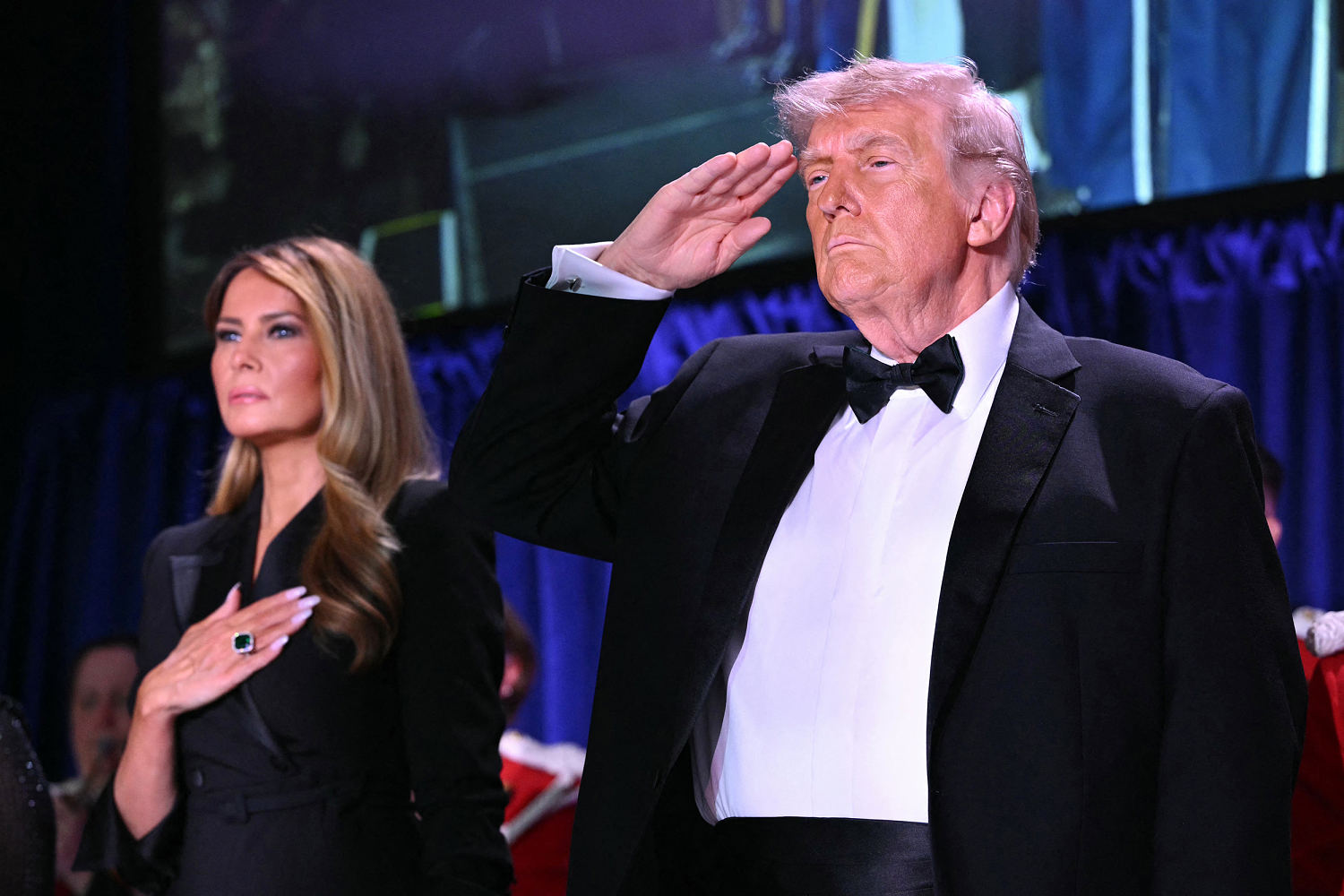
When White House Press Secretary Karoline Leavitt framed President Donald Trump’s upcoming address to the White House Correspondents’ Association as a blend of "unifying yet vicious" remarks, she was not offering a contradiction. She was articulating the core governing strategy of modern political messaging.
The rescheduled dinner, set to take place following a harrowing security breach outside the ballroom in April, presents an unprecedented spectacle. A sitting president who routinely labels news organizations as adversaries of the public will stand before those very reporters in the name of press freedom. Yet the framing provided by the West Wing reveals a far more calculated reality than simple rhetorical theater. The dual mandate to soothe and attack simultaneously is the ultimate expression of an administration that views institutional norms not as rules to obey, but as instruments to bend.
The Machinery Behind Dual Track Rhetoric
Political speeches usually aim for singular emotional outcomes. Leaders attempt to reassure an anxious electorate, rally a partisan base, or project resolve to foreign adversaries. Merging hostility with conciliation within a single microphone appearance breaks standard communication theory, yet it serves a precise function in high-stakes environment.
By signaling in advance that the speech will contain sharp attacks alongside calls for unity, the administration effectively neutralizes criticism before the first word is uttered. Attacks on the press can be dismissed by supporters as the promised humor, while any token gesture toward press freedom can be cited by allies as proof of statesmanlike restraint. It is a self-insulating architecture designed to leave commentators debating tone rather than policy.
The press corps finds itself in a familiar dilemma. Participating in an event hosted by an administration that openly denounces its function creates an uncomfortable illusion of normalcy. On the other hand, declining to cover or attend the event cedes the field entirely, allowing the administration to control the narrative without pushback.
When Security Threats Intersect Political Spectacle
The context surrounding this specific gathering adds layers of tension that standard Washington banquets rarely contend with. The postponement of the original April event after a gunman rushed a security checkpoint highlighted the volatile environment in which national politics now operates. Security protocols around top government leaders have expanded significantly, transforming routine social events into heavily armored operations.
When violence or the threat of violence overshadows a democratic tradition, the political stakes shift immediately. The administration's choice to proceed with the event allows it to project invulnerability. Appearing on stage despite safety concerns reinforces a core image of personal resilience that plays directly to the president's political advantage.
At the same time, the heightened security footprint alters the dynamic inside the room. The traditional atmosphere of lighthearted roasting and cozy proximity between political power and the press corps feels noticeably strained. When magnetometers, tactical teams, and heightened intelligence sweeps surround a room, the pretense of informal camaraderie becomes impossible to sustain.
The Evolution of the Press Briefing Relationship
To understand why the White House press room has reached this paradox, one must examine the fundamental breakdown in trust over the last decade. The relationship was once defined by a quiet understanding. Reporters pushed for access, officials leaked strategic information, and both sides maintained a baseline of institutional respect.
That implicit pact has shattered.
The Breakdown of Traditional Norms
- Direct Communication Channels: The reliance on official press briefings has given way to direct social media broadcasts, bypassing editorial filters entirely.
- Adversarial Branding: Media organizations are frequently categorized by the White House as active political opponents rather than neutral observers.
- Selective Access: Access to top officials is increasingly conditioned on favorable coverage, reshaping how beat reporting functions on a daily basis.
This structural shift means that events like the White House Correspondents' Dinner no longer serve as genuine truces. They are tactical arenas. The host organization attempts to defend the constitutional mandate of an independent press, while the administration uses the platform to demonstrate its dominance over the narrative.
The Strategic Calculation of Shock Value
Rhetorical aggression in political speech is rarely accidental. It is engineered to capture control of the news cycle in an environment saturated with competing information.
Consider a hypothetical situation where a government agency releases an unfavorable economic forecast on a Friday afternoon. Under standard political playbooks, the White House communications team would issue a detailed white paper or dispatch surrogates to explain the figures. In contrast, launching a sharp, personal assault on media personalities during a prime-time address instantly redirects the national conversation. The headline becomes the confrontation itself, pushing complex policy debates into the background.
This strategy relies heavily on the media's own operational incentives. Conflict drives engagement. A speech that delivers explosive, polarizing commentary guarantees blanket coverage across cable networks and digital platforms, ensuring that the president remains the absolute center of public attention.
A Room Divided by Purpose
Inside the ballroom, two fundamentally incompatible objectives will collide.
For the press corps, the event represents a defense of journalism as an essential pillar of constitutional governance. Reporters gather to honor investigative work, award scholarships to young journalists, and assert their role as a check on executive power.
For the president, the podium represents an opportunity to demonstrate command over his loudest critics on their own home turf. Delivering jokes that double as sharp political broadsides allows the administration to project dominance while maintaining enough humor to claim immunity from press criticism.
This dynamic ensures that neither side truly wins the evening, yet neither side can afford to walk away. The media requires access to the presidency to fulfill its mandate; the presidency requires the amplification provided by mainstream outlets to reach the broader public. They remain bound together in a relationship driven by mutual necessity and profound distrust.
The promise of a speech that is simultaneously unifying and vicious captures the precise state of modern American political communication. It reflects an era where polarization is not a obstacle to governance, but its primary engine.
Associated Press report on the WHCA security incident
This report provides crucial context regarding the security conditions and presidential statements following the incident at the press dinner.