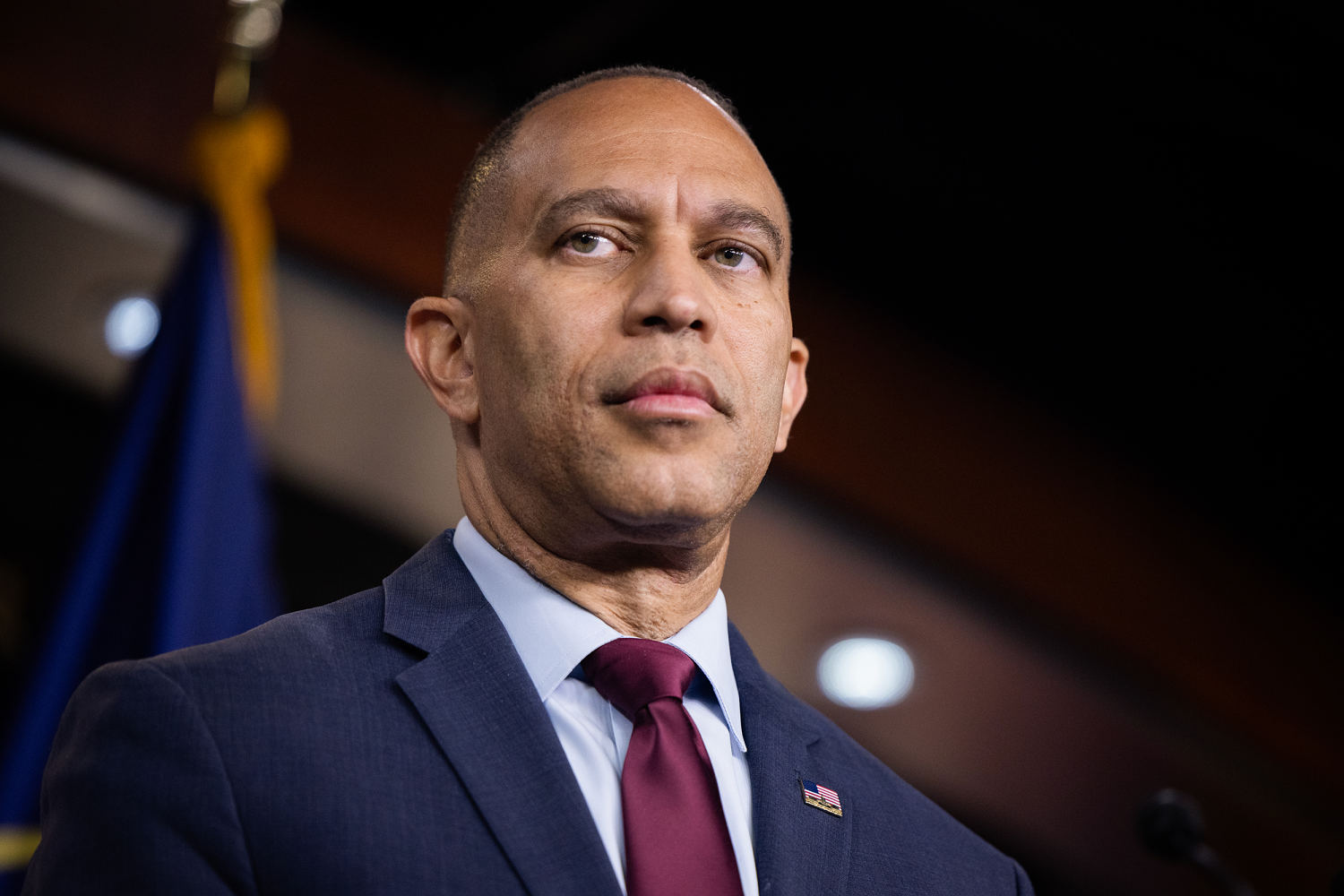
Calls from senior House Democrats to impeach Defense Secretary Pete Hegseth are less about removing him from the Pentagon and more about weaponizing congressional oversight ahead of the midterm cycle. While a prominent Democratic lawmaker recently declared himself a "hard yes" on filing articles of impeachment, the procedural reality on Capitol Hill makes actual removal nearly impossible. Impeachment requires a simple majority in the House and a two-thirds supermajority in the Senate, thresholds that current partisan arithmetic simply does not support without a massive defection from Republican leadership.
Watch the floor closely. The rhetoric sounds like an imminent constitutional crisis, yet the legislative calendar tells a very different story. Recently making headlines in related news: The Economics of Universal School Milk Subsidies and Why Fifty-Year Subsidies Collapse.
When a ranking member or committee heavyweight uses the phrase "hard yes" in front of Capitol Hill press corps, the soundbite immediately dominates cable news chyrons. The phrasing is deliberate. In Washington, declaring an absolute stance on impeachment serves two immediate functions for the minority party or an aggressive oversight faction. First, it pacifies an agitated donor base demanding visible resistance against the Pentagon's current leadership. Second, it forces moderate members of both parties to go on the record, creating campaign fodder for primary challengers and general election opponents alike.
The Anatomy of a Modern Pentagon Impeachment Drive
To understand why Pete Hegseth has become the focal point of this specific constitutional mechanism, you have to look at the intersection of executive authority and congressional frustration. Impeaching a Cabinet secretary is exceedingly rare in American history. Only one Cabinet official—Secretary of War William Belknap in 1876—was ever impeached by the House, and he resigned hours before the vote took place, resulting in a subsequent Senate acquittal on jurisdictional grounds. Later attempts, including the 2024 impeachment of Homeland Security Secretary Alejandro Mayorkas, demonstrated that modern impeachment has evolved from a terminal constitutional remedy into a high-profile political censure. Further insights into this topic are explored by BBC News.
The grievances fueling the current push against Hegseth center on three primary friction points between the E-Ring of the Pentagon and the House Armed Services Committee:
- Personnel Purges and Command Structure: Critics argue that rapid ideological restructuring within the senior officer corps and civilian defense leadership bypasses traditional Senate confirmation norms and weakens institutional continuity.
- Operational Transparency: Democrats on oversight panels have repeatedly accused the Secretary's office of withholding classified briefings, delaying responses to formal congressional inquiries, and restricting inspector general independence.
- Policy Directives and Funding Reallocation: The redirection of appropriated defense funds toward domestic border enforcement and cultural initiatives within the military ranks has triggered sharp disputes over the Impoundment Control Act and Congress's constitutional power of the purse.
None of these disputes are trivial. In a functioning legislature, disagreements over military readiness, civilian control of the armed forces, and defense appropriations form the core of committee work. When standard subpoenas stall and hearing room exchanges devolve into viral video clips, impeachment becomes the last remaining lever capable of forcing uninterrupted media attention.
Why the Constitutional Math Fails
The gap between a viral quote and a Senate conviction is wide.
Under Article II, Section 4 of the U.S. Constitution, civil officers of the United States may be removed from office on impeachment for, and conviction of, treason, bribery, or other high crimes and misdemeanors. The founders intentionally left "high crimes and misdemeanors" open to political interpretation, meaning an impeachable offense is whatever a majority of the House says it is at a given moment.
However, getting articles of impeachment out of the House Judiciary Committee and onto the floor requires tight caucus discipline. Even if House Democrats hold a unified front—or gain control of the chamber following an election cycle—every single vulnerable district representative must weigh the political cost. Swing-district Democrats historically recoil from impeachment votes unless public polling shows overwhelming support among independent voters. Right now, voters are far more focused on inflation, healthcare costs, and domestic economic stability than on internal Pentagon management disputes.
Assume, for the sake of a hypothetical scenario, that the House does pass articles of impeachment against Hegseth along a strict party-line vote of 218 to 217. The process immediately hits a brick wall in the upper chamber. Conviction in the Senate requires 67 votes. Even if one party holds 53 or 54 seats, flipping more than a dozen senators from the opposing party requires an undeniable, smoking-gun scandal—something involving direct criminal self-dealing or an unmistakable breach of national security that threatens their own reelection prospects. Policy disputes, abrasive management styles, and aggressive restructuring of the defense bureaucracy have never come close to clearing that bar.
The Real Strategy Behind the Rhetoric
If seasoned lawmakers know the Senate will never convict, why spend political capital on a "hard yes" declaration? Because in modern congressional warfare, the process is the punishment.
Filing articles of impeachment alters the rules of engagement inside the Capitol. Under House rules, impeachment resolutions can be introduced as privileged resolutions, forcing leadership to address them within two legislative days—either by voting to table the measure, referring it to committee, or holding a floor debate. This procedural mechanism strips the Speaker of the ability to quietly bury an issue in a subcommittee drawer.
Furthermore, formal impeachment inquiries strengthen Congress's legal standing in federal court when fighting executive privilege claims. During standard oversight investigations, the White House and the Defense Department can stall document production for months or years, relying on judicial reluctance to referee political disputes between co-equal branches. Once the House invokes its sole power of impeachment, federal judges historically grant congressional subpoenas far greater deference, viewing the legislature as acting in a quasi-judicial capacity rather than conducting routine lawmaking.
There is also the distraction factor. Preparing for an impeachment defense consumes massive bandwidth inside the Pentagon's Office of General Counsel and Legislative Affairs. Senior aides who would otherwise be executing the Secretary's policy agenda are suddenly pulled into document retention reviews, witness preparation, and daily crisis communications. For an opposition party trying to slow down an administration's overhaul of the military establishment, tying up the Secretary's inner circle in legal paperwork is a tangible victory, regardless of how the Senate eventually votes.
Historical Precedent and the Risk of Overreach
History offers a blunt warning to lawmakers who reach for the impeachment hammer too quickly. When used sparingly, impeachment carries immense moral weight; when deployed routinely against Cabinet officials, it rapidly loses its shock value and risks backfiring on the party driving the effort.
Consider the fallout from the Mayorkas impeachment in 2024. House Republicans successfully impeached the Homeland Security Secretary over border enforcement policies, marking the first time in nearly 150 years a sitting Cabinet member faced that sanction. Yet when the articles reached the Senate, the Democratic majority voted along party lines to dismiss them as unconstitutional without even holding a full trial, arguing that policy disagreements do not constitute high crimes and misdemeanors. Within weeks, the story vanished from front pages, leaving voters largely indifferent and setting a precedent that future majorities could summarily dismiss Cabinet impeachments on procedural motions.
A push against Hegseth faces the exact same trap. If Democrats frame their case around his controversial public statements, media background, or ideological shifts in Pentagon personnel policies, Republicans will effortlessly paint the effort as partisan theater aimed at overturning the president's lawful authority as Commander-in-Chief.
To break through public apathy, impeachment advocates would need to prove clear statutory violations—such as willful defiance of federal appropriations law, documented corruption in defense contracting, or an unlawful military directive that violated the Uniform Code of Military Justice. Without hard documentary evidence of illegal conduct, a "hard yes" from a top Democrat remains a talking point rather than a viable legal strategy.
What Actually Moves the Needle at the Pentagon
Experienced Capitol Hill hands know that if Congress genuinely wants to rein in a Defense Secretary, impeachment is the clumsiest tool in the shed. The legislative branch possesses far quieter, vastly more effective mechanisms to force compliance from the Pentagon, provided lawmakers are willing to do the unglamorous work of appropriations and authorization markup.
The National Defense Authorization Act (NDAA) and the annual defense appropriations bill give Congress granular control over every dollar the Pentagon spends. Instead of chasing television cameras with impeachment resolutions, committee leaders can insert binding statutory restrictions—known as fencing provisions—that prohibit the Defense Department from obligating funds for specific initiatives until the Secretary delivers overdue reports, testifies under oath, or reverses a contested personnel decision.
When a four-star combatant commander realizes that funding for a critical weapons program or base infrastructure project is frozen because the Secretary's office refuses to answer a congressional subpoena, internal pressure inside the Pentagon spikes immediately. Career military officers and senior civilian comptrollers will quietly lobby the Secretary to compromise with Capitol Hill just to keep the money flowing. That kind of behind-the-scenes leverage rarely generates cable news headlines, which is precisely why political firebrands ignore it in favor of louder, less effective tactics.
The Political Calculus Ahead
As the legislative session grinds forward, the split between the activist wing of the Democratic caucus and its institutional pragmatists will sharpen. Younger, media-savvy members represent safe districts where uncompromising opposition to Hegseth guarantees primary security and grassroots fundraising spikes. Conversely, committee veterans who have spent decades working across the aisle on defense budgets understand that turning the Pentagon into a permanent impeachment battleground erodes the bipartisan consensus that has traditionally protected military readiness from domestic political chaos.
The "hard yes" soundbite has already achieved its primary objective: it planted a flag, signaled resolve to a frustrated political base, and forced reporters to ask every other Democratic leader where they stand. Whether that rhetoric translates into formal articles of impeachment depends entirely on whether oversight investigators uncover hard evidence of illegality—or whether party leaders decide that a doomed floor vote is worth the risk of looking purely partisan in front of undecided voters. Until someone produces a subpoenaed document showing an actual crime rather than an unpopular policy, the Senate's two-thirds threshold remains an insurmountable wall, and the Pentagon's leadership knows it.