Indian Prime Minister Narendra Modi used the sidelines of the Shanghai Cooperation Organisation summit in Bishkek to reinforce a delicate diplomatic tightrope, telling international counterparts that ongoing regional conflicts demand strict adherence to dialogue and diplomacy. Meeting with Armenian Prime Minister Nikol Pashinyan and Iranian President Masoud Pezeshkian in rapid succession, New Delhi attempted to project an image of steady neutrality while major strategic corridors fracture under the weight of active warfare.
The optics in Kyrgyzstan reveal an underlying anxiety. For decades, Indian foreign policy has prided itself on strategic autonomy, the ability to maintain simultaneous, friction-free relationships with historical adversaries and competing blocs. Yet, as West Asia burns and Eurasian security arrangements buckle, maintaining that equilibrium grows exponentially harder.
The Armenian Calculus
When Modi sat down with Pashinyan, the conversation officially ticked the standard boxes of bilateral cooperation: information technology, space exploration, pharmaceuticals, and crucially, defense. But the subtext of the Armenia-India axis has transformed dramatically over recent years. Armenia, locked in a tense geopolitical neighborhood and striving to diversify its security architecture away from traditional, unreliable patrons, has increasingly turned to Indian military hardware.
Anti-artillery radar systems, multi-barrel rocket launchers, and localized defense contracts have turned New Delhi into a primary supplier for Yerevan. This is no longer merely about cultural affinity or historical trade routes. It represents a calculated move by Indian planners to establish a strategic footprint in the South Caucasus.
Pashinyan briefed Modi on the implementation status of the Armenia-Azerbaijan peace process, alongside broader regional volatility. For New Delhi, backing Pashinyan’s push for stability is a matter of protecting its growing diplomatic equity in Europe's eastern periphery. At the same time, it must manage sensitivities in Baku and Ankara, countries with their own complex alignments.
The Tehran Variable
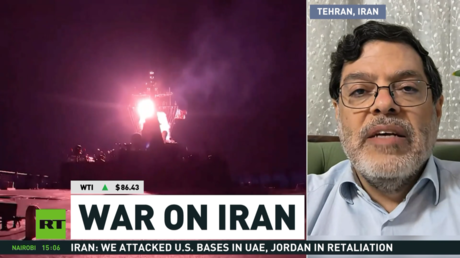
Hours before the Pashinyan meeting, Modi conferred with Iranian President Masoud Pezeshkian. This exchange carried vastly different stakes. Against the backdrop of escalating conflict involving the United States, Israel, and Iranian forces across the Middle East, Tehran faces severe economic strangulation and direct military pressure.
Pezeshkian pressed Modi directly, urging India to leverage its extensive international contacts to pull regional actors back from the brink of total war. The Iranian readout of the meeting underscored a stark reality: Tehran is looking for external shock absorbers to mitigate Western pressure and halt an accelerating cycle of bloodshed.
Modi’s response was characteristically measured. He emphasized the safety of commercial shipping, freedom of navigation, and the protection of civilian infrastructure, particularly given how missile exchanges and regional proxies have disrupted vital maritime lanes. Simultaneously, Modi dangled the prospect of expanding and diversifying bilateral trade once conditions permit, keeping the Chabahar port corridor alive conceptually even as logistical realities fray.
The Limits of Neutrality
To understand why these simultaneous meetings matter, one must look past the diplomatic communiques issued by the Ministry of External Affairs. India is attempting to thread a needle that grows narrower by the month.
Western partners expect New Delhi to isolate revisionist states, yet India’s energy security, historical supply chains, and regional counter-terrorism interests require open channels with West Asian capitals and Moscow-aligned groupings like the SCO. Conversely, states like Iran view India as a potential diplomatic bridge to the West, a role New Delhi is increasingly reluctant to play given the diplomatic capital it would consume.
The public pronouncements about peace, tranquility, and multilateral cooperation mask a grueling bureaucratic reality. Intelligence vectors, trade ministers, and defense attachés are working overtime to insulate domestic economic growth from external shocks. Every time a cargo vessel alters its route to avoid maritime drones or missile fire, the cost is borne directly by Indian consumers importing goods from Europe and the Mediterranean.
The Cost of Ambiguity
There is a distinct ceiling to how long any nation can talk around a crisis without picking structural sides. As the architecture of international law strains under unchecked military escalations, middle powers find their maneuvering room shrinking.
New Delhi’s insistence on dialogue sounds reasonable in a conference hall in Bishkek, but in active combat zones, rhetoric without enforcement mechanisms carries little weight. Pashinyan needs tangible security guarantees and economic integration to survive regional predators. Pezeshkian needs immediate relief from military blockades and sanctions to keep his domestic economy from collapsing entirely.
Modi offered both leaders what India has in abundance: patience, trade aspirations, and a sympathetic ear. Whether that is enough to prevent the broader Eurasian theater from spinning entirely out of control remains an open question, one that will not be answered by polite handshakes on the sidelines of regional summits.