Federal and state judges across the battleground states have systematically dismantled an aggressive campaign to compel local election officials to alter voting rules, purge voter rolls late in the cycle, and delay the certification of midterm ballots. By invoking strict constitutional boundaries under the Elections Clause and longstanding statutory protections, the judiciary has denied requests for emergency injunctions and rejected novel legal theories aimed at centralizing election oversight in Washington. Rather than bending to political urgency, the courts have enforced a rigid separation of powers, leaving state administrators legally insulated from White House directives as ballots are cast and counted.
The public sees the headline rulings. They miss the structural mechanics underneath.
For months leading into the midterm cycle, the strategy relied on a two-pronged approach combining public rhetoric with rapid-fire litigation and administrative demands. The goal was straightforward: pressure state secretaries of state and county canvassers into adopting last-minute procedural changes, ranging from heightened signature-matching mandates to expanded access for partisan observers inside tabulation centers. When state officials pushed back, citing state statutes that prohibit rule changes within weeks of an election, federal litigation followed almost immediately.
Judges did not take the bait. Across multiple circuits, benches staffed by jurists appointed by presidents of both parties relied on established legal guardrails to shut down these challenges before they could disrupt the mechanics of voting.
The Constitutional Architecture Blocking Federal Overreach
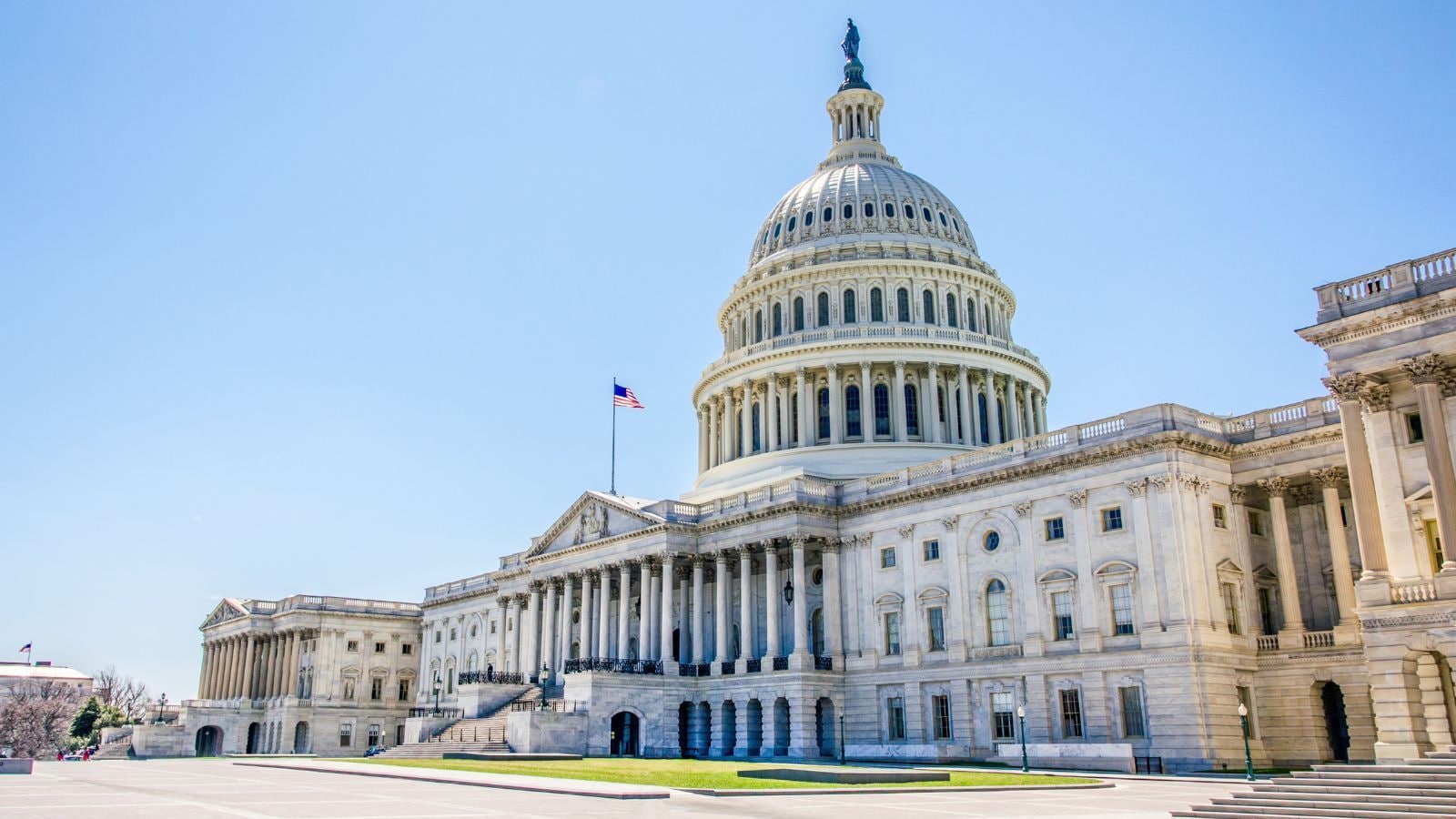
To understand why these legal challenges are collapsing, you have to look at Article I, Section 4 of the U.S. Constitution. The Elections Clause explicitly grants state legislatures the primary authority to prescribe the "Times, Places and Manner of holding Elections for Senators and Representatives." Congress holds a secondary power to make or alter those regulations, a power it has exercised through laws like the National Voter Registration Act and the Help America Vote Act.
Notice who is missing from that sentence. The executive branch.
The president has no constitutional mandate to dictate how a county clerk in Pennsylvania verifies a mail-in ballot or how a canvassing board in Michigan certifies its local tally. When executive pressure translates into legal arguments claiming inherent presidential authority to ensure election integrity, federal judges routinely treat the premise as a non-starter. During hearings over the past several weeks, government lawyers and aligned plaintiffs attempted to frame routine state administration as a federal civil rights violation, arguing that varying local standards disenfranchise voters.
Courts dismantled that framing by pointing to the Purcell principle, a foundational doctrine established by the Supreme Court in 2006. The rule is simple and unforgiving: federal courts should not alter election rules on the eve of an election because doing so creates confusion among voters and burdens election administrators.
While the Purcell principle was historically used to block voting rights groups from expanding access late in the game, judges are now deploying the exact same precedent to block conservative legal groups and federal officials from tightening rules at the eleventh hour. The law cuts both ways. A rule change three weeks before Election Day is disruptive regardless of which party demands it.
How State Canvassing Boards Became the Primary Target
The real battlefield is rarely the statehouse anymore. It is the county canvassing board.
In the American electoral system, the people who actually certify the initial vote totals are often part-time local appointees, retired teachers, and municipal clerks working out of modest civic buildings. Over the past several election cycles, these boards have transformed from obscure administrative bodies into high-pressure political flashpoints. The pressure campaign during these midterms focused heavily on convincing local board members that their role is discretionary—that if they harbor personal doubts about the administration of an election, they have the legal right to withhold their signatures from the final certification documents.
State courts have crushed this theory with remarkable speed and unanimity.
Judges in Arizona, Georgia, Nevada, and Wisconsin have reiterated a centuries-old legal standard: election certification is a ministerial duty. In plain English, a ministerial duty means an official must perform a specific task required by law without exercising personal judgment or discretion. A county canvasser is an auditor of the math, not a judge of the law. Their job is to verify that the number of ballots cast matches the number of voters checked in, tabulate the totals, and transmit the results to the state capital.
If fraud or mechanical error is suspected, the remedy is an election contest filed in court after certification, where evidence is tested under oath and subject to cross-examination. A local board member cannot unilaterally freeze the democratic process based on rumors or political pressure. When a handful of county officials threatened to delay certification during recent primary and early general election procedures, state attorneys general immediately sought writs of mandamus—court orders compelling a government official to properly fulfill their official duties. In every instance, judges issued the orders, warning reluctant officials that continued refusal would result in contempt charges, removal from office, and personal financial liability.
The Anatomy of a Failed Election Lawsuit
Consider a hypothetical example to see how this plays out in a typical federal courtroom on a Tuesday afternoon.
Suppose a coalition of plaintiffs files an emergency motion demanding that a state immediately remove 50,000 voters from its active rolls, citing a commercially purchased database that flags address changes. They argue that failure to purge these names violates federal maintenance requirements and invites illegal voting. Simultaneously, political leaders amplify the lawsuit, demanding the state's secretary of state comply immediately.
Inside the courtroom, the argument evaporates under basic evidentiary rules. First, the judge examines standing. Under Article III of the Constitution, a plaintiff cannot sue simply because they are worried about a generalized harm; they must show a concrete, particularized injury. Speculation that an unpurged voter roll might lead to an illegal ballot that might dilute a legitimate vote fails the standing test every time.
Second, the judge looks at the federal statute itself. The National Voter Registration Act explicitly prohibits systematic removal of voters from the rolls within 90 days of a federal election. The law was written specifically to prevent last-minute purges that catch eligible voters in the dragnet without giving them time to correct the record. By demanding a purge during the final stretch of the midterms, the plaintiffs are asking the court to order a state official to violate federal law.
Finally, the judge evaluates the evidence. A spreadsheet generated by a third-party data broker is not admissible proof of voter ineligibility. Without sworn affidavits, verified postal records, or cross-examined witnesses, the motion collapses. The judge denies the injunction in a brisk ten-page order, and the state's voter rolls remain untouched.
This exact sequence has repeated itself across multiple jurisdictions, exposing a profound gap between what plays well at a political rally and what survives scrutiny under the Federal Rules of Civil Procedure.
The Quiet Rebellion of Career Election Administrators
While judges get the credit for holding the line, the legal victories would be impossible without the paper trails maintained by state and local election officials. Over the last four years, election administration in the United States has undergone a quiet professionalization born out of necessity.
Administrators knew the pressure was coming. They prepared for it like a hurricane.
Across swing states, secretaries of state from both parties spent the off-year building airtight evidentiary protocols. Every logic and accuracy test on tabulation machines is now recorded on video, witnessed by bipartisan observers, and logged with cryptographic hashes. Every chain-of-custody transfer for ballot drop boxes requires dual-signature manifests from one Democrat and one Republican. When federal officials or outside groups demand raw voter data or threaten investigations into routine administrative hiccups, state officials respond with thousands of pages of timestamped documentation.
This operational rigor has stripped outside pressure campaigns of their most potent weapon: ambiguity.
It is remarkably difficult to convince a judge that a county election office is hiding malfeasance when the office can produce high-definition video of the ballot reconciliation process alongside signed attestations from the local Republican party chair. Furthermore, state officials have increasingly leaned on their own state attorneys general and private outside counsel to push back against federal overreach. Rather than quietly negotiating compromises behind closed doors to avoid negative headlines, secretaries of state have taken to publishing aggressive legal rebuttals on their official websites, exposing the lack of statutory authority behind federal demands.
Where the Legal Guardrails Show Strain
To suggest the system is entirely immune to disruption would be naive. While the courts have held firm on the core mechanics of voting and certification, significant gray areas remain where administrative friction can still cause real damage.
The first vulnerability lies in the sheer volume of litigation. Even when lawsuits are legally meritless, they consume staggering amounts of time and taxpayer money. A county election director in a rural district with a staff of three people cannot easily prepare for Election Day while simultaneously responding to four public records requests and a federal subpoena. Lawfare works as a tool of attrition. By forcing local administrators to spend their autumn in depositions rather than training poll workers, outside groups can induce the very administrative errors they claim to be fighting.
The second gray area involves the post-election window between Election Day and the statutory deadline for states to appoint presidential electors or certify congressional winners. While the Electoral Count Reform Act of 2022 closed many of the federal loopholes that were exploited in 2020, state-level timelines remain tight. If a major hardware failure or a severe weather event genuinely disrupts voting in a populous county, the resulting court battles over extending polling hours or curing damaged ballots will test the limits of judicial patience.
There is also the human toll that no court order can fully remedy. The veteran clerks who have spent twenty years mastering the intricacies of state election code are retiring in record numbers, driven out by sustained harassment and the constant threat of criminal investigation for honest clerical mistakes. When institutional knowledge walks out the door, the likelihood of accidental errors increases, handing fresh ammunition to critics who equate human fallibility with deliberate fraud.
The Unintended Consequence of Aggressive Litigation
Ironically, the relentless effort to pressure state officials through the courts has produced the exact opposite of its intended effect. Instead of weakening state autonomy, it has fortified it.
Every time a federal judge dismisses an executive branch intervention or rejects a partisan emergency petition, it creates binding precedent that further insulates state election systems from future interference. State courts, too, have sharpened their definitions of ministerial duties, leaving virtually zero wiggle room for rogue county boards in future cycles. The legal boundaries surrounding American elections are clearer, harder, and more rigorously policed today than they were four years ago.
For the political operatives running these pressure campaigns, the courtroom has proven to be an unforgiving venue. Rhetoric requires only an audience; litigation requires facts, standing, and statutory authority. As the midterm ballots move from precinct scanners to state canvassing boards, the legal architecture built by the nation's founders—and reinforced by a judiciary fiercely protective of its institutional legitimacy—remains firmly in control of the process.
The courts have made their position unmistakable: political pressure ends at the courthouse door, and the count will proceed according to the law.