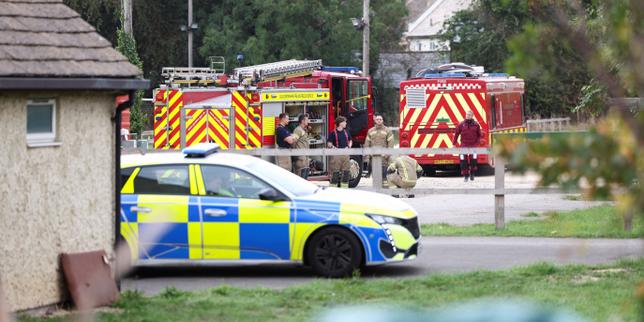
When British counter-terrorism police declared a major incident outside RAF Fairford, panic did not arrive with sirens or explosions. It arrived quietly, through the lockdown of a rural Gloucestershire road, the evacuation of dozens of nearby households, and the sudden realization that foreign hostile operations had pushed past the perimeter of critical allied infrastructure.
For months, defense analysts have warned that European military installations have become soft targets for proxy networks and state-sponsored espionage. But the arrests near Fairford—an active base hosting United States Air Force assets—exposed a stark operational reality. The threats are no longer abstract warnings buried in intelligence briefs. They are materializing on domestic asphalt, involving local operatives, rented transport vans, and fuel drums intended to turn strategic airfields into active combat zones.
The initial police response was swift and heavy-handed by necessity. Five men were arrested under the Explosives Act and terrorism legislation after intercepting a convoy of vehicles near the base perimeter. While subsequent forensic sweeps revealed no hidden military-grade ordnance—recovering instead quantities of fuel and plastic drums—the absence of immediate explosives did little to soothe counter-terrorism officials. In modern proxy warfare, the logistics phase of an attack looks entirely mundane. Surveillance, dry runs, and prepositioned incendiary materials precede actual kinetic strikes by days or weeks.
Subsequent investigations under the National Security Act revealed a much darker picture of transnational plotting. Federal indictments and counter-terrorism disclosures later tied the operatives to broader regional networks orchestrating coordinated disruptions across Europe and the United States. The choice of RAF Fairford was hardly accidental. As a forward operating site for heavy strategic bombers, the base represents an essential node in transatlantic power projection. Disrupting its operations or inflicting high-profile damage delivers an immediate psychological blow to allied deterrence.
This incident forces an uncomfortable examination of domestic security vulnerabilities. Critical infrastructure protection traditionally focuses on perimeter walls, high-definition cameras, and armed patrols. Yet these defenses are routinely tested by actors who exploit open societies, using standard commercial vehicles and exploiting legal loopholes to blend into the background before striking. When threat actors can mobilize personnel yards away from runways housing some of the world's most advanced military aircraft, the traditional definition of a secure military zone breaks down entirely.
The ripple effects extend far beyond the Gloucestershire countryside. Following escalating security assessments and external threats, military commands have been forced to reevaluate asset distribution, repositioning critical refueling and support aircraft to alternate continental bases. Every relocation is a tactical concession, signaling that domestic European soil carries heightened exposure levels.
The Fairford lockdown serves as a brutal reminder that deterrence is a two-way street. Securing the homeland requires dismantling the invisible infrastructure of hostile networks before they reach the perimeter fence. As state-backed operatives continue to probe the seams of Western defense installations, the margin for error has evaporated.