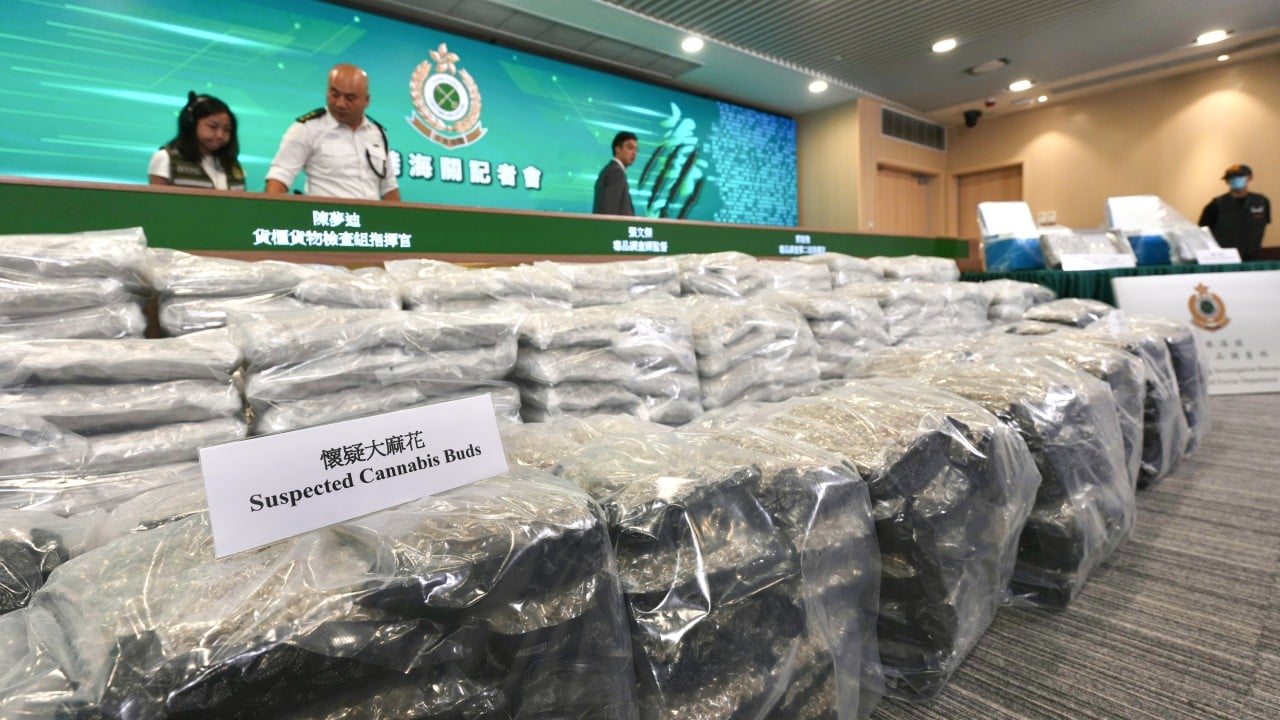
Hong Kong Customs recently intercepted 535 kilograms of suspected cannabis buds valued at approximately HK$125 million, marking the largest seaborne drug trafficking case involving the substance in the city's history. The seizure exposed a sophisticated logistical operation that utilized commercial maritime routes and advanced tracking technology to shield illicit cargo from interception.
The shipment arrived from Thailand, concealed within ocean containers declared as thermal or cooler boxes. Out of a total of 1,340 boxes packed into the container, frontline customs officers noticed subtle anomalies during routine profiling. Exactly 364 of the boxes were heavier than standard commercial units by one to two kilograms. Further physical inspection revealed that these specific containers housed vacuum-packed cannabis buds, meticulously sealed to mask the pungent organic odor from canine units and physical checks.
What separates this operation from routine smuggling attempts is the integration of high-tech telemetry. Investigators discovered hidden satellite tracking devices embedded inside the cargo. Syndicate operators used these trackers to monitor the real-time geographic coordinates of the containers as they moved through the commercial supply chain. This allowed criminal networks to verify whether law enforcement had intercepted the freight or if it remained on schedule for extraction at local warehouses.
Following the discovery at the container terminals, customs authorities initiated a controlled delivery operation that lasted 16 days. Rather than moving immediately on the port arrival, investigators tracked the movement of the shipment to a tenement flat located in Mong Kok. The extended surveillance culminated in a tactical raid on the residential storage facility, leading to the apprehension of three men.
The arrested individuals included two local men aged 21 and 47, alongside a 44-year-old foreign national holding a recognizance form. Law enforcement officials noted that one of the suspects played a pivotal coordinating role within the syndicate, managing the local distribution logistics once the cargo cleared maritime checkpoints. While two of the detained individuals were subsequently released on bail pending further inquiries, the foreign national faced formal charges of attempting to traffic in a dangerous drug before the Kowloon City Magistrates' Courts.
This record-breaking interception highlights an ongoing structural shift in regional drug smuggling patterns. As air passenger traffic face stricter post-pandemic profiling, transnational syndicates increasingly pivot back to bulk maritime freight. Commercial containerized shipping offers vast volume advantages, allowing cartels to obscure hundreds of kilograms of contraband among millions of legitimate industrial and commercial imports processed daily through global logistics hubs.
The reliance on ordinary commercial supply chains places an immense monitoring burden on port operators and logistics workers. Customs officials have repeatedly urged warehouse managers and shipping personnel to scrutinize unusual weight discrepancies, unexpected consignee modifications, or cargo routed through unconventional third-party intermediaries. The integration of satellite tracking into freight shipments further demonstrates how organized crime adapts commercial Internet of Things technology to protect capital investments in illicit commodities.
As global trade networks expand, maritime enforcement agencies face the persistent challenge of balancing high-volume cargo throughput with rigorous interdiction standards. The Mong Kok raid closed down a major distribution node, but the sophistication of the embedded tracking systems points to a resilient underground economy that continues to refine its methods of transit and asset protection.