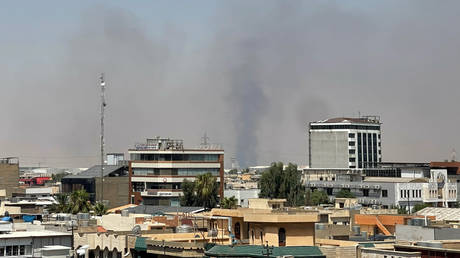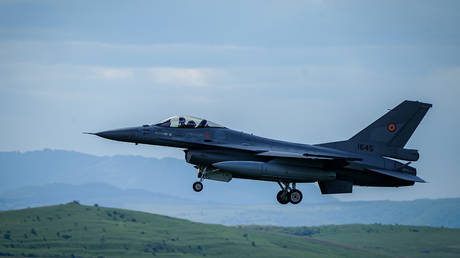
The United States has escalated its military operations against Iranian-backed targets in the Middle East following explicit warnings from Donald Trump to Tehran and Houthi militants operating out of Yemen. What began as defensive naval posture in the Bab el-Mandeb Strait has expanded into targeted air strikes across regional command structures. The strategic shift aims to re-establish deterrence after months of missile and drone attacks crippled global commercial shipping. Yet, behind the public posturing lies a stark tactical calculation. The current campaign is running up against the mathematical limits of naval air defense and the enduring resilience of asymmetric warfare.
To understand why the conflict reached this flashpoint, one must look beyond the immediate headlines of retaliatory sorties and examine the economics of modern maritime security.
For nearly a year, commercial traffic through the Suez Canal dropped precipitously as container ships opted for the multi-thousand-mile detour around the Cape of Good Hope. Insurance premiums for vessels willing to risk the passage surged. The coalition forces tasked with protecting these trade routes found themselves caught in an unsustainable attrition model.
naval vessels were regularly firing two-million-dollar interceptor missiles to shoot down fifty-thousand-dollar attack drones.
This disparity created an operational crisis. A warship carries a finite number of vertical launch cells. Once those cells are empty, the ship must pull into a safe port to reload, a process that takes days and requires specialized cranes. The Houthis, supplied with components and intelligence by Iranian surveillance ships and regional networks, faced no such logistical bottleneck. They could launch salvo after salvo of cheap, factory-assembled munitions from mobile land-based platforms that are exceptionally difficult to track and destroy before firing.
Washington’s expansion of targets inside Yemen and against Iranian assets marks an admission that passive defense has failed. Firing interceptors from the deck of a destroyer in the Red Sea is a reactive measure that hands the initiative to the attacker. The updated directive shifts the focus toward offensive strike packages aimed at radar installations, weapon stockpiles, launch sites, and command nodes.
The Asymmetric Equation in the Bab el-Mandeb
The geography of the southern Red Sea creates an ideal hunting ground for littoral combatants equipped with low-cost precision weapons. The Bab el-Mandeb Strait narrows to less than twenty miles wide in certain stretches. Ships transiting the area are forced into predictable corridors, turning massive container vessels into slow-moving targets.
                  +-----------------------------------+
                  |        RED SEA TRANSIT ZONE       |
                  +-----------------------------------+
                                    |
                                    v
+------------------+     +--------------------+     +-------------------+
| Houthi Land Base | --> | Mobile Anti-Ship   | --> | Commercial Vessel |
| (Cheap Drones/   |     | Ballistic Missiles |     | (Predictable      |
|  Missiles)       |     +--------------------+     |  Shipping Lane)   |
+------------------+                                +-------------------+
         ^                                                    ^
         |                                                    |
   Iranian Recon                                     US/Coalition Interceptors
 (Tactical Targeting)                              (Expensive, Finite Cells)
Targeting these threats requires actionable, real-time intelligence. The Houthis do not rely on static military bases. They utilize hidden underground bunkers, mobile launch trucks disguised as civilian vehicles, and decentralized command structures that can survive persistent bombardment.
Military history demonstrates the extreme difficulty of neutralizing decentralized missile threats purely from the air. During the 1991 Gulf War, Coalition forces dedicated immense air assets to hunting Scud missile launchers in the western Iraqi desert. Despite total air superiority and advanced sensors, mobile launchers proved almost impossible to destroy systematically before they could fire. Modern anti-ship ballistic missiles present an even greater technical challenge because they integrate guidance systems capable of tracking moving maritime targets.
The strategic intelligence behind these strikes is where Tehran’s involvement becomes explicit. Independent sensors, surveillance dhows, and signals intelligence gatherers operating in the Gulf of Aden feed targeting information to land-based units. Striking the launcher on the ground solves only half the problem if the sensor network directing the weapon remains intact.
The High Cost of Interception
The doctrine of modern naval warfare was built around defending aircraft carrier strike groups from high-end, state-level saturation attacks. It was not designed for indefinite patrol duty against low-cost, continuous attrition.
Vertical Launch Systems and Ammunition Scarcity
Standard Navy destroyers utilize the Mark 41 Vertical Launch System. These cells house a mix of weapons:
- Standard Missile-2 (SM-2): Primary medium-range air defense asset.
- Standard Missile-6 (SM-6): Extended-range interceptor capable of anti-ballistic missile defense.
- Evolved SeaSparrow Missile (ESSM): Point-defense weapon packed four-to-a-cell for short-range threats.
When a threat profile includes anti-ship ballistic missiles, commander doctrine often requires firing two interceptors per incoming target to maximize the probability of destruction. When facing a salvo of six or eight incoming missiles, a warship can expend a significant portion of its ready magazine in minutes.
Production pipelines for these high-end interceptors are measured in years, not weeks. Defense prime contractors operate at near-capacity, and re-supplying depleted naval stockpiles requires long lead times for specialized components like solid-rocket boosters and advanced radar seekers. Firing millions of dollars worth of precision interceptors at cheap assembly-line drones creates an unsustainable operational deficit for Western militaries.
| Weapon System | Estimated Unit Cost | Primary Target Role | Tactical Limitation |
|---|---|---|---|
| SM-6 Interceptor | ~$4.0 Million + | Ballistic / Hypersonic Threats | High cost, finite magazine capacity |
| SM-2 Interceptor | ~$2.5 Million | Air Defense / Anti-Ship Missiles | Limited inventory, complex reloading |
| Houthi Attack Drone | ~$20,000 - $50,000 | Infrastructure / Shipping Attacks | Highly replaceable, low cost |
| Anti-Ship Ballistic Missile | ~$100,000 - $200,000 | Moving Maritime Targets | Easy to hide prior to launch |
The Limits of Direct Action
Expanding the target list inside Yemen to include command sites and logistics hubs is intended to degrade the Houthis' operational capacity over time. However, air campaigns against non-state actors historically face diminishing returns.
When a factory or warehouse is destroyed, assembly operations shift to smaller, distributed workshops. When fixed radar sites are taken out, operators switch to commercial marine radars mounted on light trucks or rely entirely on off-board targeting data provided by external allies. The infrastructure required to launch a light anti-ship missile or kamikaze drone is minimal. A flat piece of ground and a basic electronic trigger are often all that is needed.
This reality leaves policymakers with difficult choices. Continued passive interception drains stockpiles and leaves commercial shipping vulnerable. Expanding offensive strikes risks drawing Western forces into a long-term campaign of attrition in rugged terrain that historically resists air-power-only solutions.
Deterrence depends on an adversary believing that the cost of continuing an action outweighs the benefits. For Tehran and its regional proxies, the economic and operational disruption caused by forcing Western navies to deploy billion-dollar warships to guard narrow waterways offers a massive return on a relatively small investment. Intercepting every incoming threat is an impossible standard, and as long as a single missile can slip through to strike a commercial tanker, the strategic objective of the attack is achieved.
The expanding strikes signal a willingness to escalate the physical pressure on the ground, but without cutting off the underlying supply networks and intelligence links that enable these launches, the military calculus remains uncomfortably balanced in favor of the lower-cost attacker.