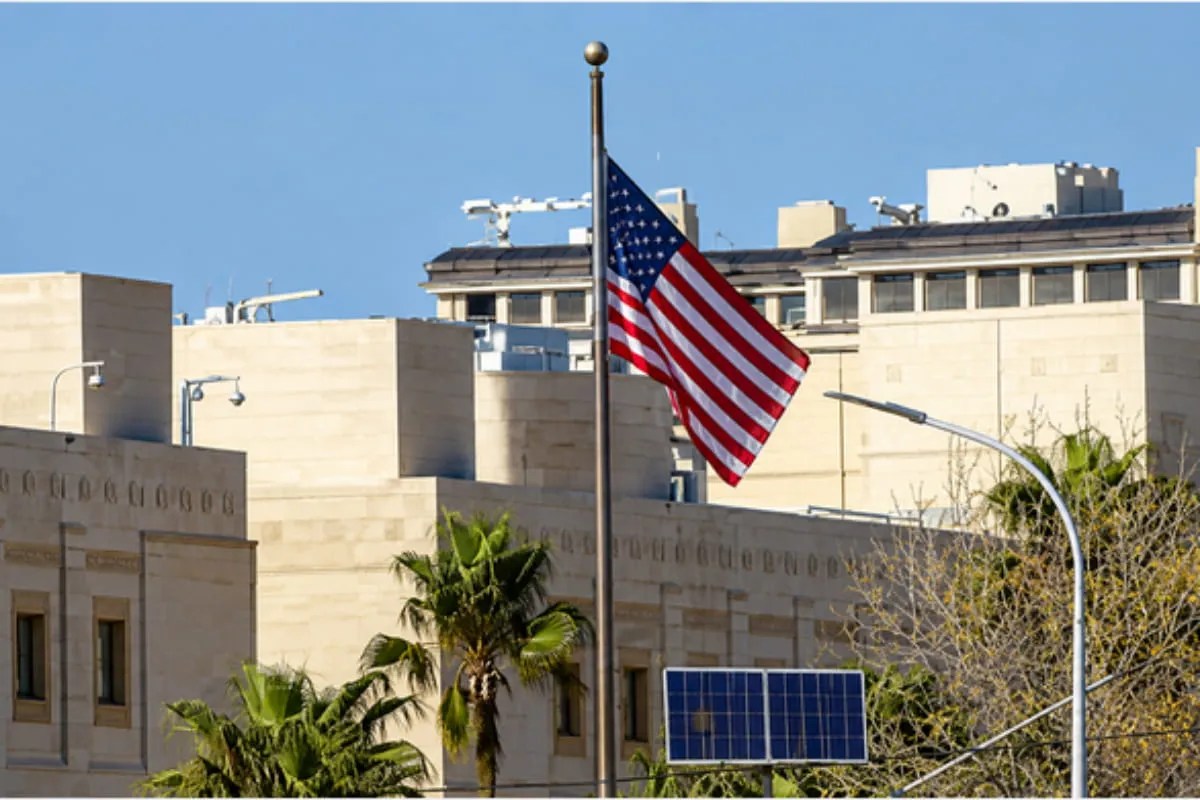
The diplomatic wire from Amman carried a familiar, chilling urgency. When the United States Embassy in Jordan updated its security posture, warning American nationals across the Middle East to practice heightened vigilance, it did so against a backdrop of compounding regional volatility. The formal advisory explicitly underscored threats stemming from Iranian-backed Houthi movements and persistent state-level plotting directed at U.S. government personnel and civilian installations.
This is not routine diplomatic caution. It represents a calculated assessment by intelligence officers who watch proxy networks transform local skirmishes into cross-border flashpoints.
For years, regional defense analysts treated the Houthi faction as a localized insurgent movement with limited administrative reach and crude regional ambitions. That analytical framework collapsed under the weight of sustained maritime interdictions, long-range missile strikes, and coordinated drone deployments targeting civilian airports and critical infrastructure across the Arabian Peninsula. When diplomatic missions in Amman and other regional hubs issue public warnings advising citizens to keep a low profile, monitor local media, and prepare for sudden airspace closures, they are responding to an operational reality where commercial corridors intersect directly with asymmetric warfare.
The Anatomy of Asymmetric Escalation
Geopolitical risk rarely manifests as a clean, predictable line. It creeps forward through a succession of calculated provocations.
Consider how modern missile and drone technology has democratized long-range power projection. Non-state actors backed by centralized state sponsors no longer require sophisticated air forces to disrupt international commerce or threaten diplomatic compounds. They rely on low-cost, high-yield loitering munitions that can bypass conventional early-warning radar arrays or force costly defensive expenditures from naval escort groups.
The security alert issued by the Amman embassy points to a broader structural vulnerability. American citizens residing, working, or traveling through the Levant and the Gulf find themselves inside a compressed threat theater. When regional tensions spike, the distinction between military targets and civilian infrastructure blurs. Airports, commercial transit hubs, and public spaces associated with Western interests become soft targets for asymmetric retaliation or opportunistic disruption.
Intelligence assessments compiled by regional desk officers emphasize that state-backed proxy networks maintain the capacity to execute multi-front operations with minimal warning. This capability alters the risk calculus for expatriates and corporate travelers alike. Staying behind requires maintaining an active emergency communications plan, monitoring local civilian defense guidelines, and understanding the operational status of national airspace networks that can shut down at a moment's notice due to falling debris or intercepted aerial threats.
Operational Realities on the Ground
Diplomatic outposts function as the early-warning sensors of foreign policy. When the U.S. mission in Jordan advises citizens to enroll in the Smart Traveler Enrollment Program (STEP) and avoid large gatherings or heavy police presences, these measures reflect tangible threat streams rather than hypothetical anxieties.
The Hashemite Kingdom occupies a uniquely precarious geographic and political position. Wedged between prolonged conflicts and severe economic pressures, Jordan has historically maintained internal stability through professional security services and tight border controls. However, domestic pressures, combined with the spillover effects of regional hostilities—such as sporadic cross-border smuggling, drone incursions, and internal civil unrest—test the limits of that stability.
When a security alert warns of potential targeting of U.S. government officials and private citizens, security managers look at historical precedent. Dissident cells and lone-actor sympathizers often use broader geopolitical friction points as catalysts for localized attacks against soft targets, ranging from religious sites to commercial shopping districts. The reactive posture required of individuals on the ground involves constant situational awareness: varying daily routines, avoiding public demonstrations, and maintaining charged communication devices equipped with local emergency contacts.
Preparing for the Unpredictable
Mitigating risk in a volatile security environment demands systematic preparation rather than panicked reaction. Travelers and long-term residents are routinely advised to map out physical shelter options, keep identification documents secure, and maintain emergency cash reserves in local currency to bypass disrupted banking infrastructure during a crisis.
The broader diplomatic and military apparatus faces an equally difficult challenge. Deterrence relies on a delicate balance between maintaining a visible defensive posture and avoiding actions that inadvertently accelerate the cycle of escalation. As long as regional proxy groups retain the capability and the mandate to project force across international borders, diplomatic missions will continue to issue these stark warnings.
The advisory from Amman serves as a sober reminder that the safety margin in the modern security landscape is razor-thin. For those living and working in the region, ignoring the warning signs is a luxury no one can afford.

