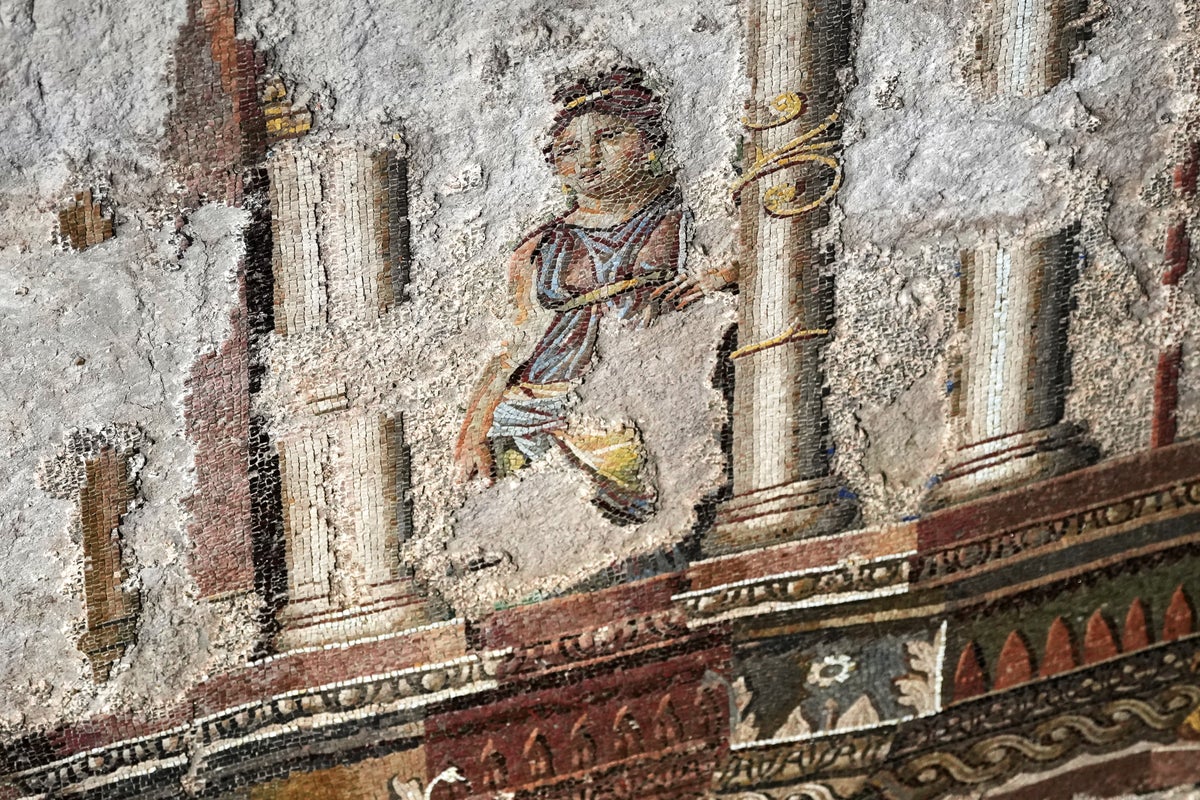
For three decades, a subterranean chamber beneath the Oppian Hill remained locked away from the world. Unearthed during 1990s excavations near the Colosseum, an extraordinary expanse of ancient Roman artistry—featuring the largest known fresco and mosaic complex of its era—stayed hidden while tourists crowded the surface streets above. Now, municipal authorities have initiated a cautious trial program to open these underground galleries to the public.
This is not a straightforward ribbon-cutting ceremony. It is a high-stakes conservation experiment driven by the perpetual friction between cultural heritage and modern tourism economics. Don't forget to check out our recent post on this related article.
The Architecture of Erasure and Foundation
To understand why this discovery matters, one must look closely at how ancient Rome consumed its own real estate. Emperor Trajan did not build his massive thermal bath complex on empty land. In the early second century AD, architects filled in and built directly over older structures, including portions of Nero’s notorious palace footprint. The sub-structures of the Baths of Trajan effectively entombed an entire visual archive of first-century AD civic life.
This subterranean survival created a paradox. Because these walls were sealed beneath tons of concrete and earth, they escaped the pillaging, weathering, and urban sprawl that destroyed surface-level monuments. Yet sealing them away created a microclimate of trapped humidity and stagnant air. To read more about the history of this, National Geographic Travel offers an informative summary.
The centerpiece of this newly accessible space is the so-called Painted City fresco, a sweeping bird's-eye view of a walled maritime port. Towers, public piazzas, temples, and theaters are rendered in striking blues and terra cotta pigments that have survived two millennia underground. Alongside it sits the Great Mosaic, a towering fifteen-meter vertical composition spanning four distinct tiers of theatrical scenes and architectural perspectives.
The Logistics of Fragile Access
Rome’s cultural superintendency is restricting initial public access to tiny groups of fifteen people on weekends only. This tight control stems from harsh scientific reality. When a subterranean cavity sealed for thirty years—and buried for nearly two thousand—is suddenly exposed to human breath, body heat, and shifting carbon dioxide levels, the chemical balance shifts instantly.
Every visitor introduces microscopic changes in humidity and temperature. Ancient pigments fixed with organic binders do not tolerate sudden environmental shocks. Mold spores, bacterial blooms, and moisture condensation pose immediate threats to surfaces that survived centuries of stable darkness.
The weekend trial acts as an environmental stress test. Technicians are monitoring how the structural grouting, surface deposits, and consolidated plaster respond to foot traffic. If humidity spikes beyond acceptable thresholds, the site will close again.
The Economic Pressure on Eternal Stones
City officials face relentless pressure to monetize and display every square meter of excavated antiquity to millions of annual visitors. Rome's tourism sector operates at maximum capacity, with major archaeological zones routinely overwhelmed by bottlenecked queues and ticket scalpers.
Opening the subterranean galleries beneath the Oppian Hill offers a dual promise. It relieves crowd density at nearby landmarks like the Colosseum and the Roman Forum while feeding global public appetite for fresh archaeological spectacles. However, treating fragile underground spaces as standard tourist destinations risks destroying the very artifacts drawing the crowds.
The integration of this space with the upper-level semicircular structure—believed by archaeologists to be an ancient library connected to the thermal baths—provides a glimpse into how Romans combined physical fitness with intellectual pursuits. Yet, translating that historical narrative into a viable visitor path requires millions of euros in constant environmental engineering, climate-control sensors, and specialized staffing.
The Reality Beneath the Surface
The unsealing of Rome's largest ancient fresco complex is a triumph of archaeological preservation, but it is also a warning. Ancient paint and ancient mortar are finite, non-renewable resources. Every footstep in the damp galleries of the Oppian Hill carries a cost.
As authorities evaluate the data from the initial weekend trials, the long-term outlook for general public access remains uncertain. The true test of Rome's cultural management will not be how many tickets it can sell, but whether these fragile maritime vistas can survive the very people who traveled thousands of miles to see them.