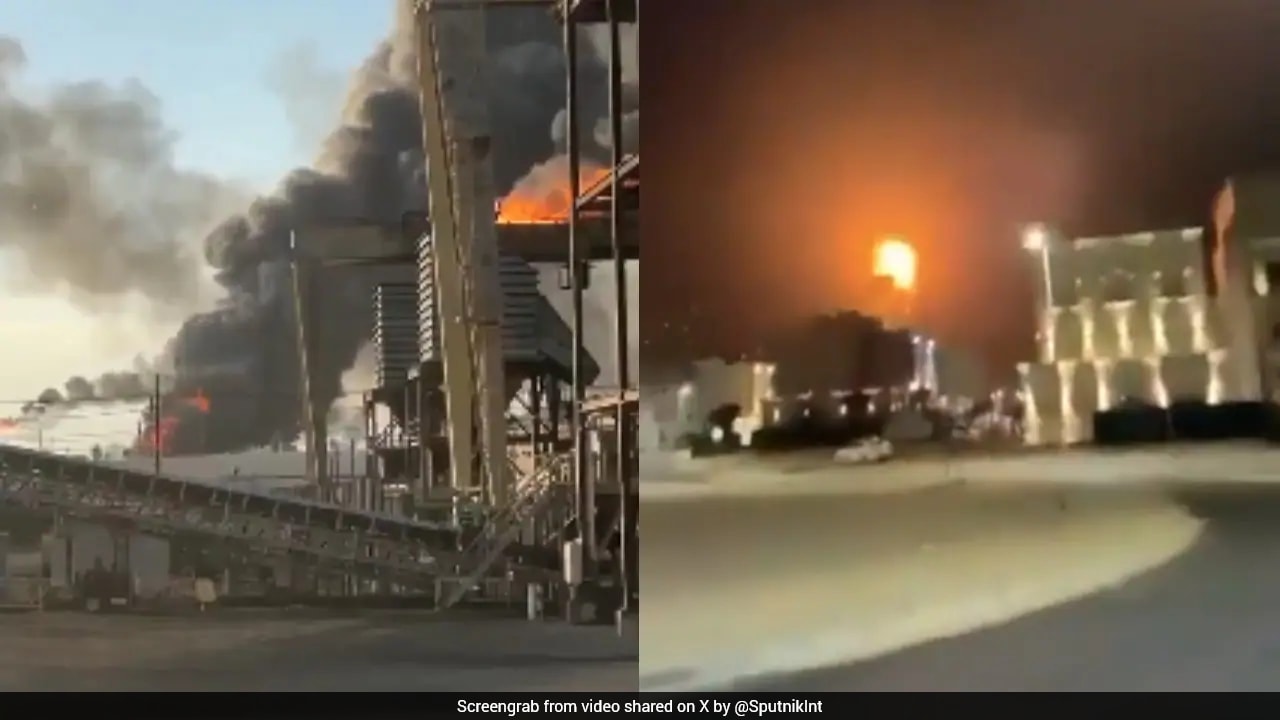
Seventy-three civilians were wounded when a coordinated wave of Houthi ballistic missiles and explosive drones struck deep inside Saudi Arabia, targeting vital energy infrastructure, civilian airports, and Saudi Aramco oil facilities across Abha, Jazan, Najran, and Khamis Mushait. The strikes, which forced a temporary shutdown of core operational activities at key energy sites and ignited massive industrial fires, represent far more than a localized flare-up in the long-running Yemen conflict. They expose a glaring tactical reality: multi-million-dollar modern missile defense shields are struggling to maintain asymmetric parity against cheap, mass-produced aerial munitions.
Years of conflict have transformed the Arabian Peninsula into a testing ground for modern ordnance. Yet, the strategic vulnerability of the world's primary energy exporters remains dangerously unaddressed.
The Economics of Asymmetric Warfare
Consider a hypothetical economic breakdown of a single defensive engagement. A modern Patriot or equivalent interception battery fires a missile system costing millions of dollars to intercept a crude, low-cost loitering munition or delta-wing drone built for a fraction of that price. This math heavily favors the attacker.
The Houthis do not need precision military victory to achieve their strategic objectives. They need only to create persistent uncertainty.
When sustained strikes hit facilities like the Jazan refining complex—a crucial 400,000-barrel-per-day industrial anchor on the Red Sea coast—the shockwaves ripple far beyond regional boundaries. Global energy markets react instantly. Insurance premiums for maritime shipping spike. Supply chains that rely on the uninterrupted flow of hydrocarbons through chokepoints like the Bab el-Mandeb strait suddenly price in systemic risk.
Security analysts have long warned that centralized oil infrastructure is inherently fragile. Distributed pumping stations, massive storage depots, and sprawling coastal refineries present massive radar cross-sections. They are stationary targets sitting in open desert terrain. No amount of hardware can completely armor a footprint that size.
The Regional Spillover and Strategic Calculation
The timing of this offensive is not accidental. The escalation follows a breakdown of localized ceasefires and a corresponding naval blockade declared by the Houthi movement in July, coinciding with broader geopolitical friction involving Iran, regional proxy networks, and shifting maritime traffic through the Strait of Hormuz.
Diplomacy has repeatedly stalled because the underlying political incentives for peace remain weak. Riyadh faces a difficult balancing act. It must project domestic security and protect its economic diversification projects under Vision 2030, while simultaneously avoiding a permanent military quagmire on its southern border.
Military planners in the Saudi-led coalition have vowed a firm response, characterizing the civilian casualties and infrastructural damage as an unacceptable escalation. However, retaliatory airstrikes have historically done little to deter decentralized cells capable of launching mobile truck-mounted missile batteries from rugged mountain terrain.
The structural flaw in regional defense doctrines lies in an over-reliance on point-defense interceptors rather than electronic warfare jamming, kinetic close-in weapons systems, and high-energy laser countermeasures. Until defense architectures pivot toward cost-effective kinetic mitigation, critical energy corridors will remain vulnerable to low-tech saturation attacks.
Emergency response teams continue to damp down industrial blazes across the kingdom's southern provinces. Operations are slowly returning to baseline capacity under strict emergency protocols. Yet the psychological impact on the workforce and the persistent fragility of Gulf energy architectures remain exposed